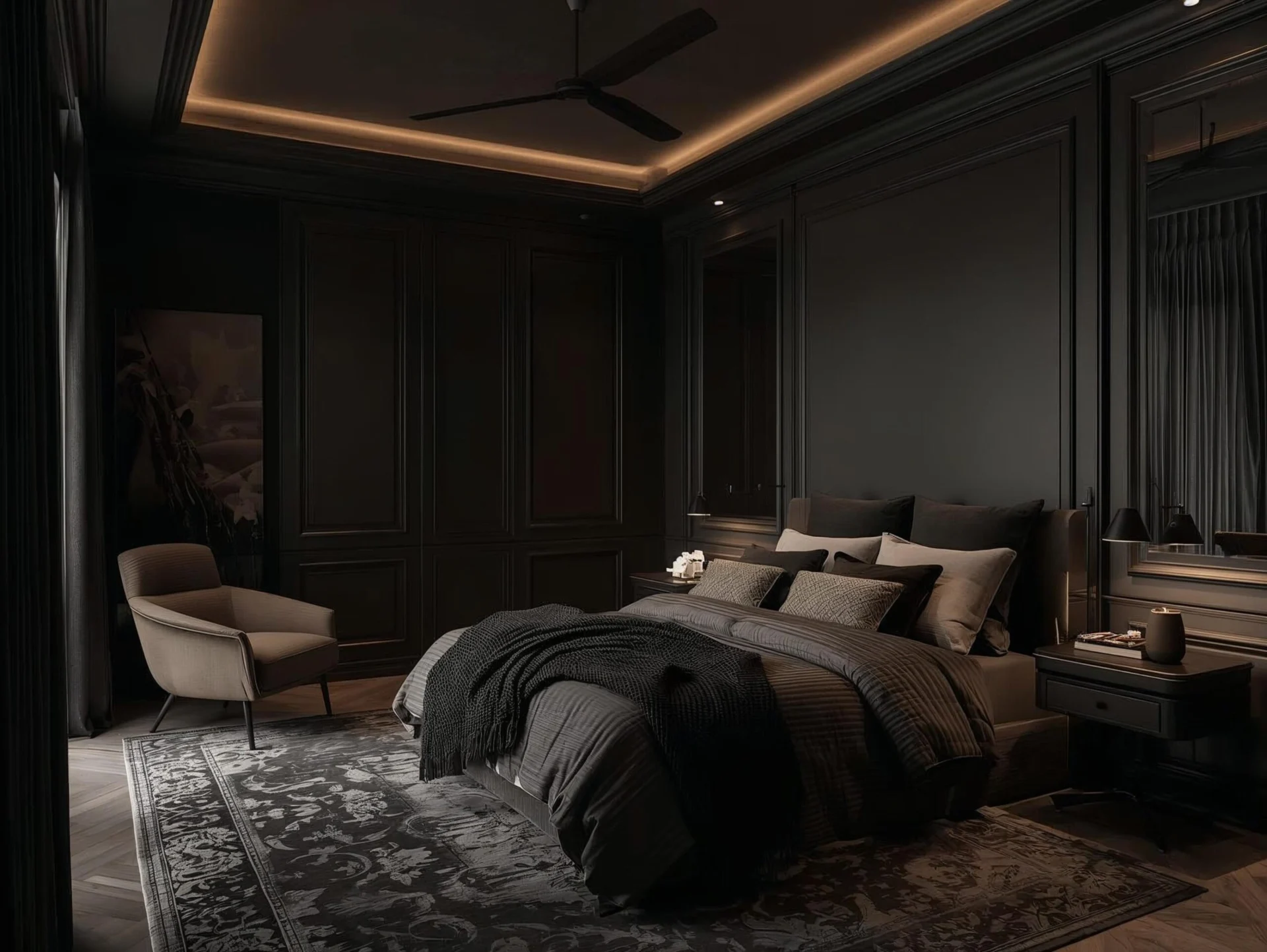

If you’ve ever wished your bedroom felt like a serene sanctuary — a place where you wake up feeling refreshed and calm — then the Japandi style might be just what you need. Blending the cozy warmth of Scandinavian design with the soothing simplicity of Japanese aesthetics, Japandi bedrooms offer peace, balance, and timeless elegance.
Here are 15 easy-to-implement ideas to help you transform your space into a soothing, stylish retreat. Whether you’re redecorating completely or just refreshing a few corners, there’s something here for every home.
📝 Key Takeaways
- Japandi bedrooms are all about natural materials, neutral tones, clean lines, and cozy simplicity.
- Focus on quality over quantity — one beautiful wood bed or simple plant can outshine dozens of cheap decor items.
- Light, texture, and space matter just as much as furniture — natural light + soft textiles + breathing room = serenity.
- The blend of Scandinavian warmth + Japanese minimalism creates a balanced space that feels both restful and stylish.
15 Japandi Bedroom Ideas & Design Tips
1. Natural Wood Furniture
Natural wood is the core of Japandi design. Opt for light oak, beech, pine, or ash to bring in warmth and natural beauty. Wood furniture also tones down visual clutter and creates a grounded feeling in the room. A simple wooden bedframe, nightstands, or a bench instantly sets the Japandi tone. Choose smooth, clean-lined pieces for a calming and balanced atmosphere.

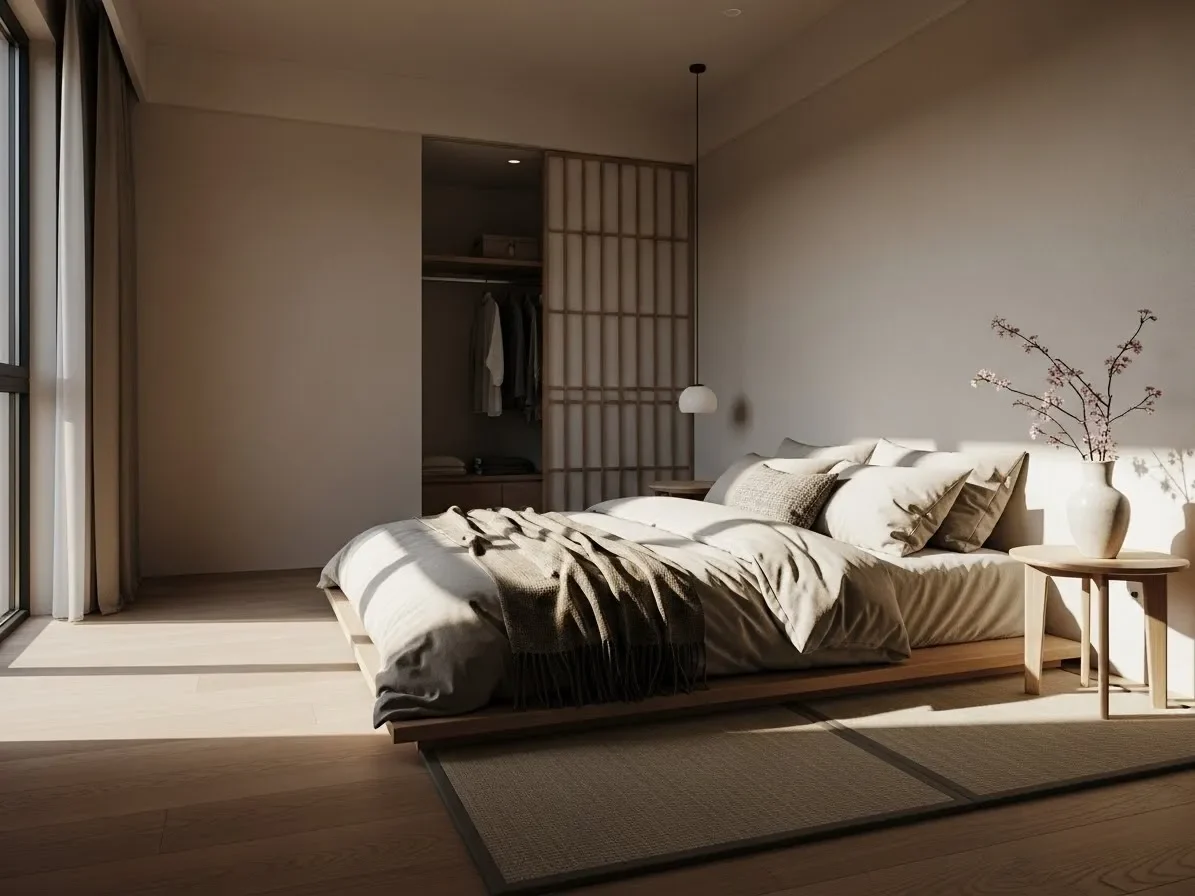
2. Low-Profile or Platform Beds
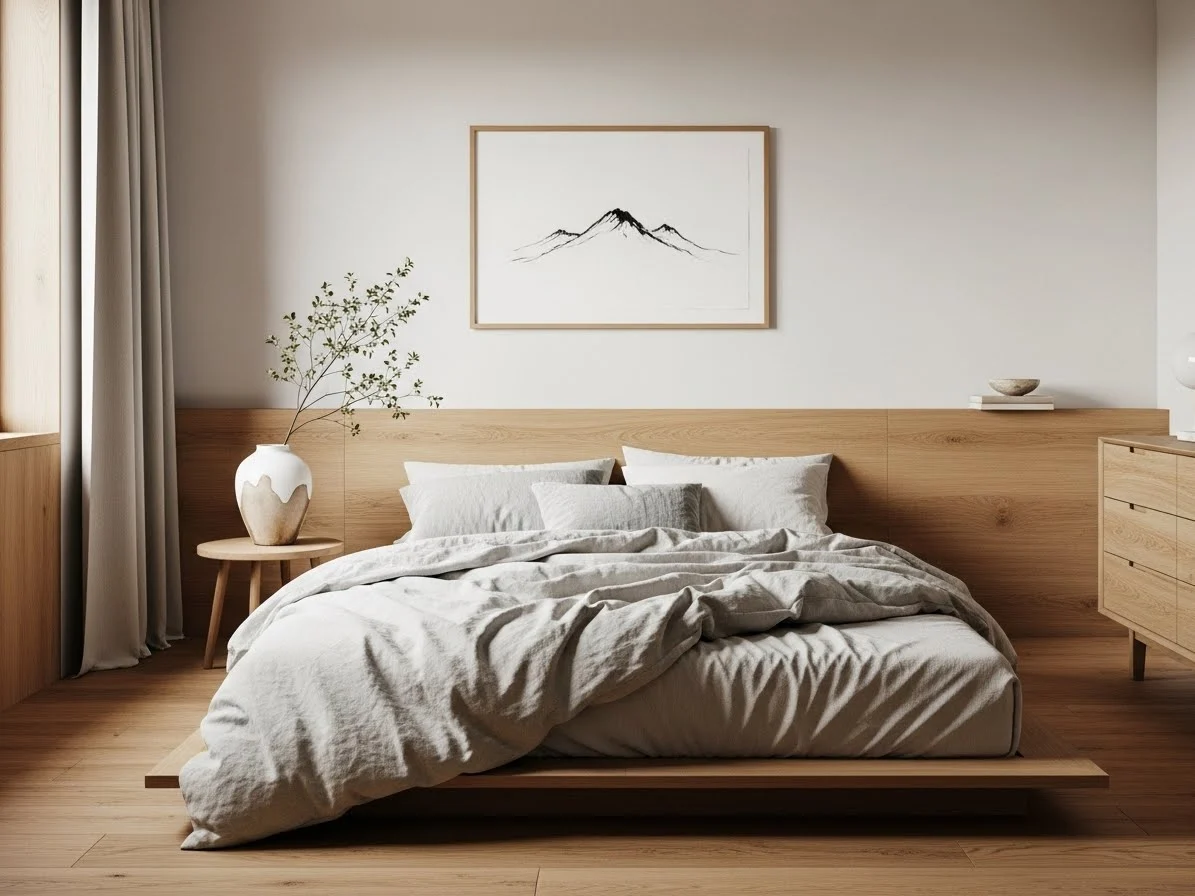
Japandi bedrooms favor low, grounded beds because they reflect both Japanese minimalism and Scandinavian coziness. A platform bed also helps create a floating, airy mood without making the room feel heavy. Pair your low bed with plain bedding and soft neutrals to maintain a harmonious, uncluttered look.
3. Soft Neutral Color Palettes
Muted neutrals—beige, warm white, clay, taupe, and soft gray—create the soothing base Japandi is known for. These quiet colors reduce visual noise and make your bedroom instantly feel serene. Stick to a simple palette and repeat the same tones in furniture, fabrics, and decor for a cohesive, restful feel.
4. Natural Textures Like Linen, Wool & Jute
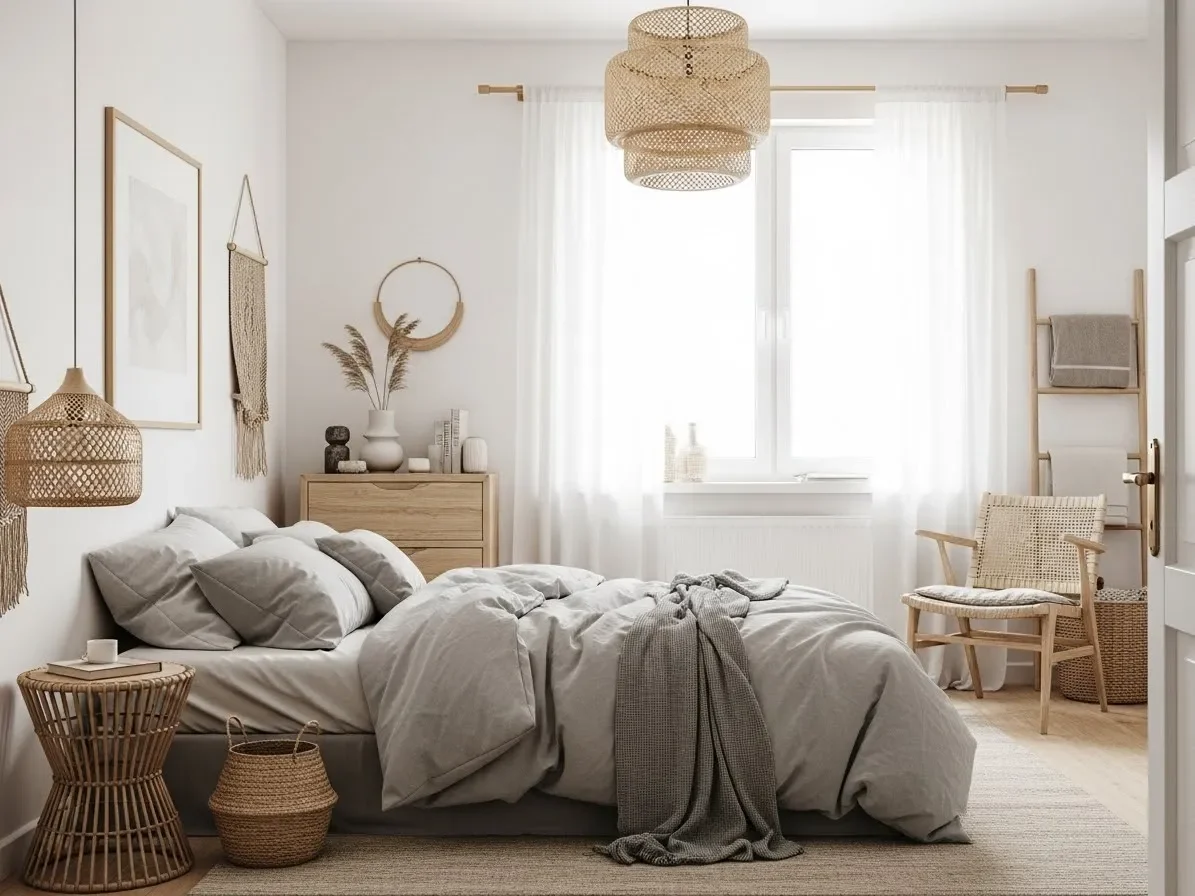
Texture is what brings Japandi minimalism to life. Linen bedding, wool throws, cotton blankets, bamboo accents, and jute rugs add warmth without overwhelming the space. These organic materials make your bedroom feel cozy while still looking clean and understated.

5. Wood Slat Accent Walls
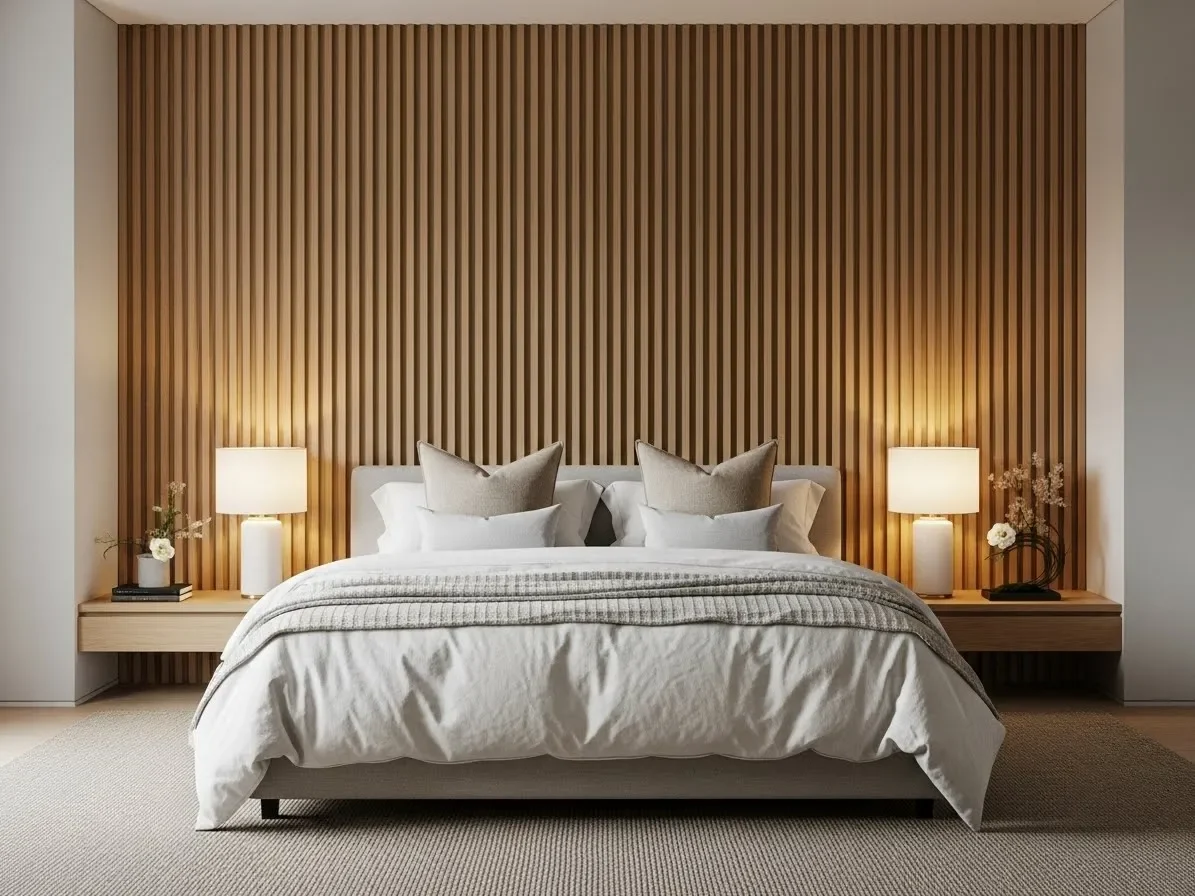
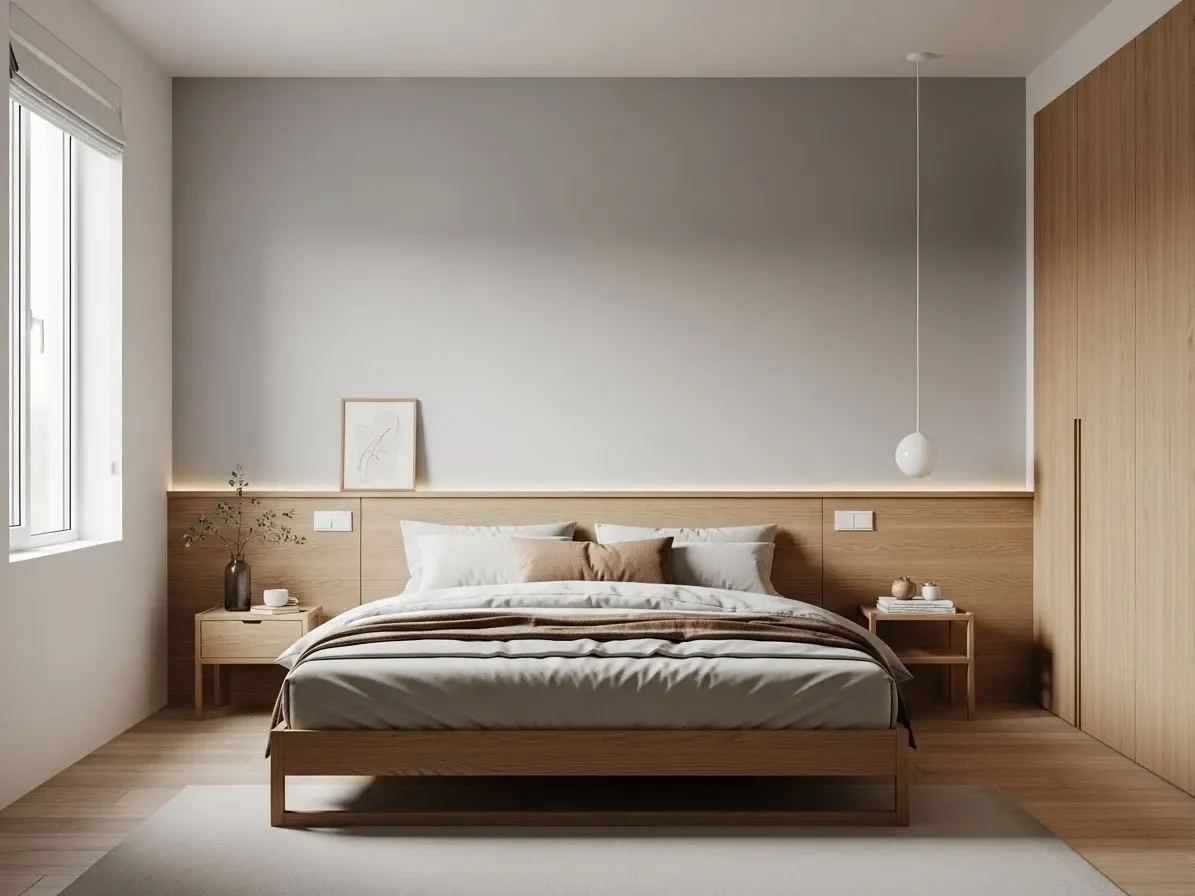
A wood slat accent wall is one of the most popular Japandi design features. It adds depth, structure, and natural charm without relying on bold colors or busy patterns. Place it behind your bed for an instant focal point that feels modern yet timeless.
6. Greenery & Natural Light
Plants play a huge role in Japandi style because they connect the indoors with nature. Choose simple plants like a bonsai, olive tree, or rubber plant. Combine them with soft natural light—like sheer curtains or large windows—to brighten the room without losing the minimalist vibe.

7. Minimal Furniture With Hidden Storage
Japandi bedrooms thrive on simplicity, so hidden storage is essential. Choose beds with storage drawers, nightstands with shelves, or built-in wardrobes that blend into the wall. The goal is to keep surfaces clear and maintain a visually calm space.
8. Soft & Warm Ambient Lighting
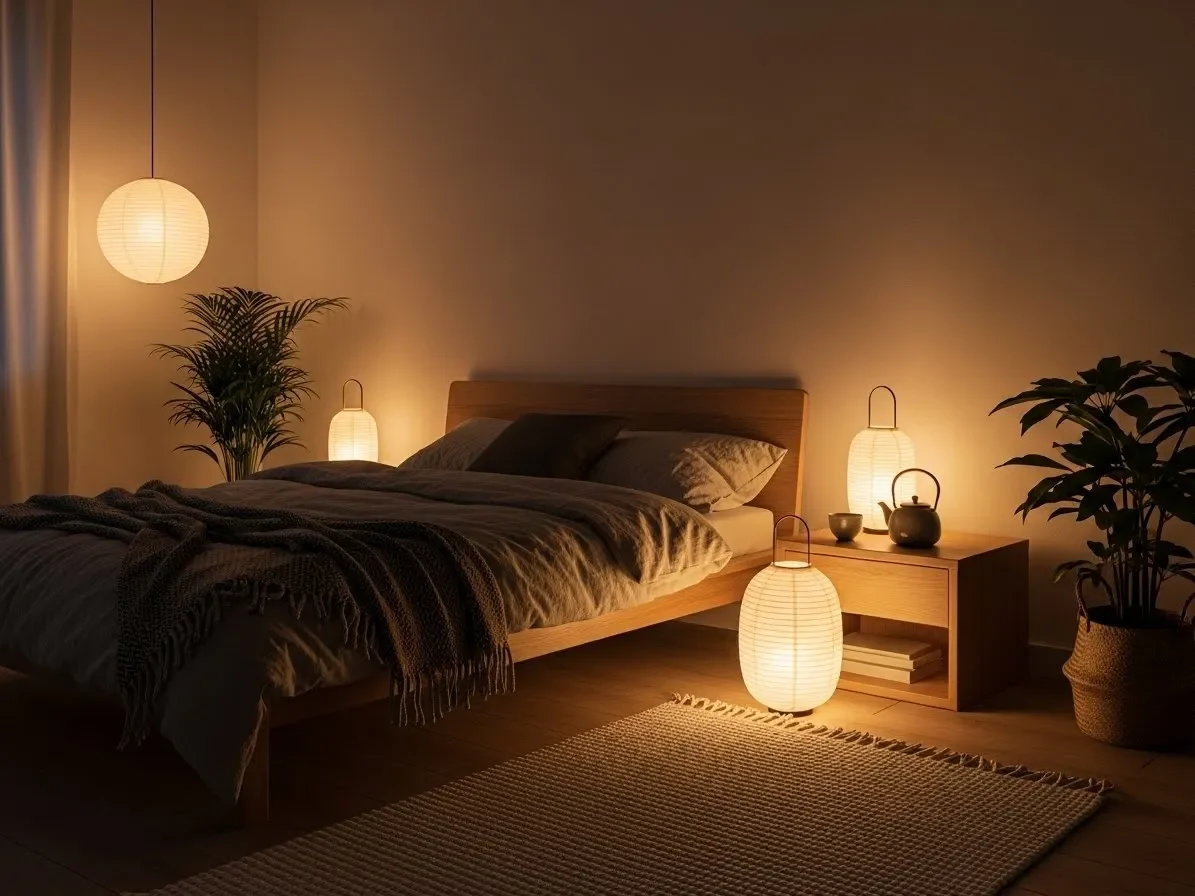
Harsh lighting is a big no in Japandi rooms. Instead, layer warm, diffused lights—like paper lanterns, wall sconces, and soft bedside lamps. This creates a comforting glow that enhances the cozy–minimalist feel and makes the bedroom feel more relaxing on the eyes.
9. Subtle Accent Colors
Japandi style may be minimalist, but a small pop of color can make the design more interesting. Soft sage, muted terracotta, dusty blush, or warm earth tones work beautifully. Use these colors sparingly in throw pillows, pottery, or artwork for a gentle touch of personality.

10. Choose Quality Over Quantity
Japandi design values craftsmanship. Instead of filling your bedroom with decor, invest in a few high-quality items that you truly love—like a handcrafted vase, a linen duvet, or a solid wood bench. Fewer, better pieces help maintain a calm atmosphere.

11. Minimal, Intentional Decor
Every decor piece in a Japandi bedroom should serve a purpose. Keep surfaces clutter-free and choose decor that enhances the room’s natural beauty—like ceramic vases, minimal artwork, or organic sculptures. Intentional decor makes your space feel thoughtful and balanced.
12. Balance Clean Lines With Soft Textures
Japandi combines structured Scandinavian lines with soft Japanese-inspired textures. Think smooth wooden bedframes paired with fluffy bedding, round cushions, or woven baskets. This balance prevents the space from feeling too rigid or too cozy—creating a perfect zen–warmth blend
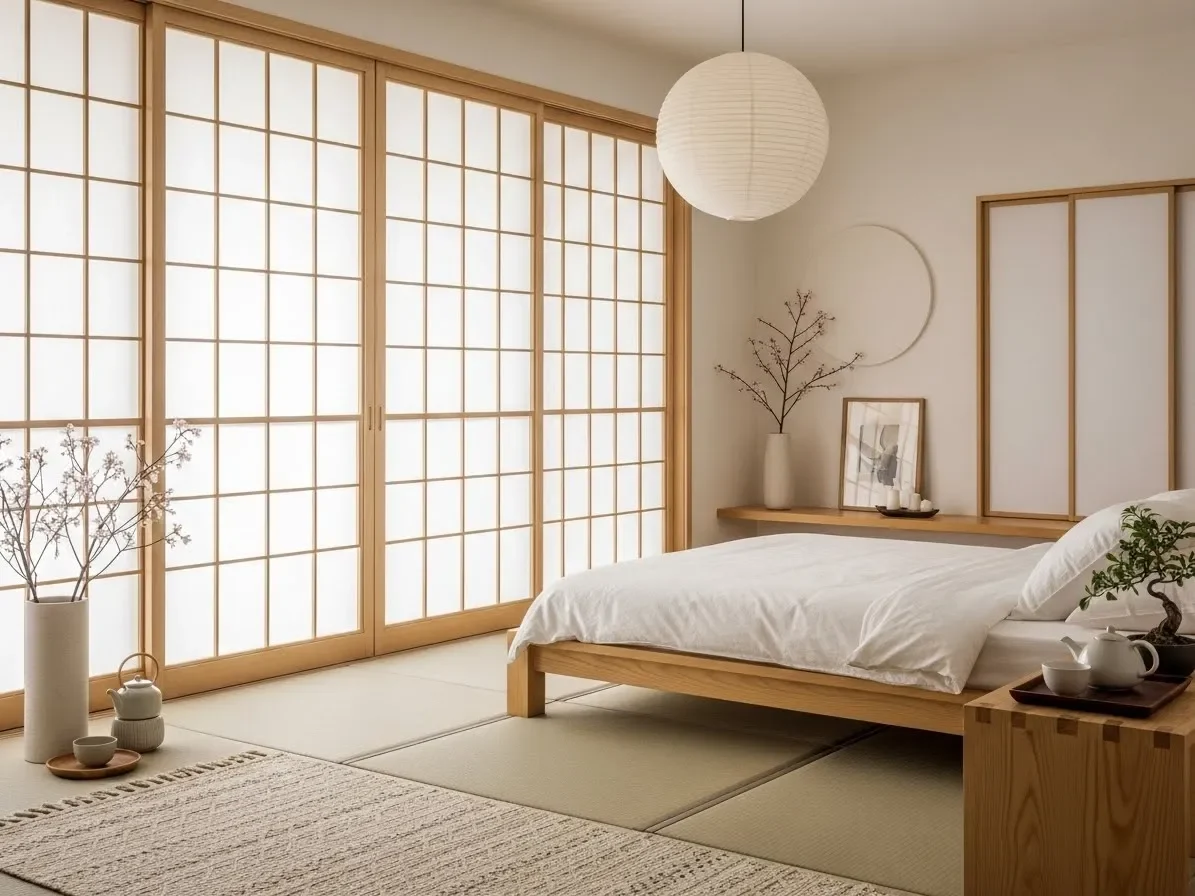
13. Sliding Screens or Shoji Elements
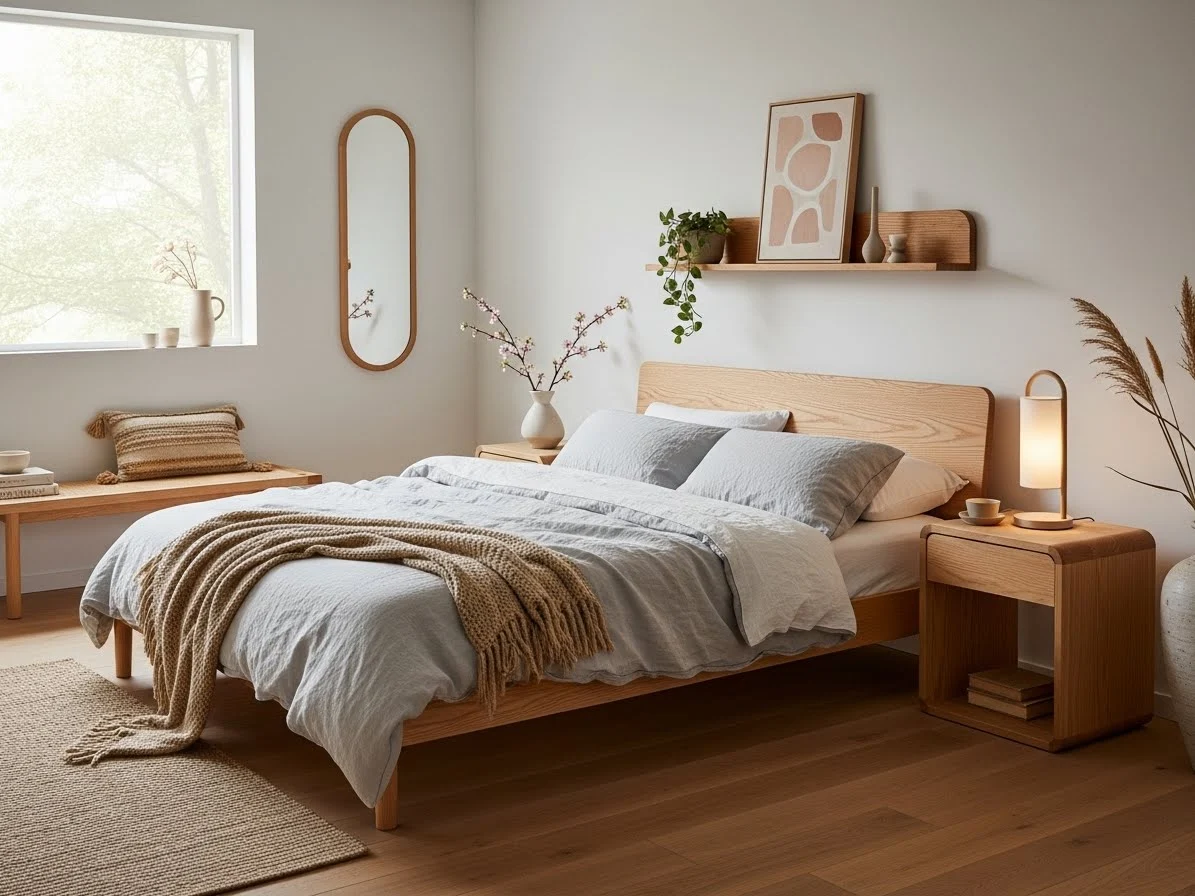
Shoji-inspired sliding doors or room dividers bring subtle Japanese elegance into your space. Whether you use them for your closet, window, or as a room accent, they diffuse light beautifully and add that signature Japandi look. Even a faux shoji panel can transform the space.
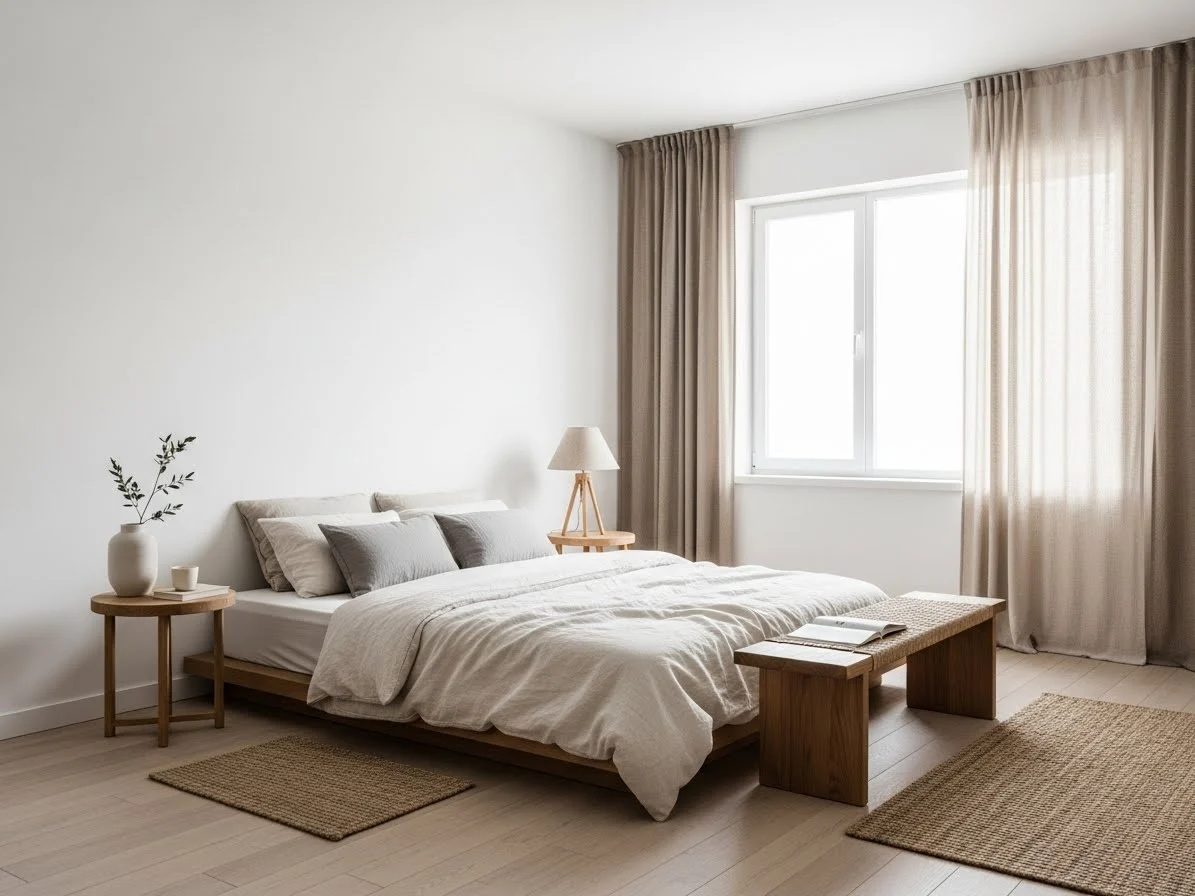
14. Keep Breathing Space and Negative Space
Japandi is famous for celebrating “Ma” — the beauty of empty space. Leave open areas in your bedroom and avoid filling every corner with furniture or decor. This breathing room helps the space feel peaceful, airy, and truly minimal.
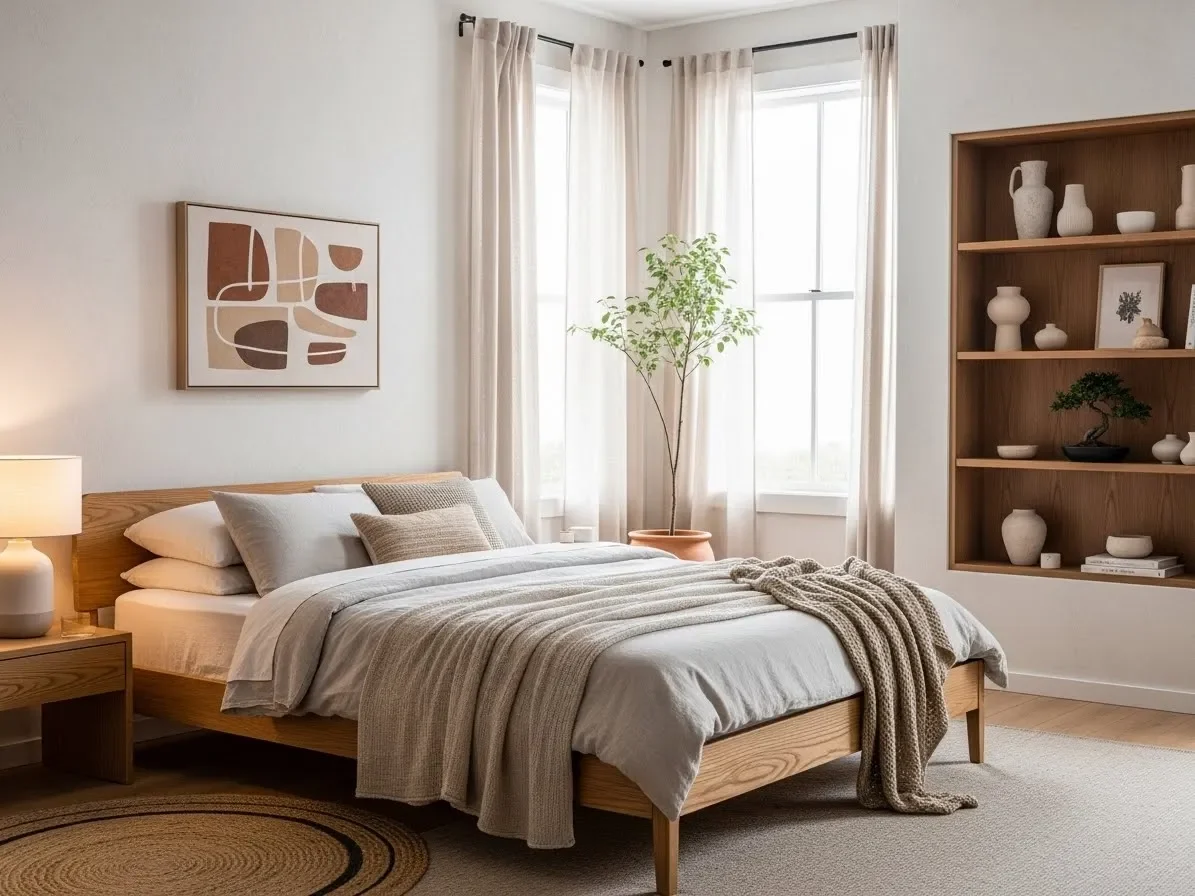
15. Blend Scandinavian Warmth With Japanese Minimalism
Japandi is all about harmony. Combine Scandinavian coziness—like soft blankets, warm woods, and gentle lighting—with Japanese simplicity such as clean lines and intentional decor. When these two worlds meet, you get a bedroom that feels calm, modern, and deeply comforting.
Why Japandi Works — What You’ll Get from This Style
- A calm, clutter-free environment that helps clear the mind.
- A cozy, warm feel that still looks modern and clean.
- A timeless aesthetic that doesn’t go out of fashion.
- Easy to personalize — just a few elements needed to give character.
- A restful retreat: better sleep, better morning vibes, more peace.
Conclusion: Is Japandi Right For You?
If you want a bedroom that feels like a calming retreat — a space to recharge, reflect, and rest — then adopting a Japandi approach can transform your space. It doesn’t demand huge budgets or drastic renovations: a simple low-profile wood bed, soft neutral bedding, a plant or two, and minimal decor can make a big difference.
Japandi is less about decorating thoroughly and more about curating thoughtfully. With just a few intentional choices, you can have a bedroom that feels calm, balanced, and deeply personal.
❓ FAQs
Q: What exactly is “Japandi”?
A: Japandi is a design style that fuses Japanese minimalism and Scandinavian simplicity. It emphasizes natural materials, neutral colors, clean lines, and a calm, decluttered environment. (A House in the Hills)
Q: Do I need a big bedroom to do Japandi design?
A: Not at all. Japandi works especially well in small spaces because low-profile furniture, minimal decor, and smart use of light make small rooms feel open and restful.
Q: Can Japandi style feel cozy and warm, or is it too minimal and cold?
A: Definitely cozy. The use of wood, natural textiles (linen, wool), warm neutral tones, and soft lighting keeps Japandi bedrooms feeling inviting and restful, not cold or sterile.
Q: How can I add a personal touch without ruining the minimal look?
A: Use subtle accents — a muted pastel pillow, a textured throw, a small plant, or a single piece of minimalist art. These small touches add character while keeping the calm vibe intact.
Q: Is Japandi expensive to implement?
A: It doesn’t have to be. While handcrafted furniture is great, you can start with simple, affordable pieces — a basic wood bed frame, neutral bedding, minimal decor — and build your Japandi space gradually. The philosophy values quality over quantity.
“If you love this cozy vibe, explore our full bedroom makeover ideas next.