
If your bathroom feels more chaotic than calming, embracing Wabi Sabi bathroom design might be the refresh it needs. Rooted in traditional Japanese aesthetics, the Wabi Sabi style celebrates imperfection, natural materials, and serene simplicity, resulting in a space that feels grounded, soulful, and soothing rather than polished or overly styled.
Wabi Sabi is about stripping back the non‑essentials and allowing the beauty of natural textures, muted earthy tones, and handcrafted elements to take center stage. It’s a design philosophy that makes your bathroom feel like a quiet sanctuary you look forward to entering each day — a place where materials age gracefully and imperfections are a welcome part of the story.
Key Takeaways
- Wabi Sabi design celebrates imperfection, natural materials, and serene simplicity in bathrooms.
- Use weathered wood, stone, plaster, and linen to bring warmth and authenticity.
- Soft earthy tones and muted neutrals create a calming, timeless backdrop.
- Layer textures and materials for visual interest without clutter.
- Handcrafted and salvaged items add personality and soulful charm.
- Natural light, plants, and minimal accessories enhance serenity and create a grounding atmosphere.
What Is Wabi Sabi in Bathroom Design?
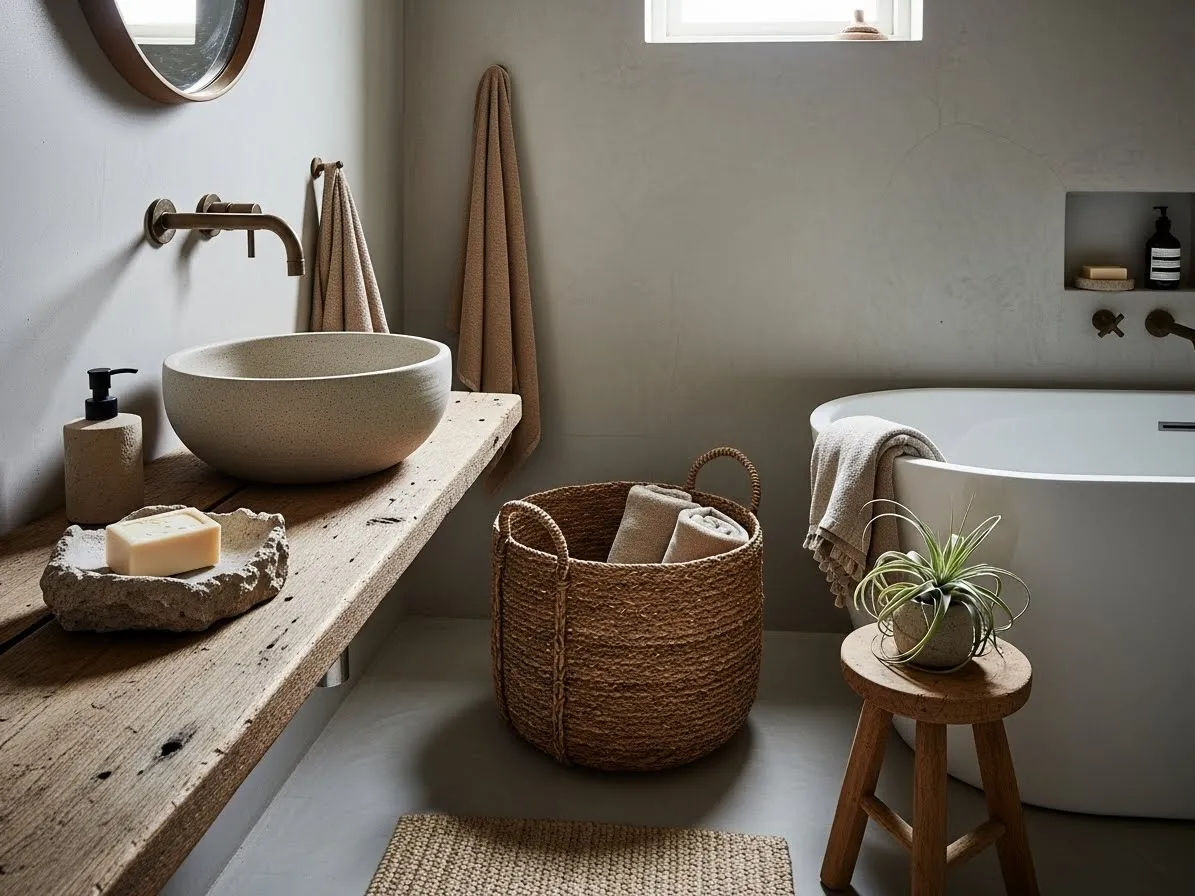
At its core, Wabi Sabi design is about embracing authenticity over perfection. Rather than gleaming, factory‑made finishes, Wabi Sabi spaces favor organic materials, tactile textures, and surfaces that show life and use. In a bathroom context, this might mean stone sinks with organic edges, weathered wood elements, or plaster walls with subtle variations in texture — all of which contribute to a warm and calming environment.
The philosophy also embraces earthy, muted color palettes — think soft neutals, warm taupes, clay tones, and gentle greens — that work harmoniously with natural light and handcrafted materials
Here are 15 Wabi Sabi bathroom ideas to help you design a space that feels authentic, calm, and beautifully imperfect.
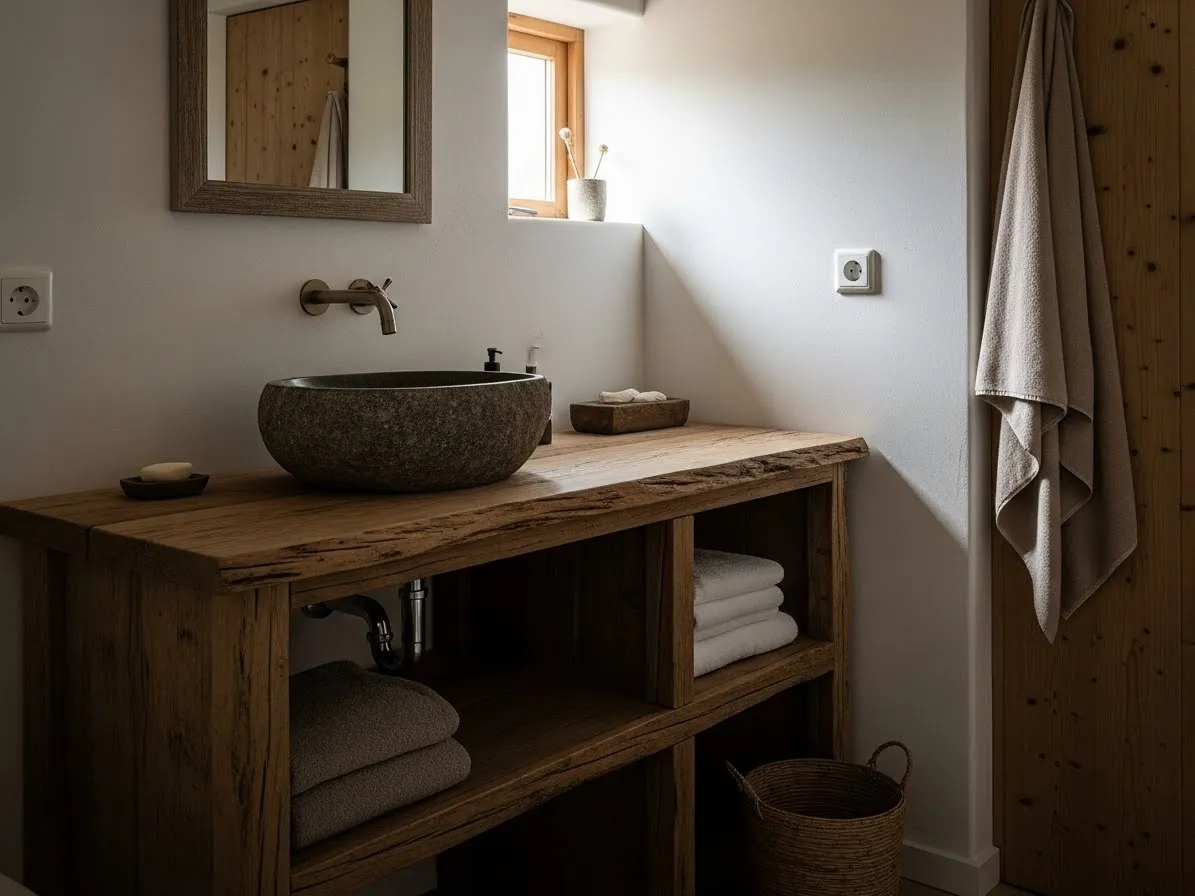
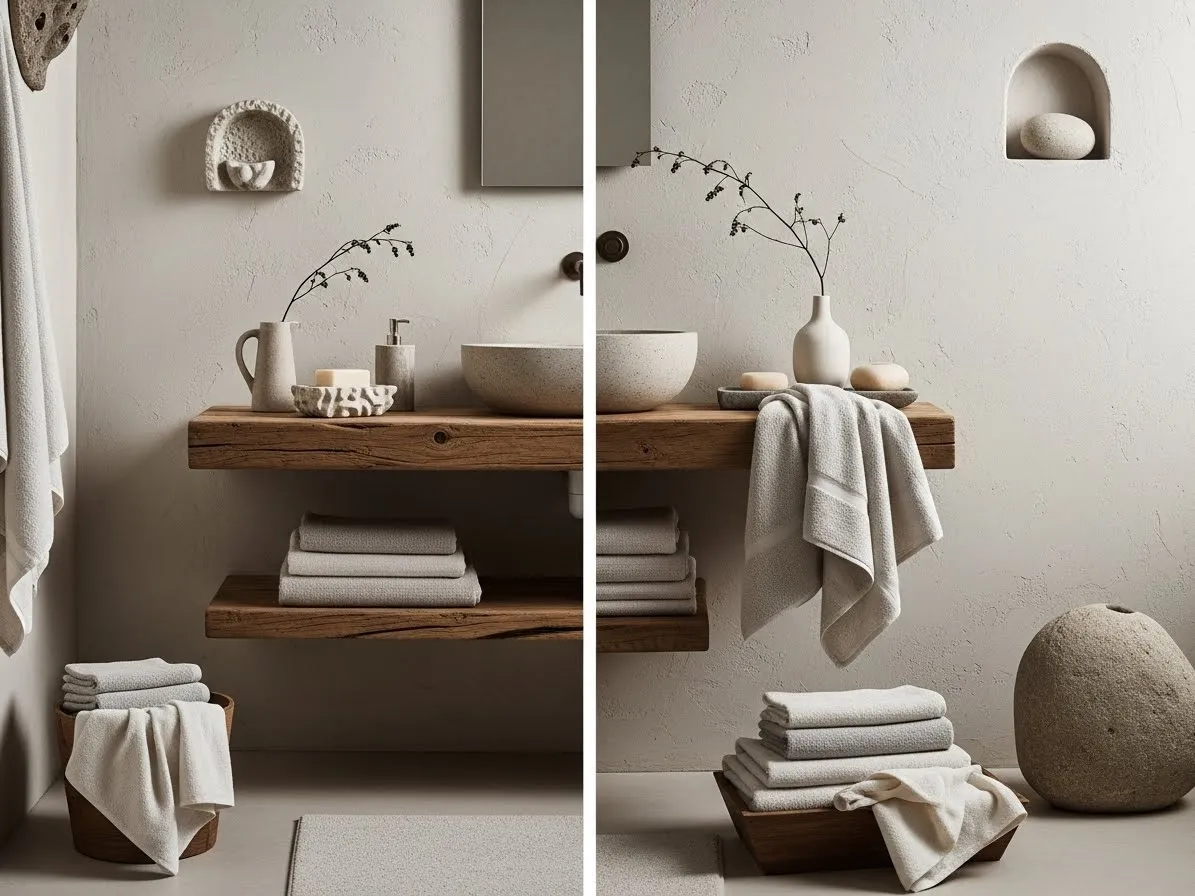
1. Weathered Wood Vanities With Open Shelving
A wooden vanity with visible grain and knots instantly warms the space. Opt for reclaimed or aged wood for character.
Pro Tip: Use open shelving to display hand towels, pottery, or baskets — keep items minimal to maintain calm.
2. Soft Earthy Wall Colors
Choose muted earth tones like beige, taupe, clay, or soft gray instead of stark white. These create a calm, harmonious backdrop.
Extra Idea: Paint one wall darker for a subtle focal point.

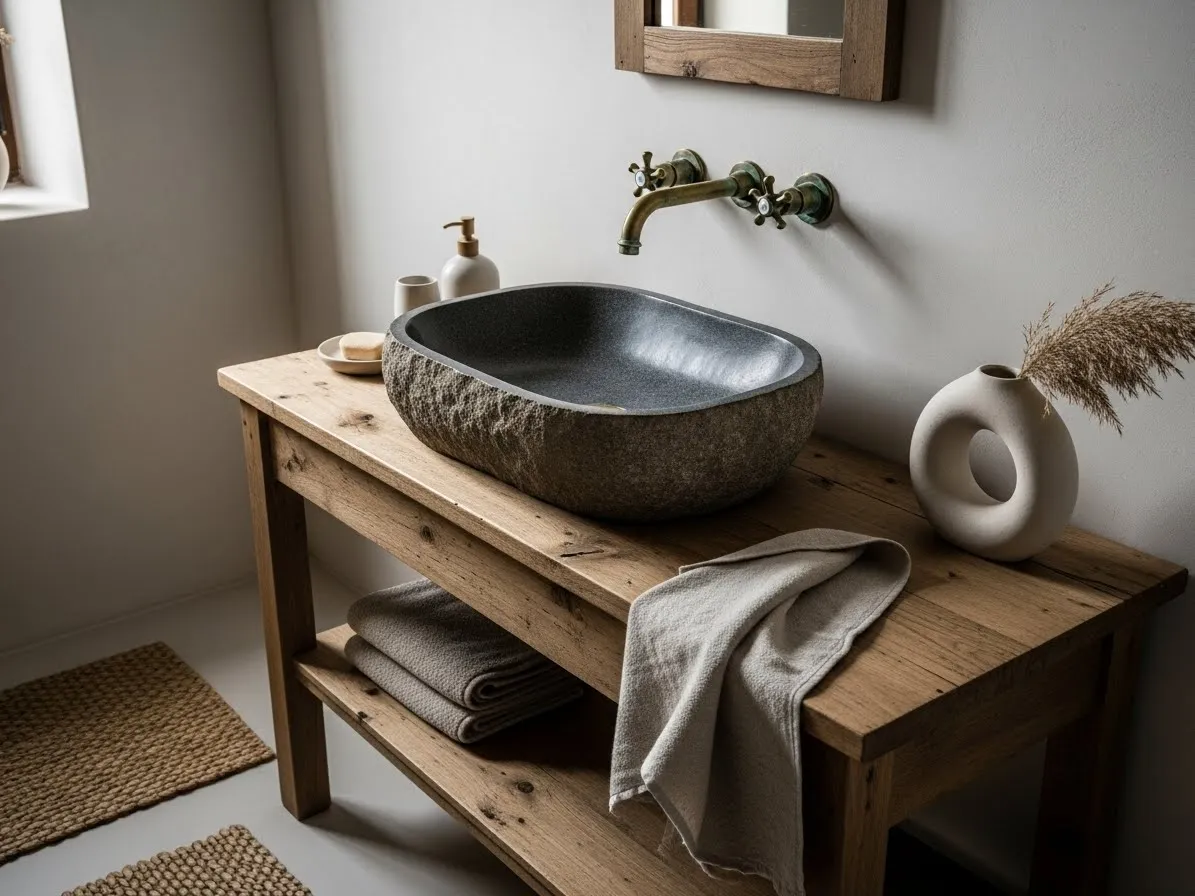
3. Stone Basins With Patina
Stone sinks with natural edges add texture and authenticity. Pair with brass or black matte fixtures for modern contrast.
Pro Tip: Choose a stone with subtle veining for a more dynamic, natural look.
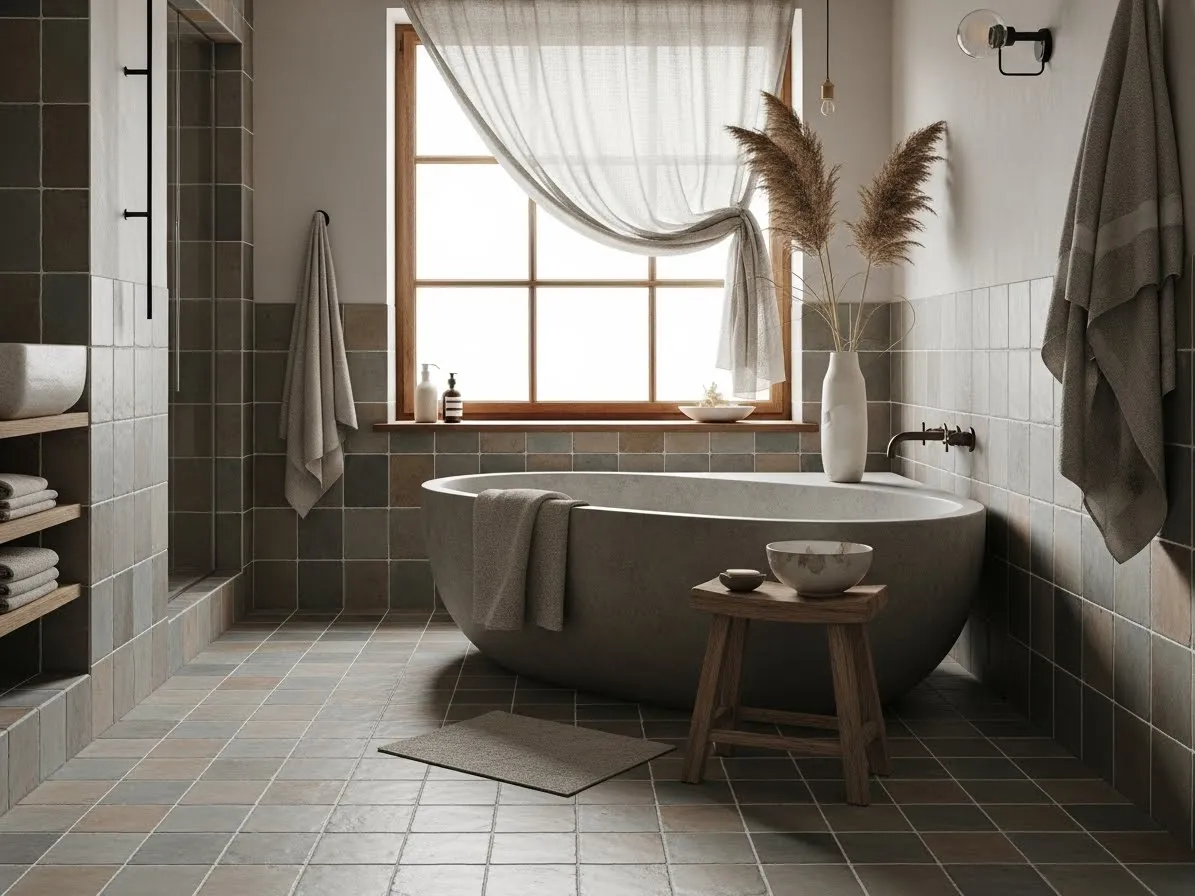
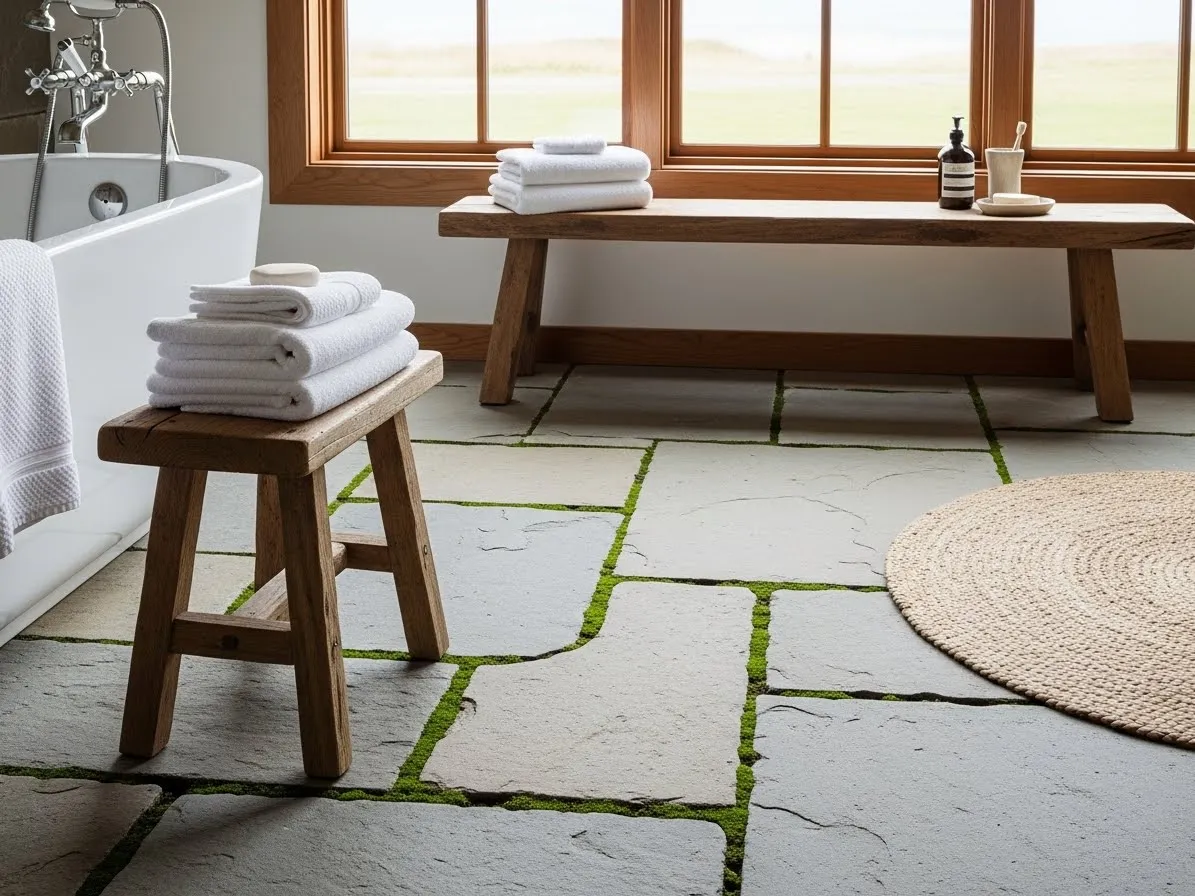
4. Irregular Handmade Tiles
Tiles with uneven edges or slight color variations bring organic charm to floors and walls.
Extra Idea: Mix tile sizes for a more layered, artisanal feel.
5. Diffused and Ambient Lighting
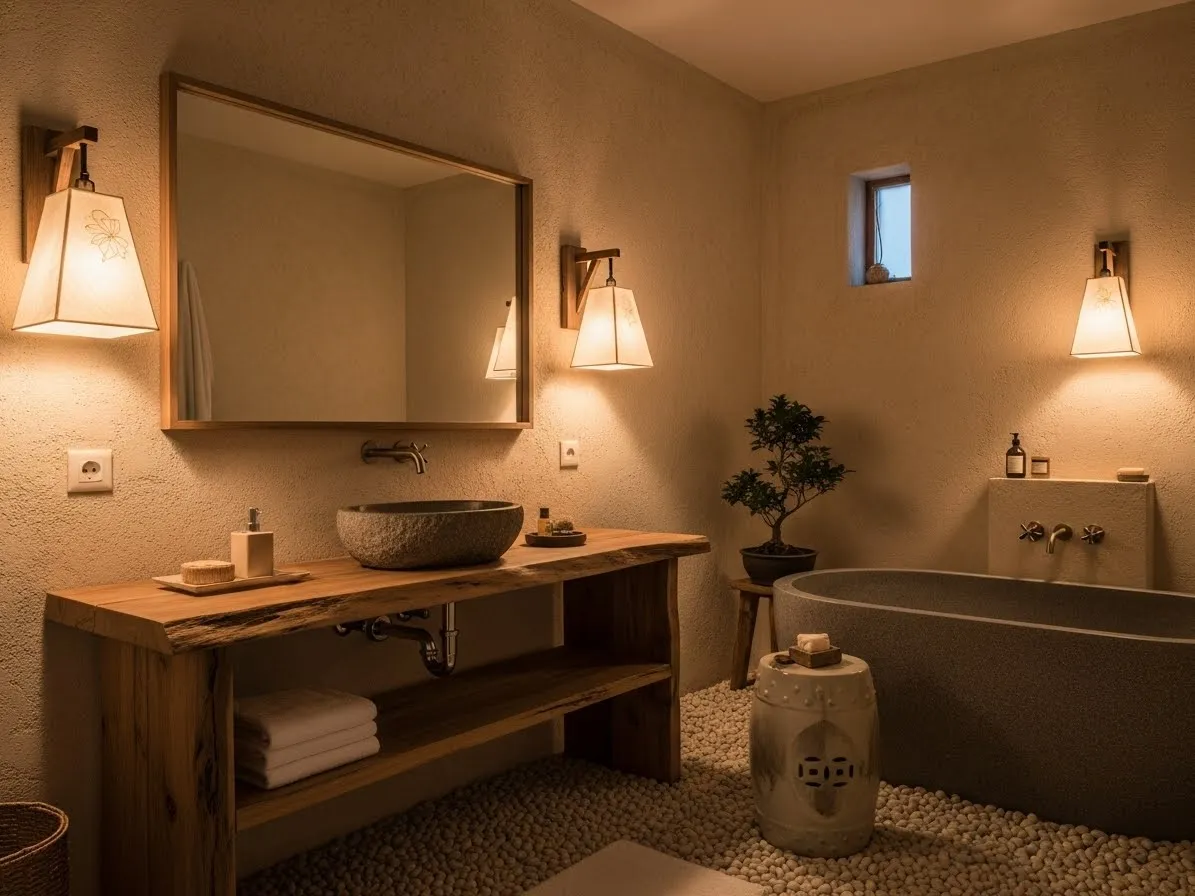
Soft lighting is key. Lantern-style sconces, dimmers, or paper shades create a relaxing, spa-like vibe.
Pro Tip: Place lights near mirrors or niches to highlight textures and natural materials.
Related: 10+ Bathroom Lighting Ideas You’ll Wish You Tried Sooner
6. Textured Plaster or Clay Walls
Layered plaster or clay walls add depth and visual interest. They also age beautifully over time.
Extra Idea: Use a subtle color wash on plaster to enhance warmth and depth.

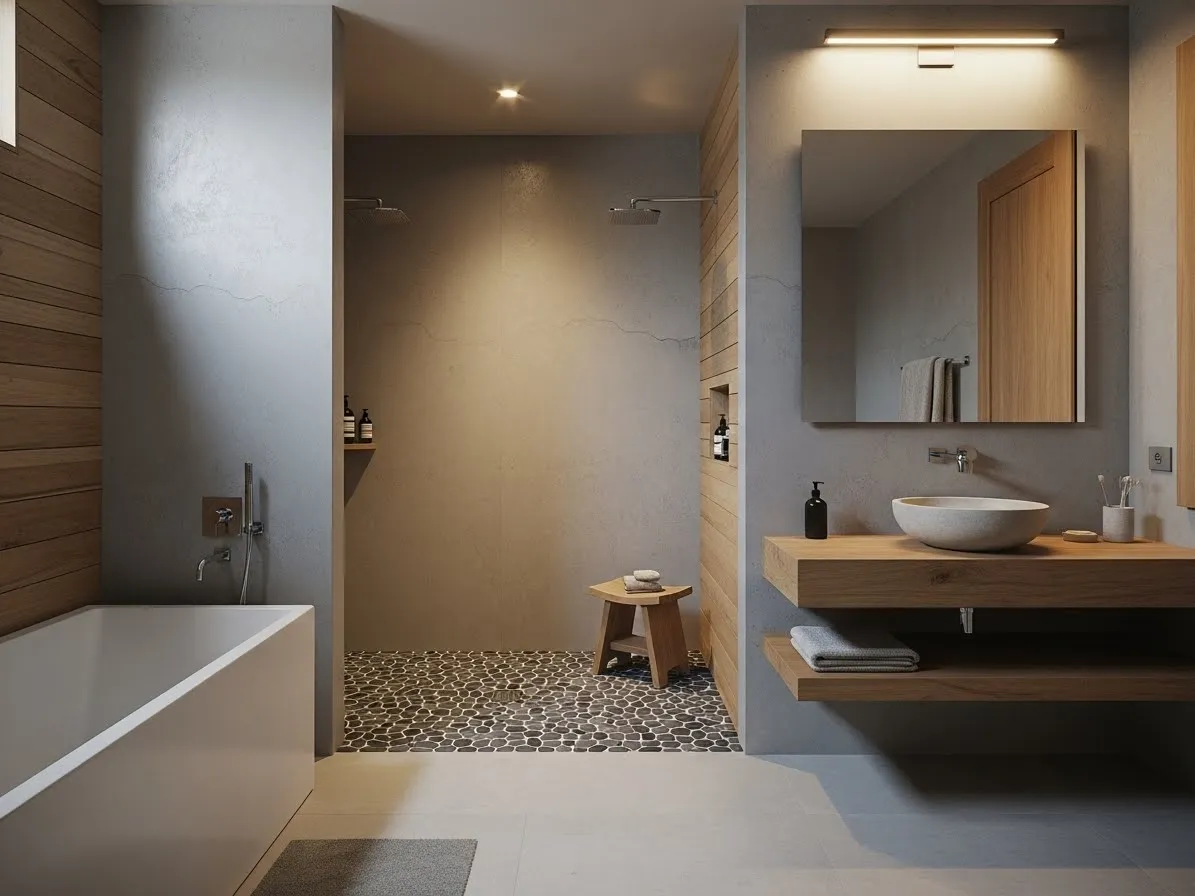
7. Pebble or Stone Shower Floors
Pebble flooring adds a tactile, spa-like experience. The uneven surface embraces imperfection.
Pro Tip: Seal natural stones to prevent water damage while keeping texture.
8. Japandi-Inspired Minimalism
Combine Wabi Sabi with Japandi design: clean lines, muted tones, and rustic touches. This balances simplicity and warmth.
Extra Idea: Add low-profile wooden stools or benches for functional decor.
9. Linen or Cotton Curtains
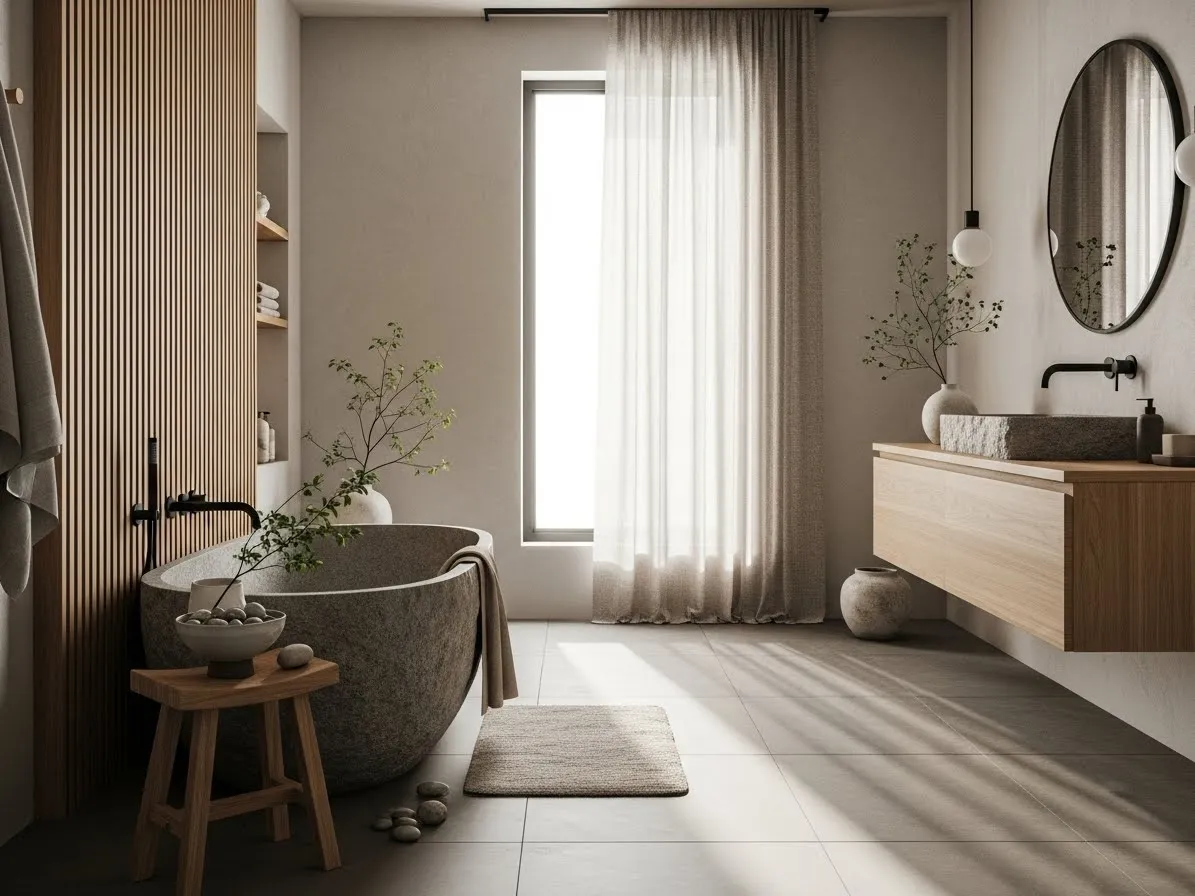
Soft linen shower curtains add texture, movement, and warmth. Choose neutral tones like taupe or sand.
Pro Tip: Layer sheer and opaque curtains to control light and maintain privacy.

10. Salvaged Furniture for Storage
Repurpose cabinets or chests as storage. Look for natural wear and patina — every scratch adds character.
Extra Idea: Mix a small modern cabinet with a vintage piece to create contrast while keeping cohesion.

11. Neutral Palettes With Layered Textures
Maintain soft neutrals across walls, floors, and textiles. Layer plaster, wood, stone, and linen to add interest without clutter.
Pro Tip: Vary the scale of textures — large jute rugs with fine linen towels create balance.
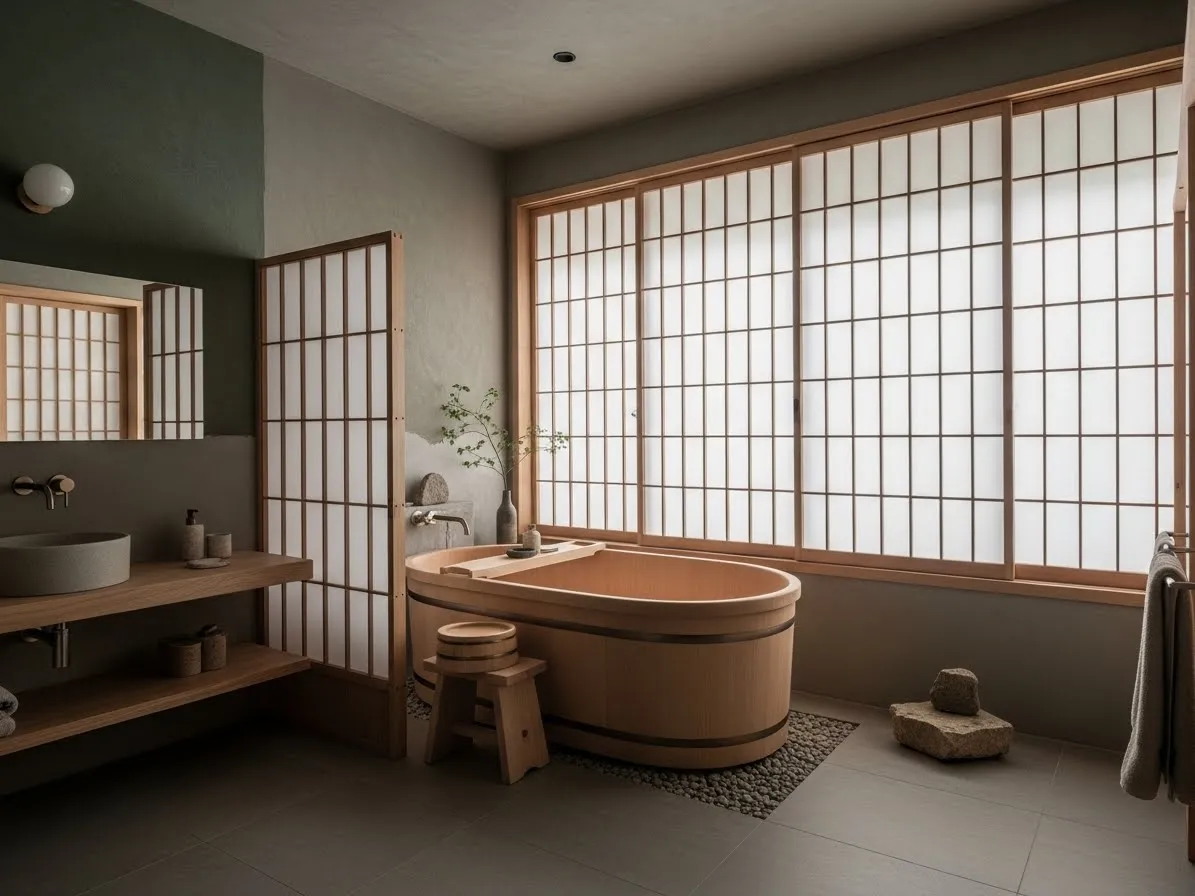
12. Shoji Screens or Partitions
Use shoji screens to filter light softly. They create privacy and bring a Japanese-inspired touch.
Extra Idea: Use a light-colored wood frame for warmth and subtle contrast.
13. Natural Greenery and Botanical Accents
Plants like ferns, bamboo, or orchids thrive in humid bathrooms. They enhance serenity and complement stone and wood.
Pro Tip: Choose low-maintenance plants that do well in indirect light and humidity.
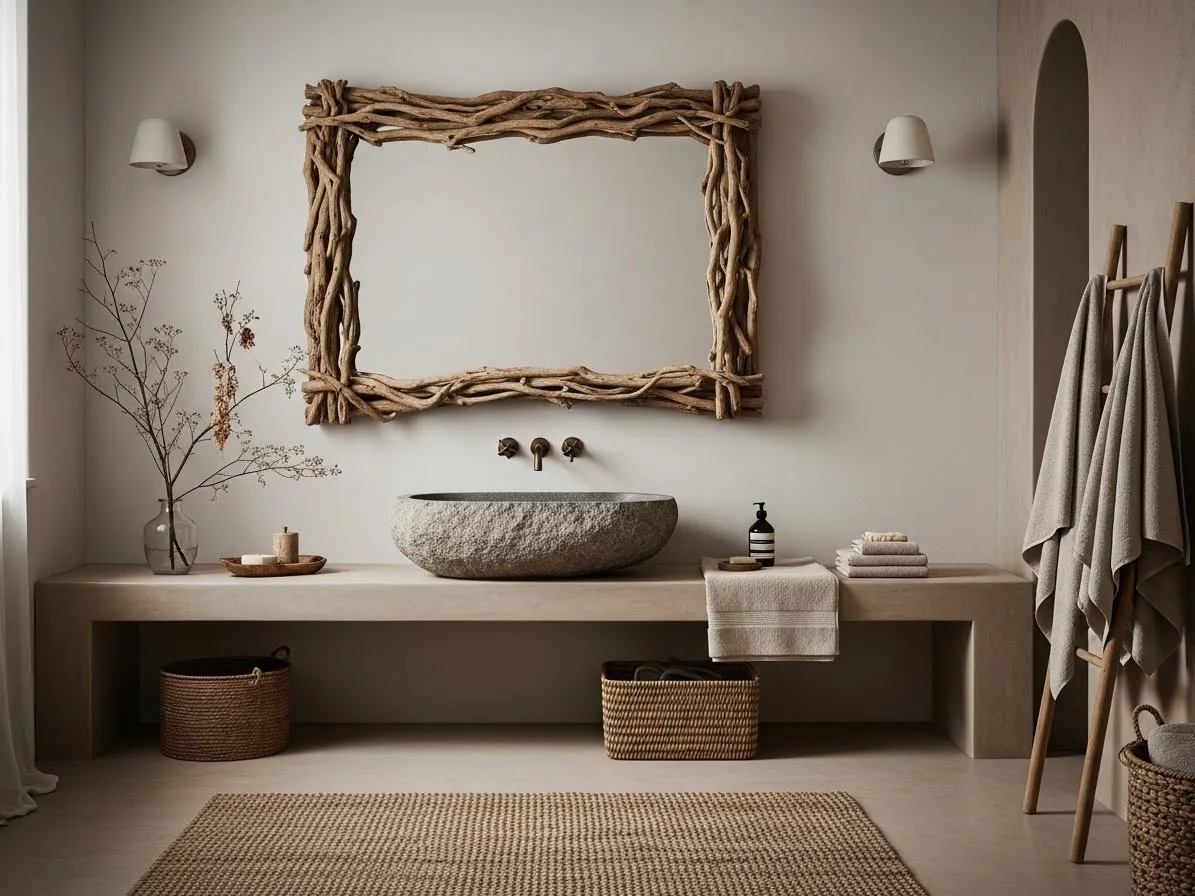
14. Imperfect Mirrors With Organic Frames
Mirrors with driftwood or uneven edges highlight imperfection beautifully.
Extra Idea: Pair an imperfect mirror with a small shelf below for functional decor and visual interest.
15. Minimal, Handcrafted Accessories
Curate pottery, soap dishes, or woven baskets to add personal touches. Keep items meaningful and functional.
Pro Tip: Rotate seasonal accessories to keep the space feeling fresh without cluttering.
Bonus Tips for Wabi Sabi Bathrooms
- Keep surfaces uncluttered: Minimalism enhances the feeling of calm.
- Mix finishes: Rough wood, matte stone, and soft textiles create a rich tactile experience.
- Embrace aging: Don’t hide imperfections — they tell a story and bring authenticity.
- Use natural light: Maximize windows or skylights to highlight textures and create a soothing atmosphere.
Conclusion
A Wabi Sabi bathroom is more than a design trend — it’s a philosophy that turns a functional space into a serene retreat. By combining natural materials, muted colors, and handcrafted elements, your bathroom becomes a place to slow down, relax, and enjoy imperfection. From weathered wood vanities and pebble floors to soft linens and plants, every choice contributes to a space that is authentic, grounding, and beautiful in its imperfection.
FAQs (with short answers)
It’s a style that embraces imperfection, natural textures, muted tones, and simple, authentic elements.
Earthy neutrals like taupe, beige, clay, soft gray, and muted greens create a calm, natural palette.
Yes. Focus on minimalism, natural light, compact storage, and layered textures to make small spaces feel serene.
Wood, stone, plaster, linen, and clay are key for authenticity and natural warmth.
Use handcrafted accessories, plants, or salvaged furniture sparingly, choosing items with meaning and texture.