15 Clever Small Living and Dining Room Combo Ideas to Maximize Your Space
By fari | Interior Design Enthusiast & Decor Expert
If you live in an apartment or a cozy home where the living room and dining room share the same space, you know the challenge: how do you make one room serve two purposes — without it feeling cluttered, chaotic, or cramped? When done right, a small living-dining combo doesn’t have to sacrifice style or comfort. In fact, it can become a thoughtful, intentional space that feels both cozy and spacious. Here’s how to pull off that balance.
Contents
- 1 Key Takeaways
- 2 Define zones with rugs — anchor your dining spot
- 3 Multi-functional furniture — make every piece earn its keep
- 4 Light colors to brighten and enlarge the room
- 5 Floating shelves and wall storage — go vertical, not horizontal
- 6 Keep dining and living zones close — for flow and functionality
- 7 Use corners wisely — tuck a dining nook into overlooked space
- 8 Wall-mounted lighting — free floor space and define zones
- 9 Choose a round table — smoother flow & more intimacy
- 10 Use mirrors to reflect light and create depth
- 11 Use transparent or glass furniture — less visual weight, more openness
- 12 Go vertical with tall furniture — make the room feel taller
- 13 Maximize natural light — let the sunshine in
- 14 Mix textures — add depth and warmth
- 15 Keep furniture low to the ground — open up vertical space
- 16 Bringing It All Together
- 17 Final Thoughts
- 18 Explore More Ideas
Key Takeaways
- Use rugs to visually define the living and dining zones without cluttering the room.
- Choose multi-functional furniture like storage ottomans, nesting tables, and slim consoles.
- Stick to light, neutral colors to make the room feel brighter and more spacious.
- Go vertical with floating shelves or tall storage units to save floor space.
- Place zones close together for smooth movement and better flow in small layouts.
- Utilize corners to create a cozy dining nook or bench seating.
- Use wall-mounted lighting to free up floor space and highlight each zone.
- Opt for round dining tables to improve circulation and soften the space.
- Try foldable or drop-leaf tables if you need flexibility in tight layouts.
- Incorporate mirrors to reflect light and visually double the room.
- Choose transparent furniture to keep the space feeling open and airy.
- Mix textures for depth, warmth, and visual interest.
- Use low-profile furniture to open up vertical space and make ceilings feel taller.
- Maximize natural light with sheer curtains and minimal window treatments.
Define zones with rugs — anchor your dining spot
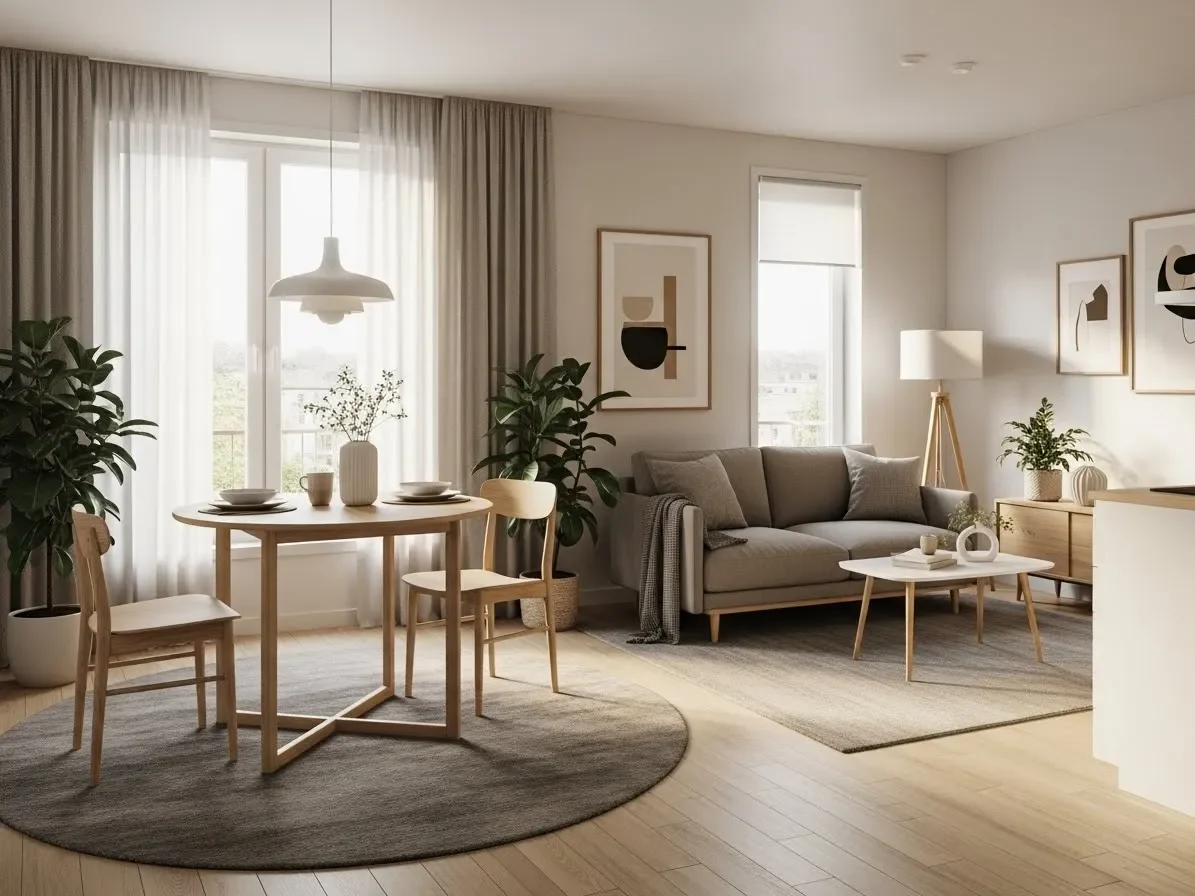
One of the simplest, most effective tricks for any open-layout combo is to give each “zone” its own foundation — and nothing does that better than a rug. A well-chosen rug under the dining table “anchors” the space. It visually separates the eating area from the lounging area, making the combo feel more organized and intentional.
Yes — putting a rug under a dining table might sound like a recipe for stains and spills. But with today’s low-pile, stain-resistant, indoor-outdoor rugs, many are easy to clean and surprisingly forgiving. The key is size: make sure the rug is large enough so that chairs remain on the rug even when pulled out. That way you’ll avoid that awkward “half-on, half-off” furniture look — and keep things safe and tidy.
Rather than defining spaces with walls (which you don’t want in a small layout), rugs do the job subtly but beautifully.
Multi-functional furniture — make every piece earn its keep
In small spaces, every item should pull double duty. Furniture that just “looks pretty” but doesn’t do more often becomes clutter. Instead, pick pieces that offer multiple functions:
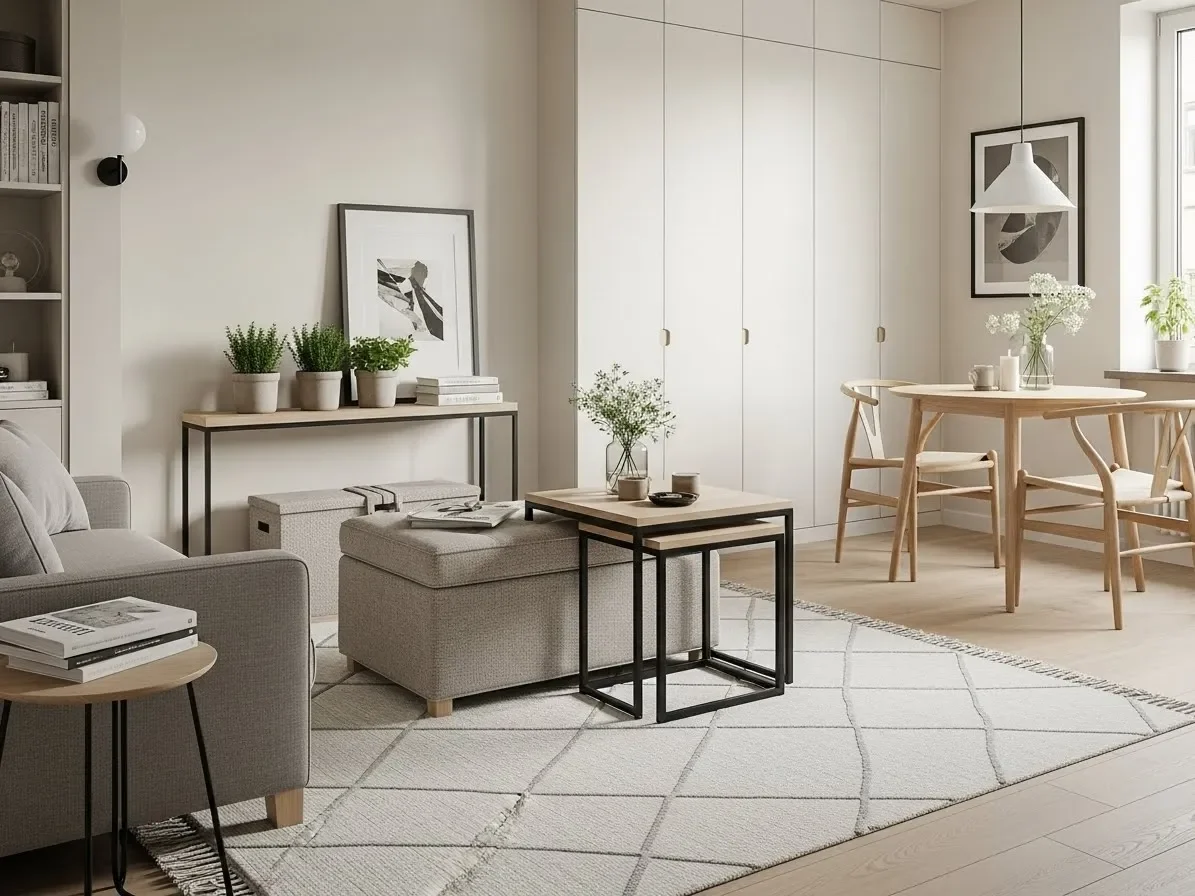
- Storage ottomans: they can be a seat, a footrest, and a hidden space for blankets, games, or anything you want tucked away.
- Nesting coffee/side tables: a larger coffee table that splits into smaller side tables gives flexibility when you need more surface area — or when you want to save floor space.
- Console table behind the sofa: that often-wasted space becomes a useful surface for lamps, decor, books, or hidden drawers for extra storage.
The golden rule? If a piece doesn’t have a purpose — don’t put it in. Prioritize practicality without compromising on style.
Light colors to brighten and enlarge the room
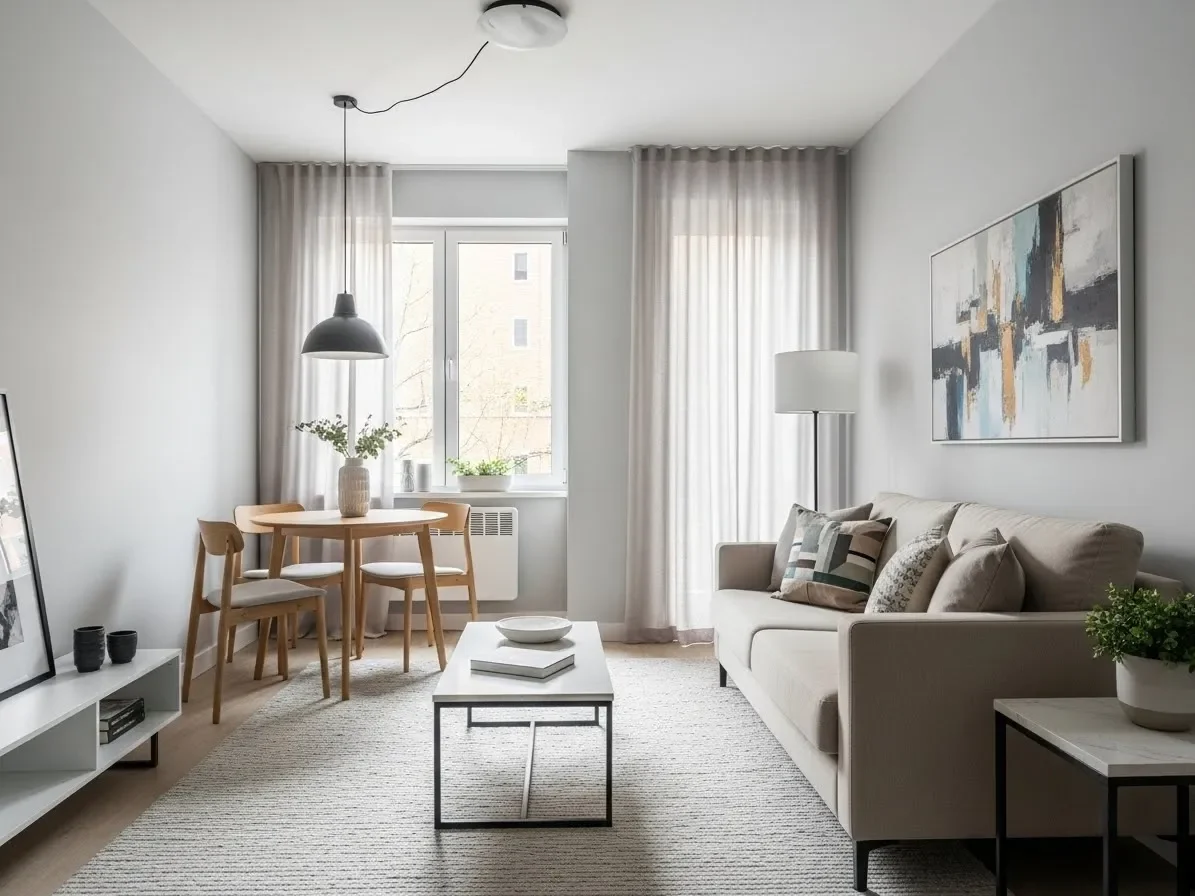
Dark paint and dramatic hues can feel cozy — but in a small combined space they tend to absorb light and make walls feel like they’re closing in. Instead: go for light, neutral colors. Think whites, light grays, soft beiges, pale blues or gentle greens.
These tones reflect natural light, making walls recede and rooms feel bigger, brighter, and more open. But that doesn’t mean your space has to feel bland. Use the neutrals as a backdrop — then bring in personality with accents: throw pillows, rugs, art, or colorful décor items. The result: a bright canvas that amplifies everything else in your room.
Floating shelves and wall storage — go vertical, not horizontal
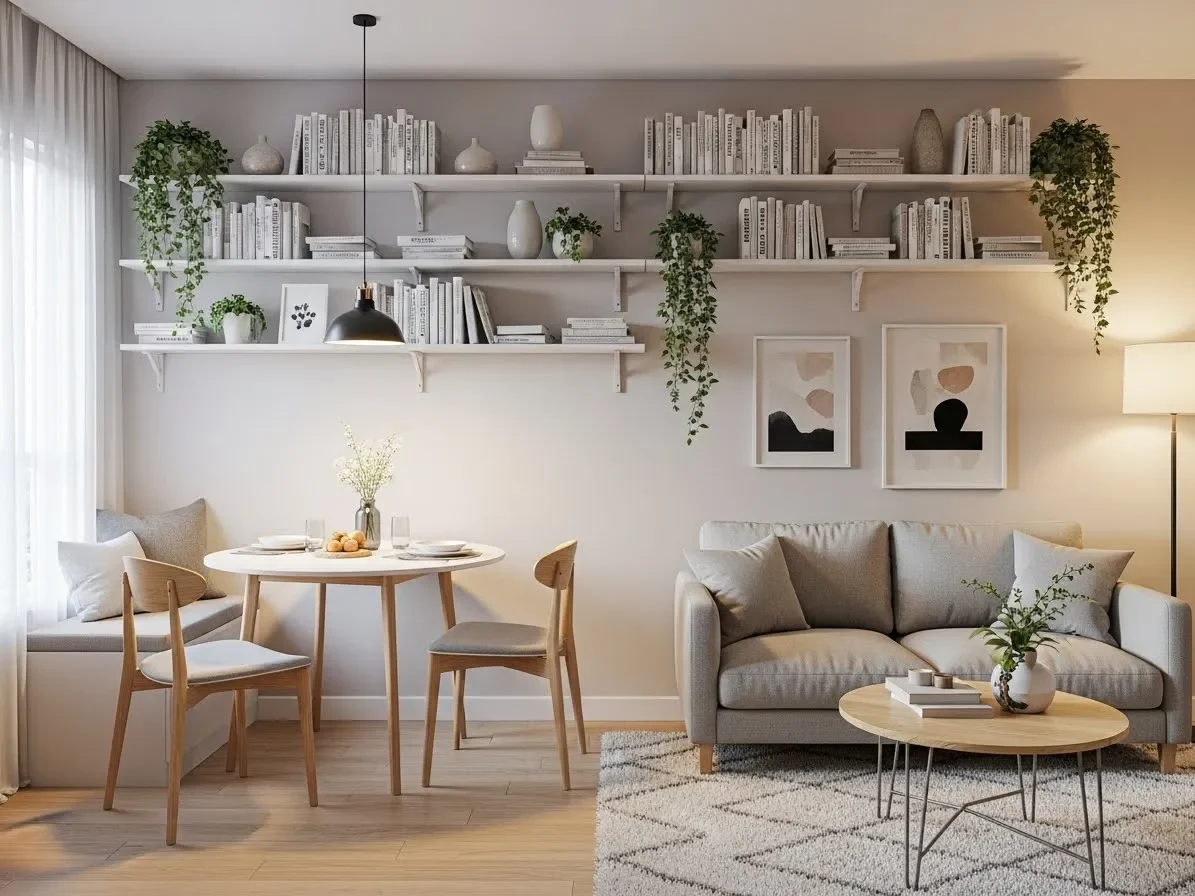
When floor space is limited, look up. Floating shelves mounted on walls give you valuable storage or display options without eating up precious square footage. In the dining area, use them for glassware or dishes. In the living zone, they’re great for books, plants, or photos.(https://www.apartmenttherapy.com/living-and-dining-room-together-small-spaces-268565)
Compared to bulky floor-to-ceiling furniture, floating shelves feel light and airy. The trick is to curate — don’t overfill them. Leave breathing space so the room continues to feel open.
Keep dining and living zones close — for flow and functionality
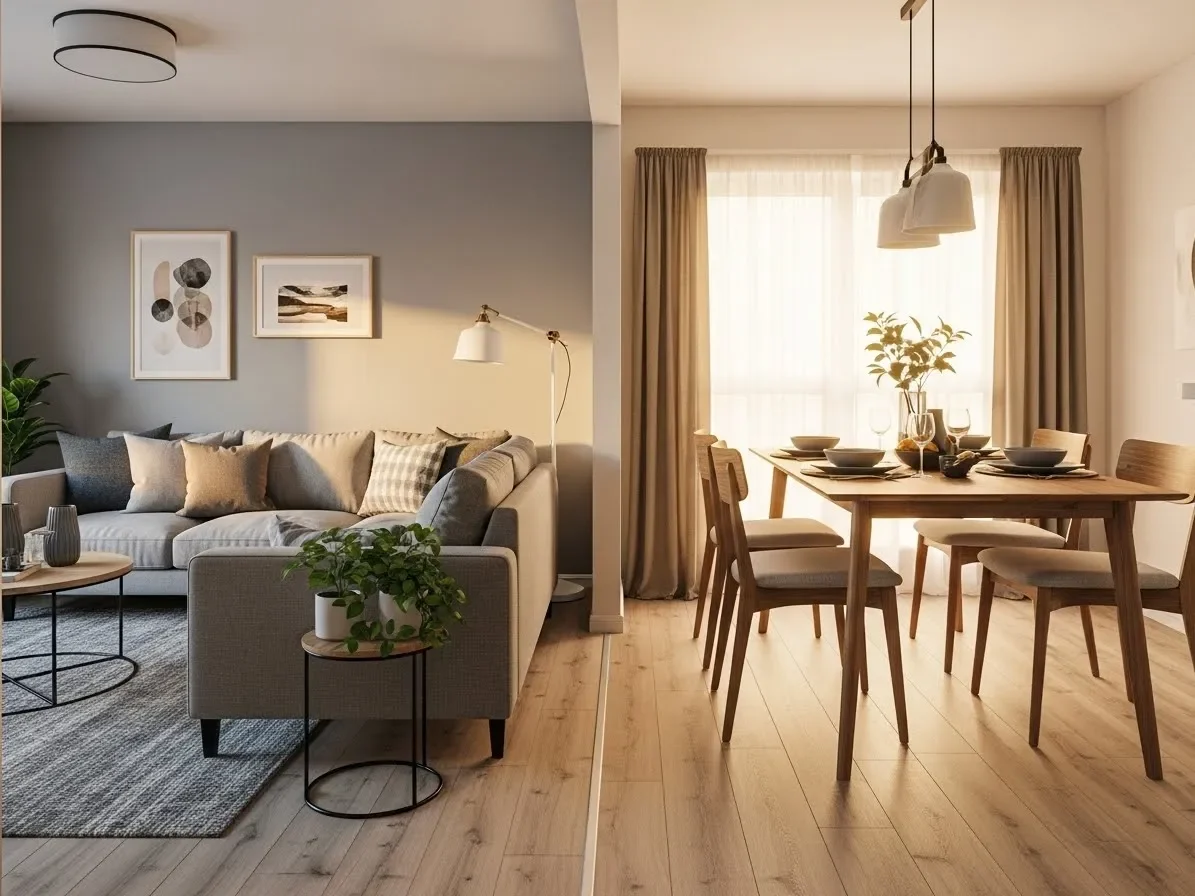
It might seem obvious, but how you place your living and dining zones relative to each other can make or break the room. Instead of tucking the dining table off in a far corner, it’s often better to place it near your sofa or main living area.
Why? Because it creates a natural flow: grabbing snacks from the kitchen, serving on the coffee table — it all feels smooth and intuitive. When zones are separated by distance, the room can feel disjointed, making the combo seem awkward. A close setup keeps things cohesive — both visually and socially.
When you’re arranging furniture, think of the natural paths people walk. Make sure there are no obstacles to interrupt those paths. Clear, intuitive circulation makes a small space feel larger than it is.
Use corners wisely — tuck a dining nook into overlooked space
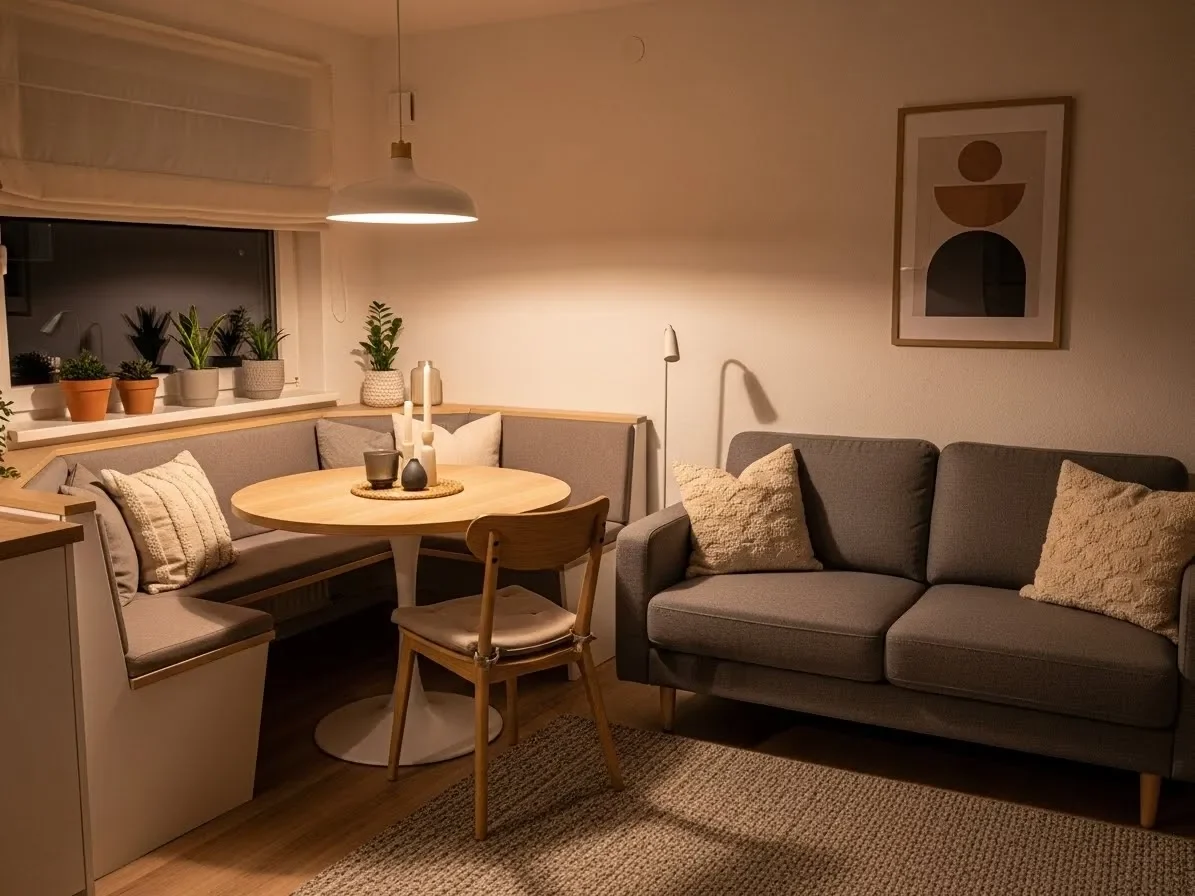
Corners are often wasted. But in a small combo room, they’re potential game-changers. Tucking a small dining table into a corner clears up the rest of the floor for your living area.
A round or small square table fits nicely into a 90° angle. For extra space-saving, consider a built-in bench or banquette seating — benches take up less space than full chairs, and they instantly give you a cozy, café-like feel.
Bonus: you don’t always even need a rug or divider to make a corner dining spot feel intentional — simply the placement gives it identity.
Wall-mounted lighting — free floor space and define zones
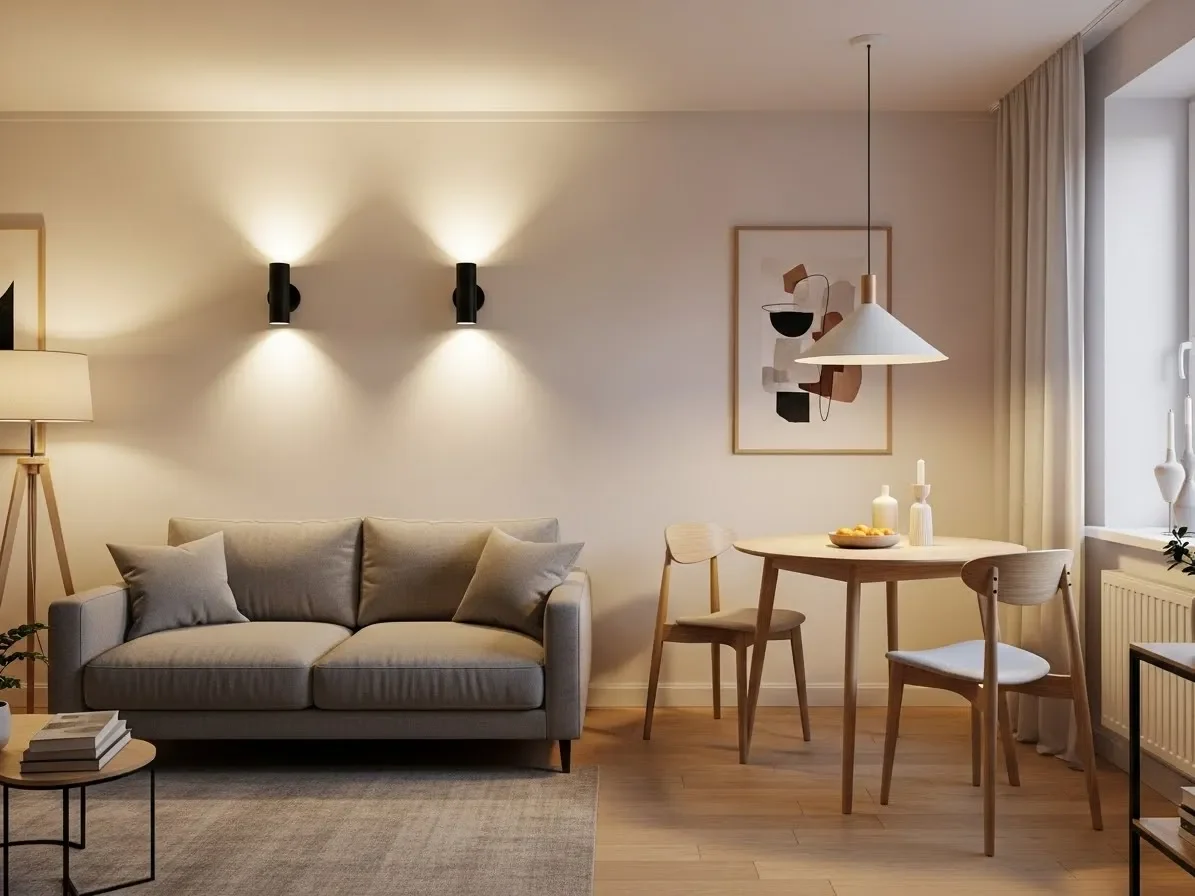
In small spaces, floor lamps and bulky lighting stand out — and not always in a good way. Instead, mount lighting on the walls or ceiling. Wall sconces near the sofa replace end tables and floor lamps; a pendant light or small chandelier over the dining table defines that zone without taking up floor real estate.
Looking up draws the eye upward — making ceilings feel taller and the room more spacious. It’s a subtle trick, but it adds a good dose of design finesse to small layouts.
Choose a round table — smoother flow & more intimacy
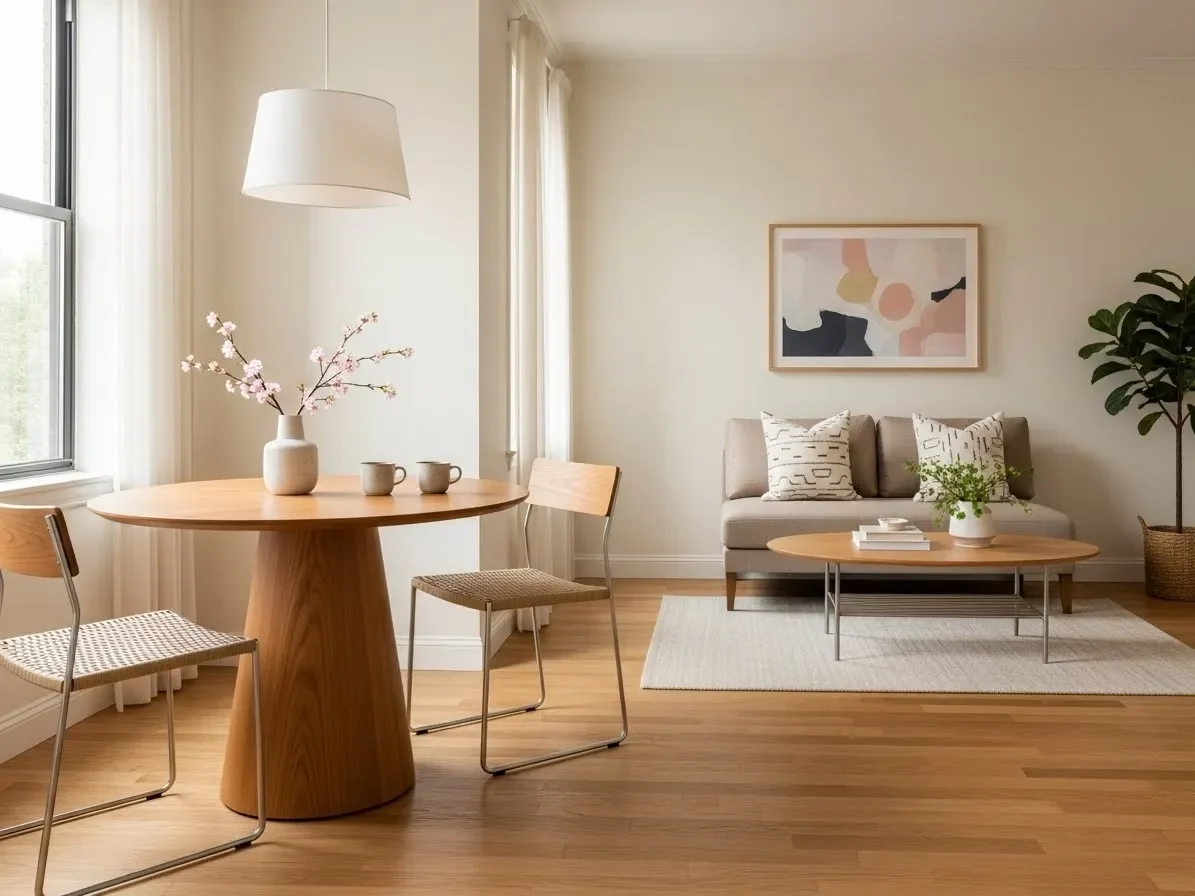
Rectangular dining tables are classic — but in a tight living-dining combo, a round table often works better. Without sharp corners, movement around the table is easier. It takes up less visual space and feels softer; plus, it encourages everyone to face each other, making conversations more intimate.
A round pedestal table — especially a small one — can often fit where a rectangular table wouldn’t. It’s a small change with a big impact.
Use mirrors to reflect light and create depth
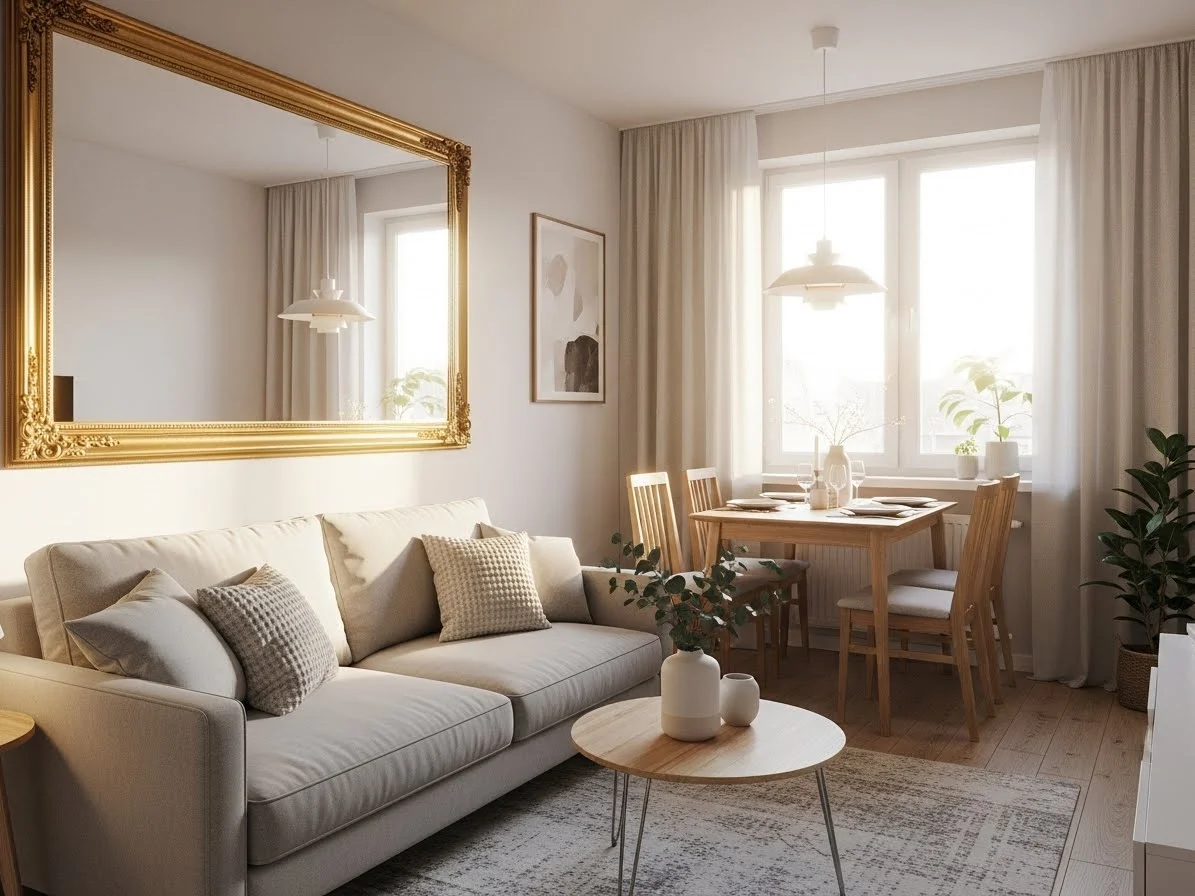
Want to make a small room feel bigger — without knocking down walls? Mirrors are your best friend. Hang a large statement mirror opposite a window (or near a light source). It will bounce natural light around the room, instantly brightening it and visually doubling its depth.
A mirror does more than that — with a nice frame, it becomes décor, too. Think of it as art that also expands your space. A large mirror has far more impact than a bunch of small ones; don’t be shy about going big.
Use transparent or glass furniture — less visual weight, more openness
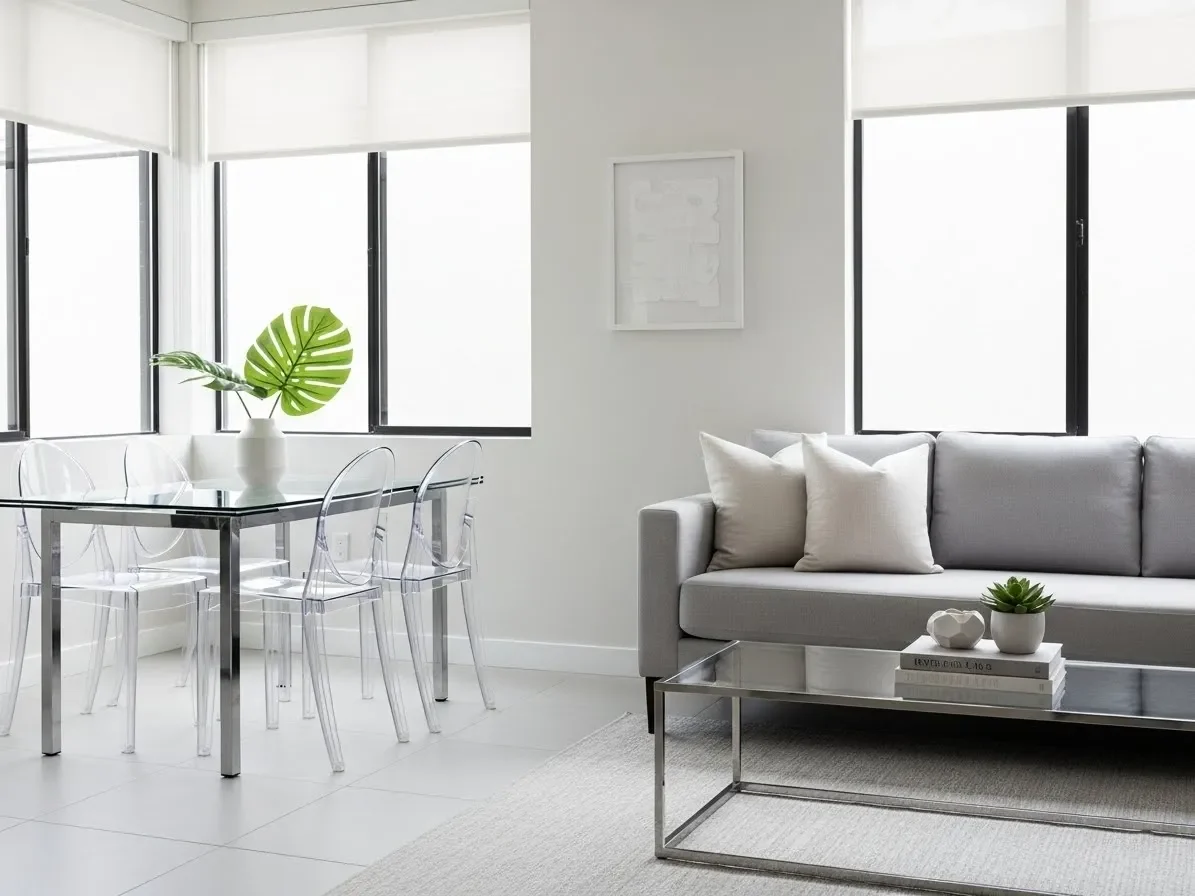
Solid heavy furniture can make a small room feel crowded. Instead, go for transparent or see-through pieces. Glass coffee tables, acrylic chairs, or a glass-top dining table — these let your eye pass right through them.
Visually, they “disappear” into the room, leaving open sightlines which help the space feel airier and less cluttered. They’re a modern, sleek way to keep functionality while preserving openness.
Go vertical with tall furniture — make the room feel taller
Another often-overlooked strategy: go vertical. Use tall, slim furniture pieces (bookcases, narrow cabinets, vertical shelving) to draw the eye upward and use vertical space wisely. It’s a subtle way to create “zones” without walls.
These pieces can act as gentle dividers between your living and dining zones — offering storage or display space while preserving openness. Just ensure they are proportionate to the room; bulky or wide vertical furniture defeats the purpose and can make things feel cramped.

Maximize natural light — let the sunshine in
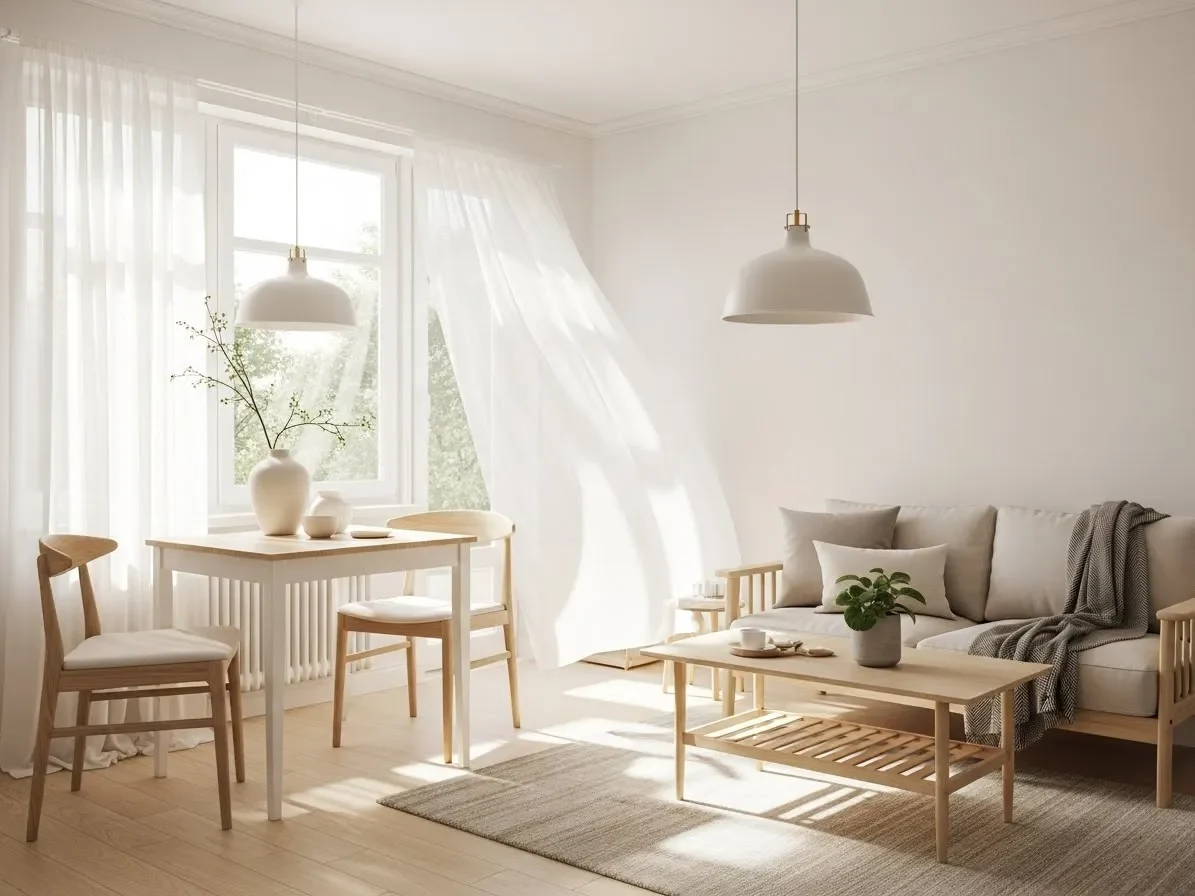
Lighting (natural & artificial) has a huge impact on how spacious a small room feels. Wherever possible, place your dining table or main seating near windows to soak up natural light. Heavy dark curtains? Replace them with light-filtering sheer curtains or minimalist roller shades.
Letting in daylight not only brightens the space, it expands it — psychologically and visually. Paired with light-colored walls and furniture, sheer curtains help blur boundaries and make a small room feel much larger and more inviting.
Mix textures — add depth and warmth
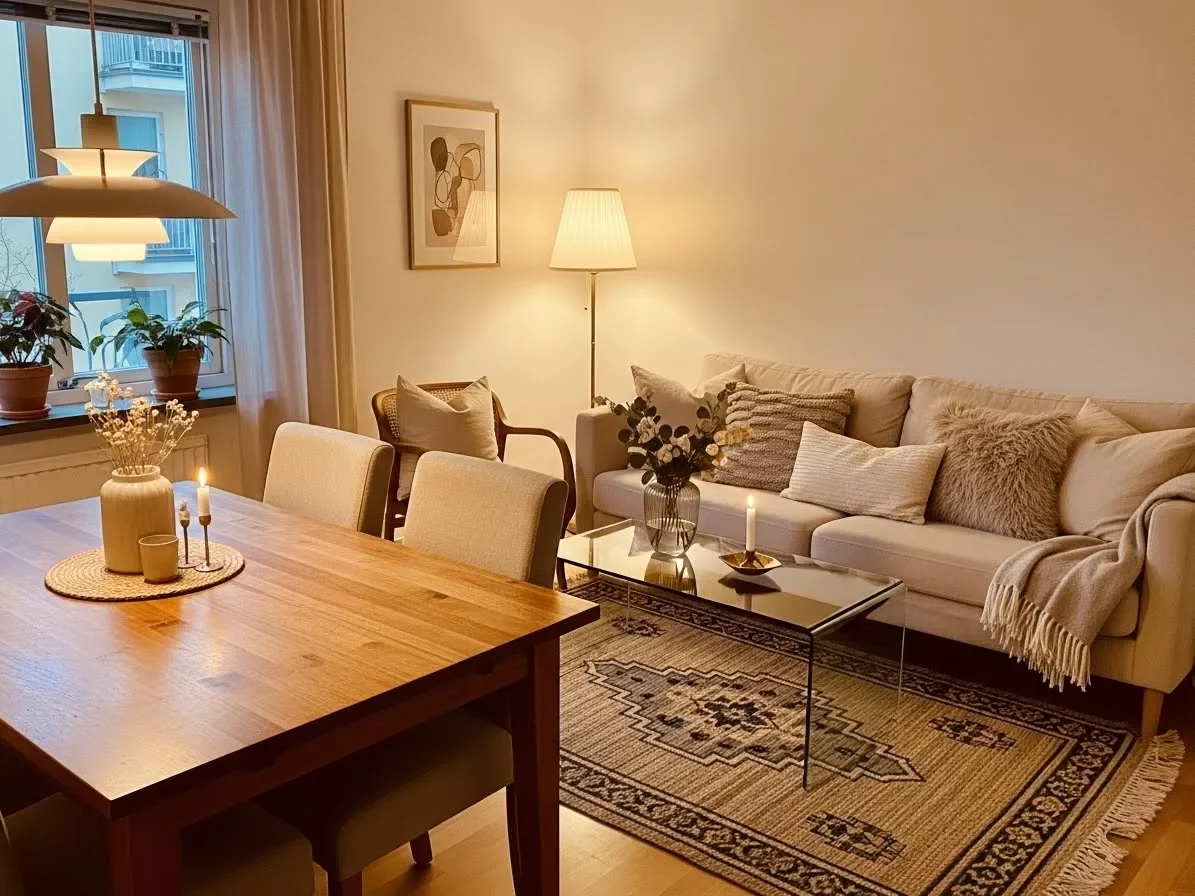
In a small room, a monotonous palette can feel flat. Contrast that by mixing textures: soft rugs, smooth glass tables, wooden furniture, woven throws or cushions, metal lighting fixtures. Textures add depth, warmth, and character — making a small living-dining combo feel cozy and layered rather than sterile.
The trick: balance. Too many competing textures can feel chaotic. So pick a few complementary textures and spread them thoughtfully across both zones.
Keep furniture low to the ground — open up vertical space
Low-profile furniture — like low sofas, short coffee tables, slim chairs — helps open up vertical space, making rooms feel taller and airier. Bulky bulky furniture can “eat” the room and make it feel heavy and cramped.
When your furniture sits low, your eyes can move freely up the walls — creating an illusion of height and openness. It’s a subtle but powerful way to make a small living-dining combo breathe.

Bringing It All Together
Combining living room and dining room in a small space doesn’t have to mean compromising style or comfort. By using rugs, multi-functional furniture, clever layout tricks, vertical storage, smart lighting, and thoughtful textures — you can transform a cramped rectangle into a harmonious, stylish, and functional home.
Whether you’re sipping morning coffee by a window or hosting dinner with friends, your small living-dining combo can be both beautiful and practical. The key is intention: treat every piece, every corner, every lighting choice as part of a bigger plan.
So go ahead — embrace the challenge. Get creative, plan smart, and make the most of every inch. Your small space has huge potential.
Final Thoughts
Making a small living and dining combo look good — and feel good — is all about being intentional. Use rugs, clever furniture, smart lighting, and light colors. Think vertical, not just horizontal. Let natural light do its magic. And don’t be afraid to mix textures and materials for a cozy, layered vibe.
With these ideas, your small space can become a stylish, functional haven — perfect for relaxing, dining, entertaining, or just chilling with a good book.
Explore More Ideas
Check out our other articles on HomefulSpell for more inspiration and dynamic spaces!