15 Wabi-Sabi Bedroom Ideas for a Peaceful, Minimal Look
By fari | Interior Design Enthusiast & Decor Expert
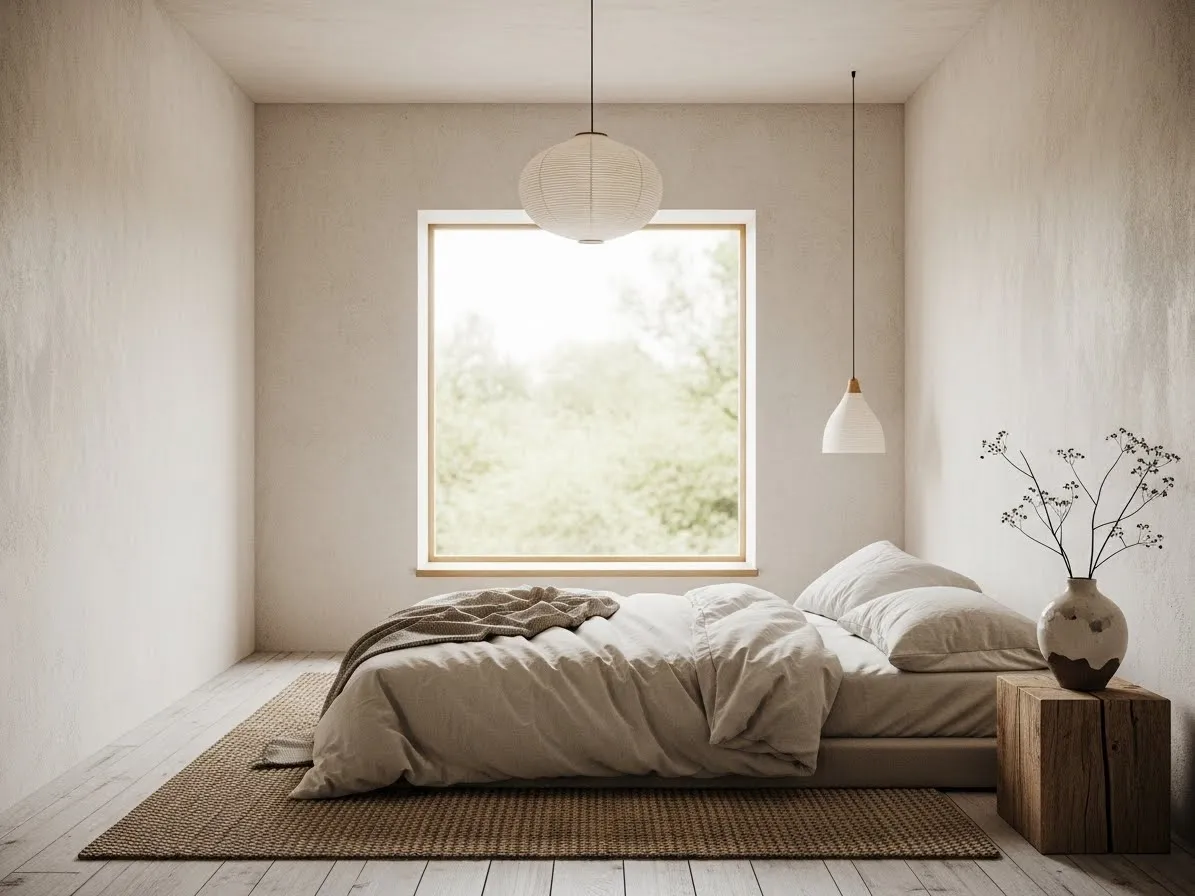
If your bedroom has started to feel “too busy,” too bright, or simply not restful, Wabi-Sabi may be the calm reset you’ve been craving. A Wabi-Sabi bedroom isn’t about perfect styling or trendy decor. It’s about creating a space that feels warm, quiet, and deeply grounding — the kind of room that helps your body relax and your mind slow down. This style is inspired by the Japanese philosophy of finding beauty in imperfection, natural materials, and the gentle passage of time.
Wabi-Sabi bedrooms often look simple, but they never feel cold. They feel soft, lived-in, and honest. You’ll see textured linens, natural woods, handmade pottery, muted colors, and a sense of “less, but better.” The goal is not to impress — it’s to rest. Below are 15 Wabi-Sabi bedroom ideas that help you build a peaceful retreat with warmth, texture, and timeless calm.
Contents
- 1 Key Takeaways
- 2 What Is a Wabi-Sabi Bedroom Style?
- 3 How Do You Create a Wabi-Sabi Bedroom?
- 4 1. Soft, Earthy Wall Colors
- 5 2. Natural Wood Bed Frames
- 6 3. Linen Bedding with Relaxed Texture
- 7 4. Low, Grounded Furniture
- 8 5. Handmade Ceramics and Clay Decor
- 9 6. Warm, Soft Lighting
- 10 7. Minimal Decor with Meaning
- 11 8. Natural Textiles and Grounding Rugs
- 12 9. Aged, Patina, or Timeworn Finishes
- 13 10. Organic Shapes and Soft Edges
- 14 11. A Calm, Layered Neutral Palette
- 15 12. Light, Breathable Curtains
- 16 13. Simple Nightstands with Practical Styling
- 17 14. Natural Elements from Outdoors
- 18 15. Space to Breathe
- 19 FAQs
- 20 Conclusion
- 21 Explore More Ideas
Key Takeaways
- Wabi-Sabi celebrates imperfection, simplicity, and natural beauty
- Warm, muted colors create a calm bedroom without feeling flat
- Natural materials (wood, linen, clay, stone) are the heart of the look
- Gentle lighting matters as much as decor
- Empty space is intentional — it helps the room feel peaceful
- The best Wabi-Sabi bedrooms feel collected, not decorated
What Is a Wabi-Sabi Bedroom Style?
A Wabi-Sabi bedroom style is rooted in the idea that beauty doesn’t need to be polished. It values natural textures, quiet details, and the warmth that comes from age and authenticity. In a Wabi-Sabi room, you might notice a slightly uneven handmade vase, softly wrinkled linen bedding, or a wood finish that shows grain and character. Instead of hiding imperfections, Wabi-Sabi design welcomes them.
This style is ideal for bedrooms because it encourages rest. It removes visual noise and replaces it with softness, warmth, and calm. Think of it as “peaceful minimalism” — but with more soul, more texture, and more comfort.
How Do You Create a Wabi-Sabi Bedroom?
Start by simplifying. Wabi-Sabi isn’t about buying a lot of new items; it’s about choosing fewer, better pieces. Begin with a warm neutral palette, then layer natural textures: linen, wool, wood, clay, and stone. Keep decor meaningful and functional. Finally, soften the mood with warm lighting and breathable fabrics.
A helpful approach is this:
Calm base → warm textures → handmade touches → gentle lighting → space to breathe.
1. Soft, Earthy Wall Colors
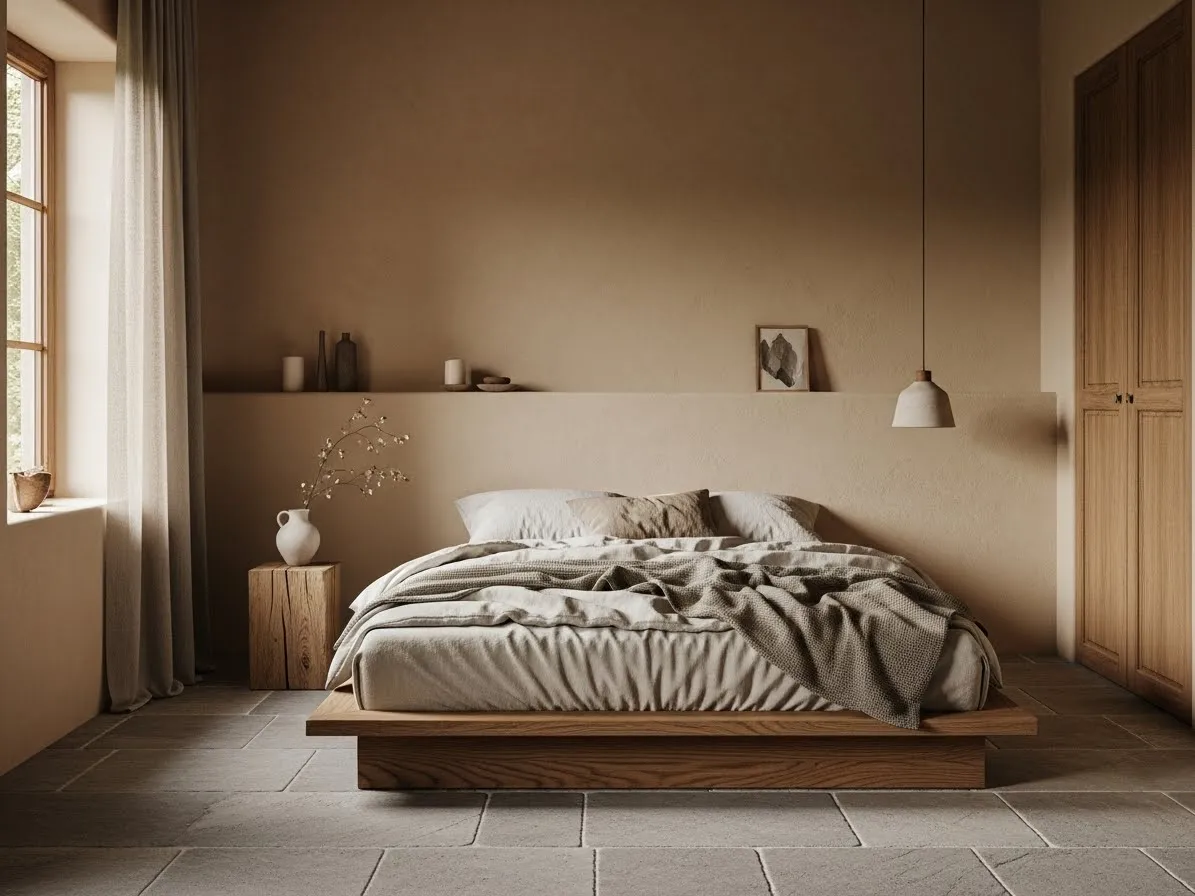
Choose wall colors that feel like nature: warm beige, soft taupe, clay, muted sand, or gentle greige. These tones create a calm atmosphere without feeling sterile. If you’re used to stark white walls, you’ll be surprised how much warmer the room feels with even a slightly creamy neutral.
Quick tips:
- Matte paint finishes look softer and more natural
- If painting feels like a lot, start with one warm accent wall
- Earthy walls make linen and wood tones look richer
2. Natural Wood Bed Frames
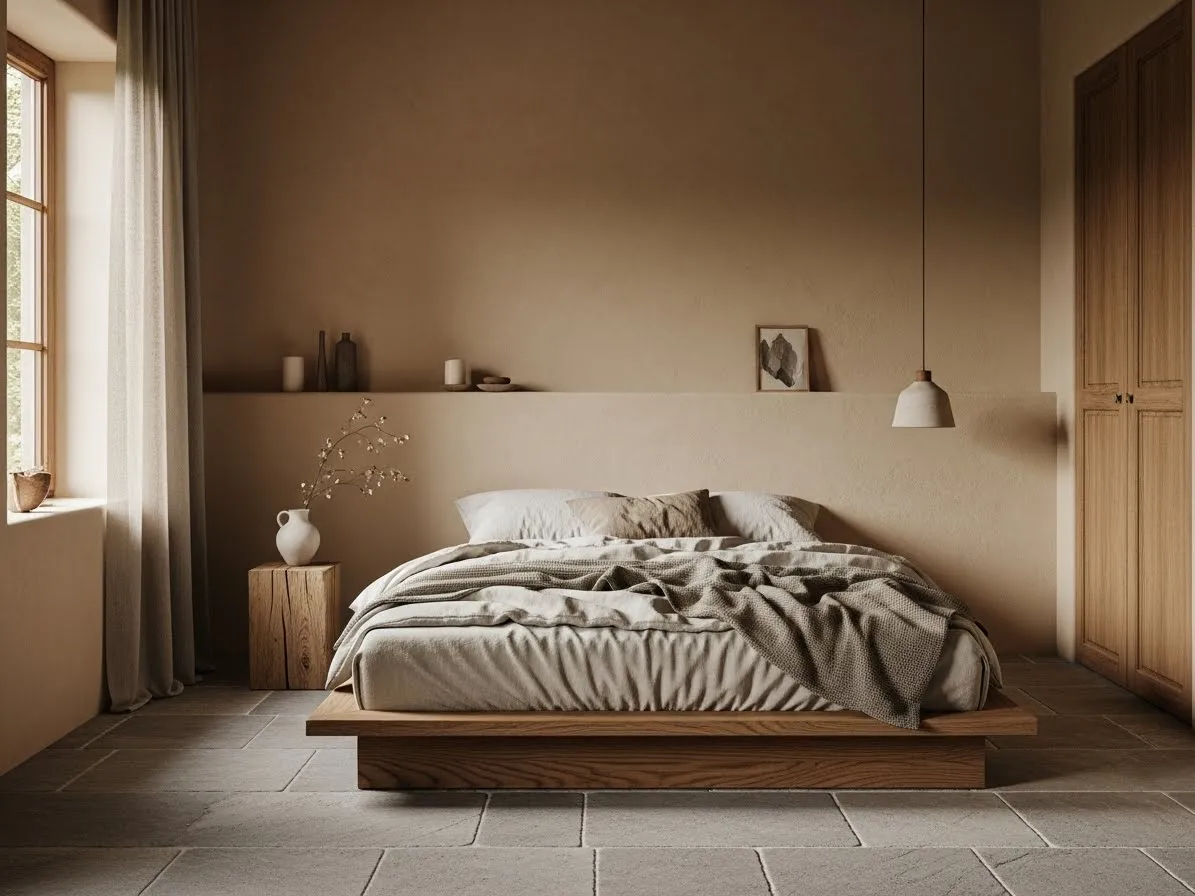
A simple wood bed frame instantly grounds a Wabi-Sabi bedroom. Look for wood grain, natural variation, and finishes that aren’t too glossy. The bed becomes the anchor of the space, and wood adds warmth that makes neutrals feel cozy instead of plain.
Quick tips:
- Lighter woods feel airy; darker woods feel richer and moodier
- Avoid overly shiny finishes that look too modern
- A low wooden platform bed fits the Wabi-Sabi look beautifully
3. Linen Bedding with Relaxed Texture
Linen is one of the easiest ways to bring Wabi-Sabi into a bedroom. It’s breathable, soft, and naturally textured — and it looks better slightly wrinkled. Choose warm neutrals like cream, oatmeal, stone, or soft gray, then layer for a cozy, calm look.
Quick tips:
- Mix tones (cream sheets + taupe duvet) for depth
- Add one textured throw at the foot of the bed
- Keep patterns minimal or very subtle
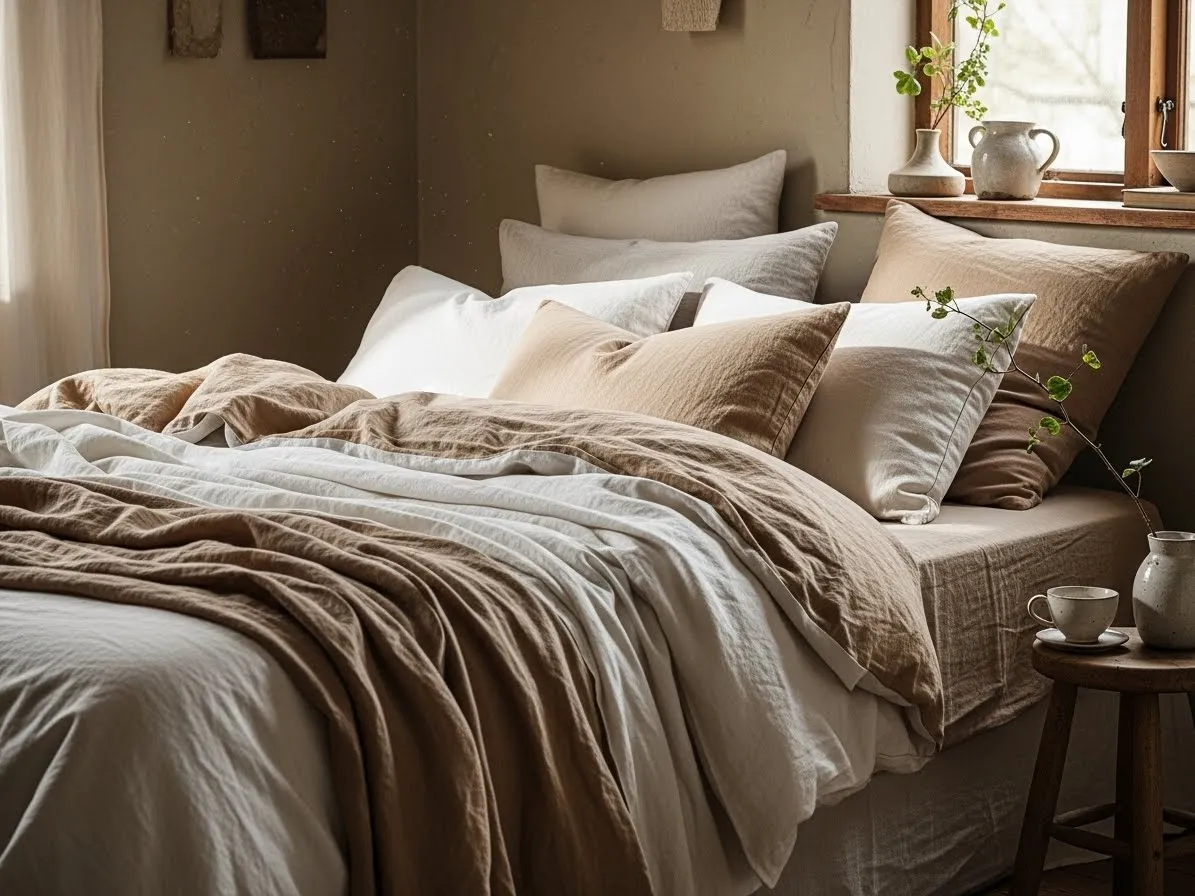
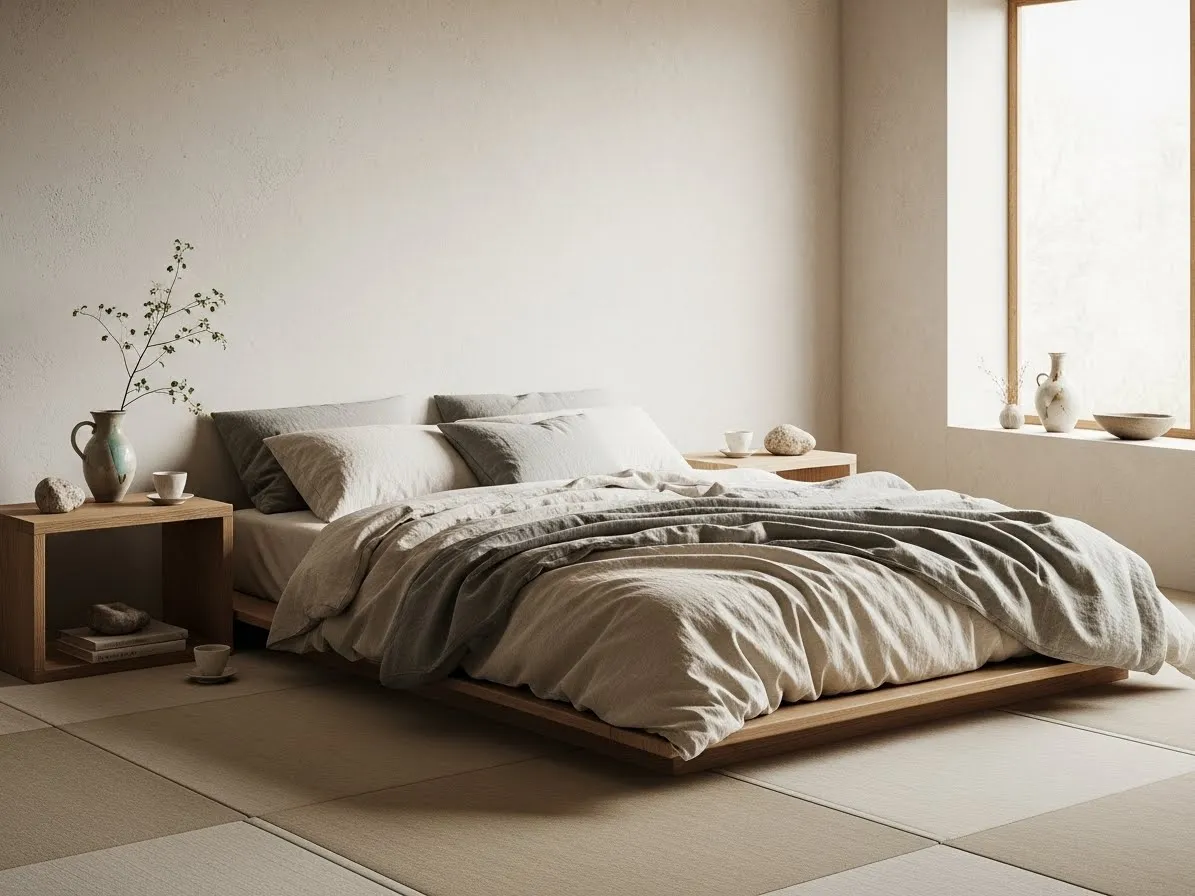
4. Low, Grounded Furniture
Wabi-Sabi bedrooms feel peaceful because the furniture sits low and relaxed. Low nightstands, platform beds, and simple benches create a grounded feeling that’s calming. This also makes the room feel larger and less visually crowded.
Quick tips:
- A simple stool can replace a bulky nightstand
- A low bench adds function without heaviness
- Keep silhouettes clean and uncomplicated
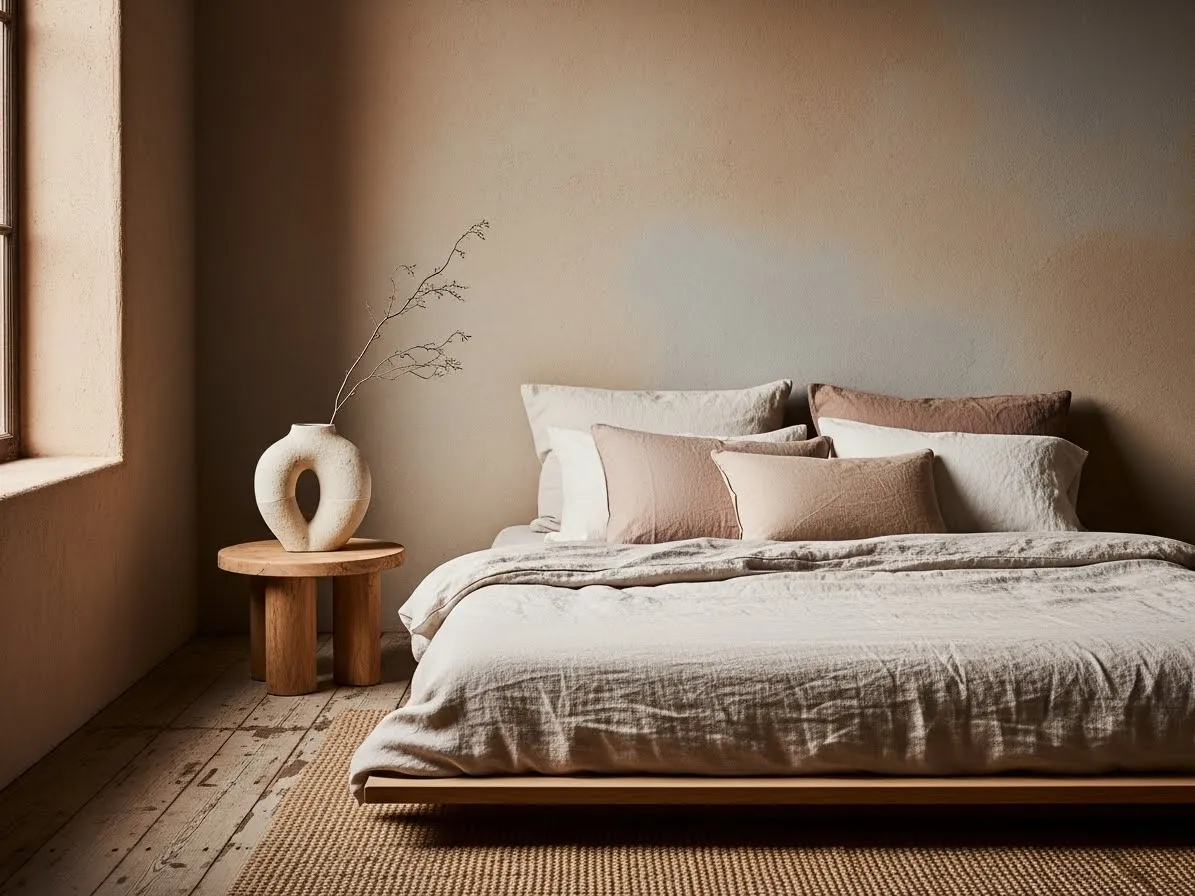
5. Handmade Ceramics and Clay Decor
Handmade pottery is a perfect match for Wabi-Sabi because it highlights imperfect beauty. A slightly uneven rim or textured glaze adds warmth and personality. Ceramic vases, bowls, or lamps create a quiet, natural focal point without shouting for attention.
Quick tips:
- Choose matte, earthy glazes (sand, stone, charcoal, clay)
- Use one larger ceramic piece instead of many small ones
- Handmade items instantly make the room feel more “real”
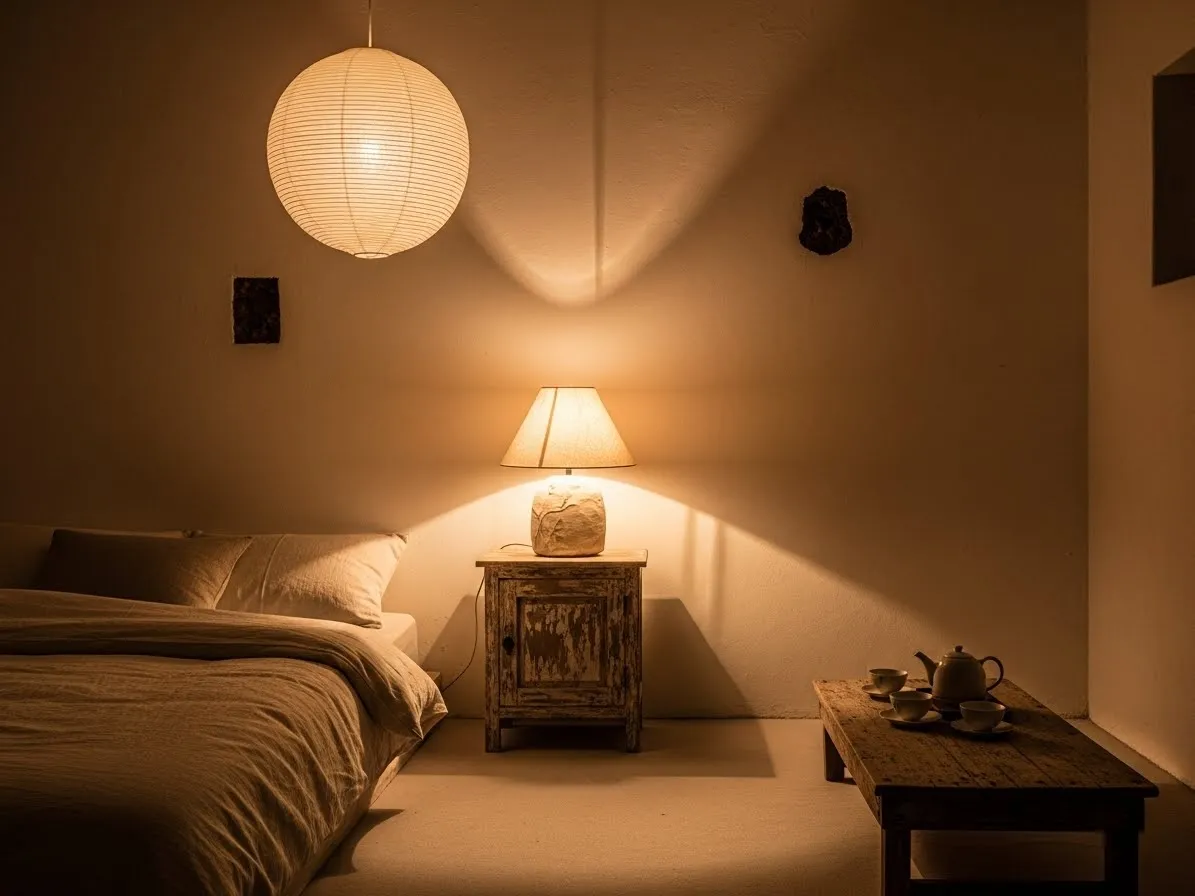
6. Warm, Soft Lighting
Lighting sets the emotional tone of the room. Wabi-Sabi bedrooms avoid harsh overhead lighting and instead rely on warm, gentle sources like bedside lamps, paper lanterns, and soft sconces. Warm light brings out natural textures and makes the room feel calm at night.
Quick tips:
- Use warm bulbs (avoid bright, cool white)
- Add a second light source for layered softness
- Fabric shades or paper lanterns look especially serene
7. Minimal Decor with Meaning
Wabi-Sabi is not about empty rooms — it’s about meaningful rooms. Keep decor minimal, but intentional. Instead of filling surfaces with trends, choose pieces you actually love: a worn book, a small bowl for jewelry, a framed sketch, or one calming candle.
Quick tips:
- One meaningful object is stronger than five random ones
- Choose decor with texture, not shine
- Leave space around decor so it feels peaceful
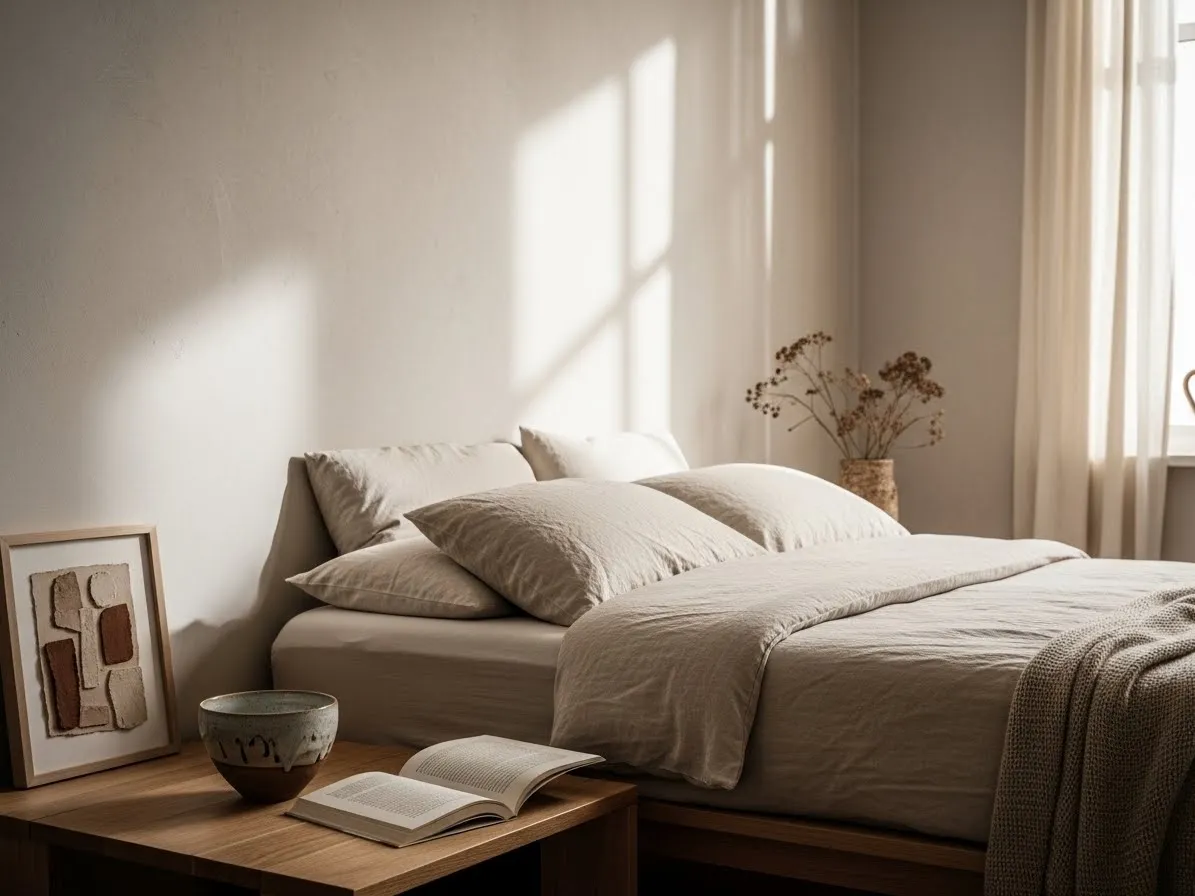
8. Natural Textiles and Grounding Rugs
Textiles add comfort and warmth without adding clutter. Think wool throws, cotton blankets, and jute or wool rugs. Natural materials feel calming underfoot and help your bedroom feel cozy even with a simple color palette.
Quick tips:
- A neutral rug adds softness and quiet structure
- Texture matters more than pattern in Wabi-Sabi
- Slight irregularity in weave looks authentic
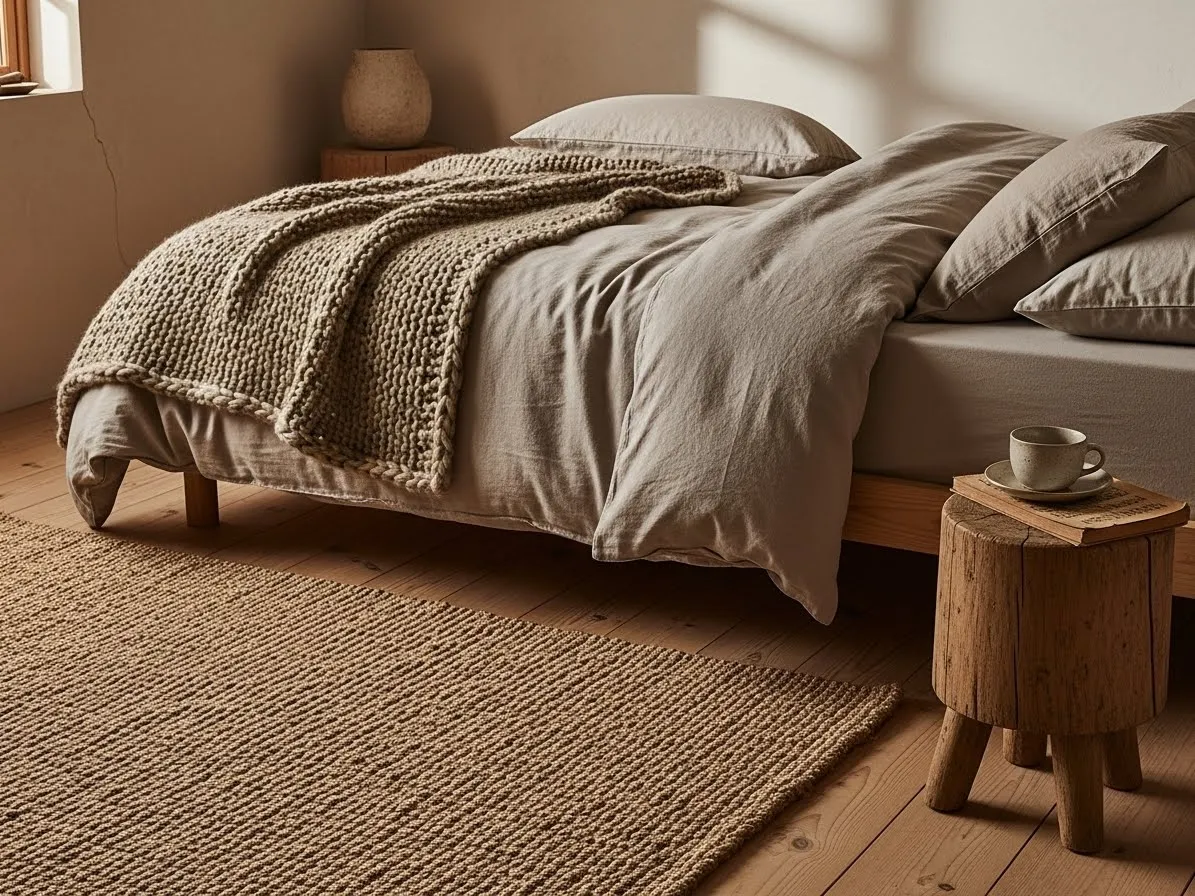
9. Aged, Patina, or Timeworn Finishes
Wabi-Sabi appreciates the beauty of time. Furniture with patina, slightly worn edges, or vintage character feels perfect here. You don’t need brand-new pieces to create a Wabi-Sabi bedroom — in fact, older items often fit better.
Quick tips:
- Look for vintage wood tones and softened finishes
- Don’t fear small marks or imperfections
- Choose items that feel “lived with,” not showroom perfect
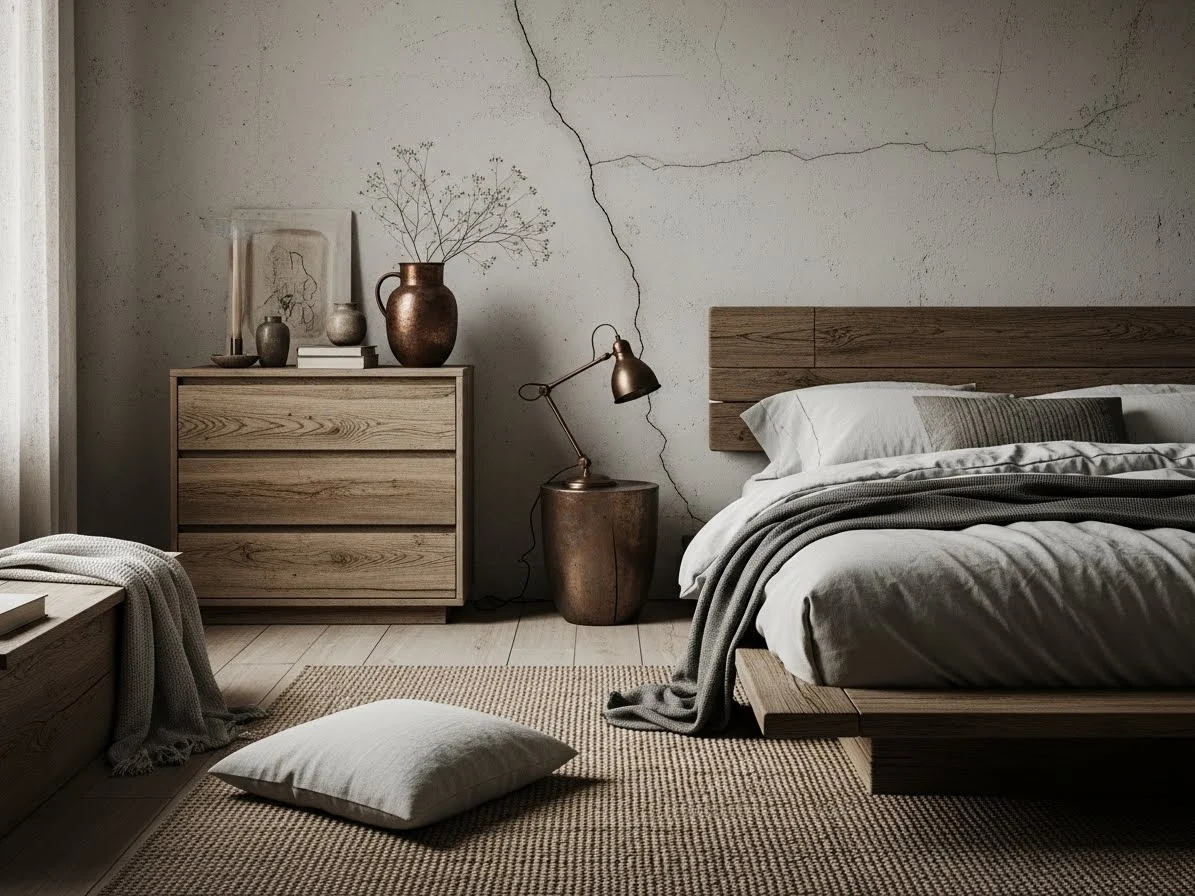
10. Organic Shapes and Soft Edges
Nature doesn’t make perfect straight lines, and Wabi-Sabi decor often reflects that. Rounded shapes and soft edges make the room feel gentler. Curved mirrors, rounded lamps, and softly shaped ceramics help balance the simplicity of the space.
Quick tips:
- Add one rounded element to soften the room
- Curved shapes pair beautifully with textured linens
- Avoid too many sharp, glossy modern forms
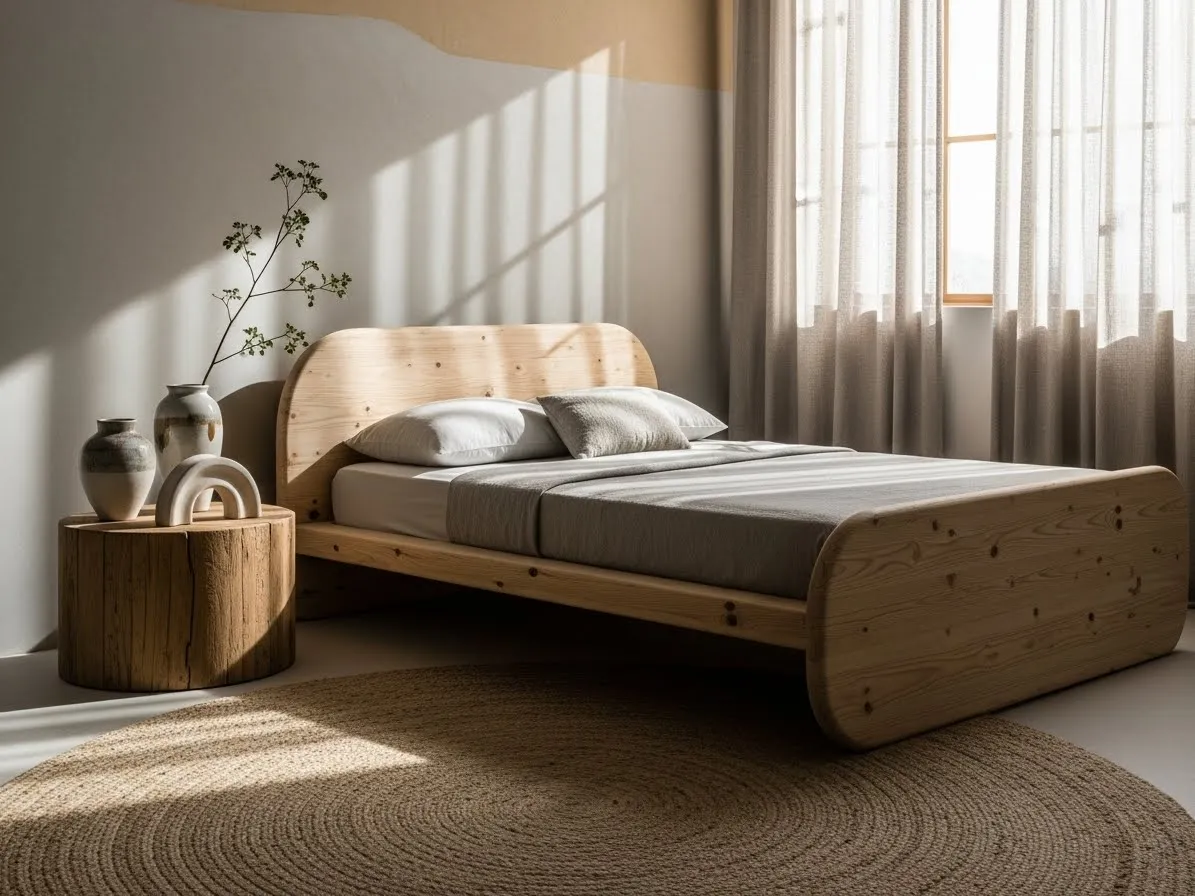
11. A Calm, Layered Neutral Palette
Wabi-Sabi rooms don’t rely on bold colors — they rely on layered neutrals. Instead of one flat beige, layer different tones: cream, sand, mushroom, warm gray, and soft brown. This creates depth without visual noise.
Quick tips:
- Repeat the same tone 2–3 times in the room
- Mix warm and slightly cool neutrals for balance
- Let texture do the “decorating”
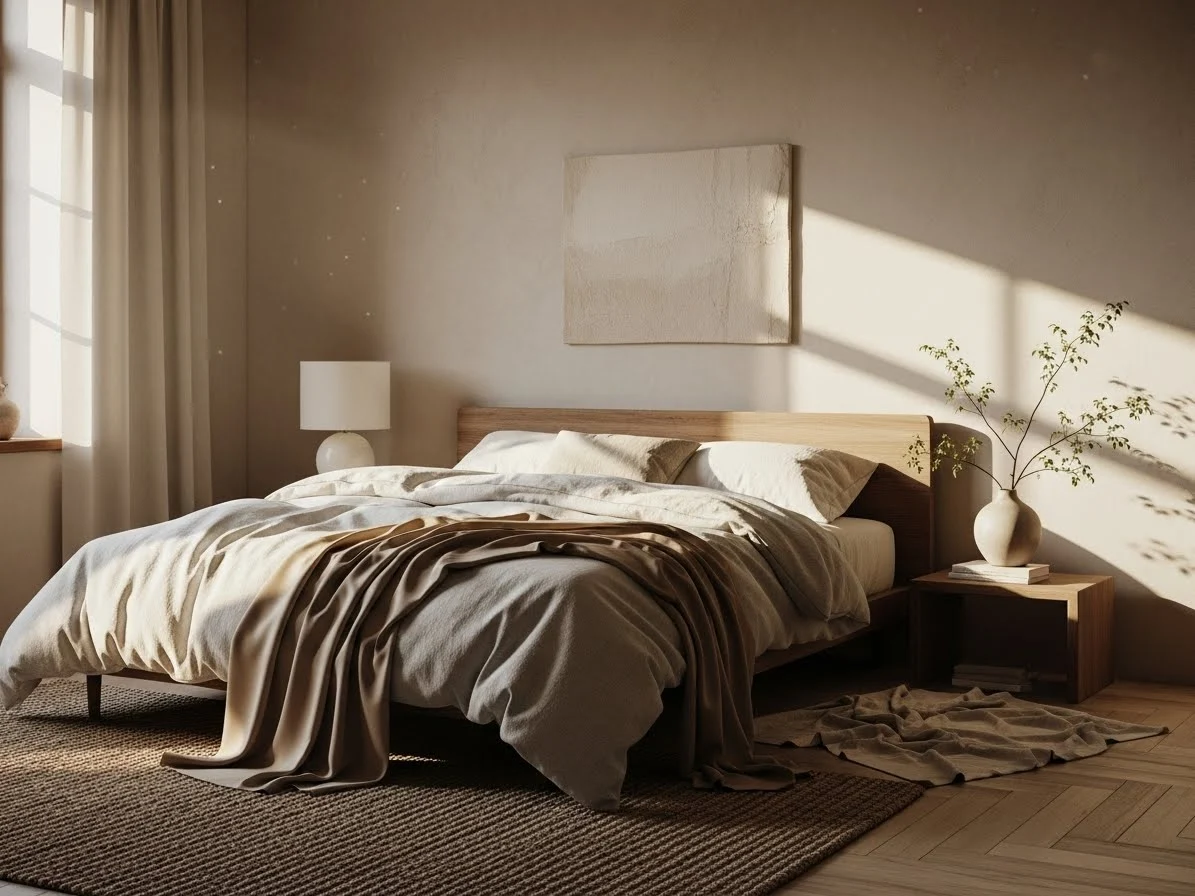
12. Light, Breathable Curtains
Curtains should feel soft and natural, not stiff or heavy. Linen or cotton curtains allow light to filter in gently, creating a calm glow in the morning. This makes the bedroom feel airy, peaceful, and warm.
Quick tips:
- Choose neutral curtains close to wall color for calm continuity
- Floor-length curtains make the room feel softer
- Avoid shiny fabrics that feel too formal
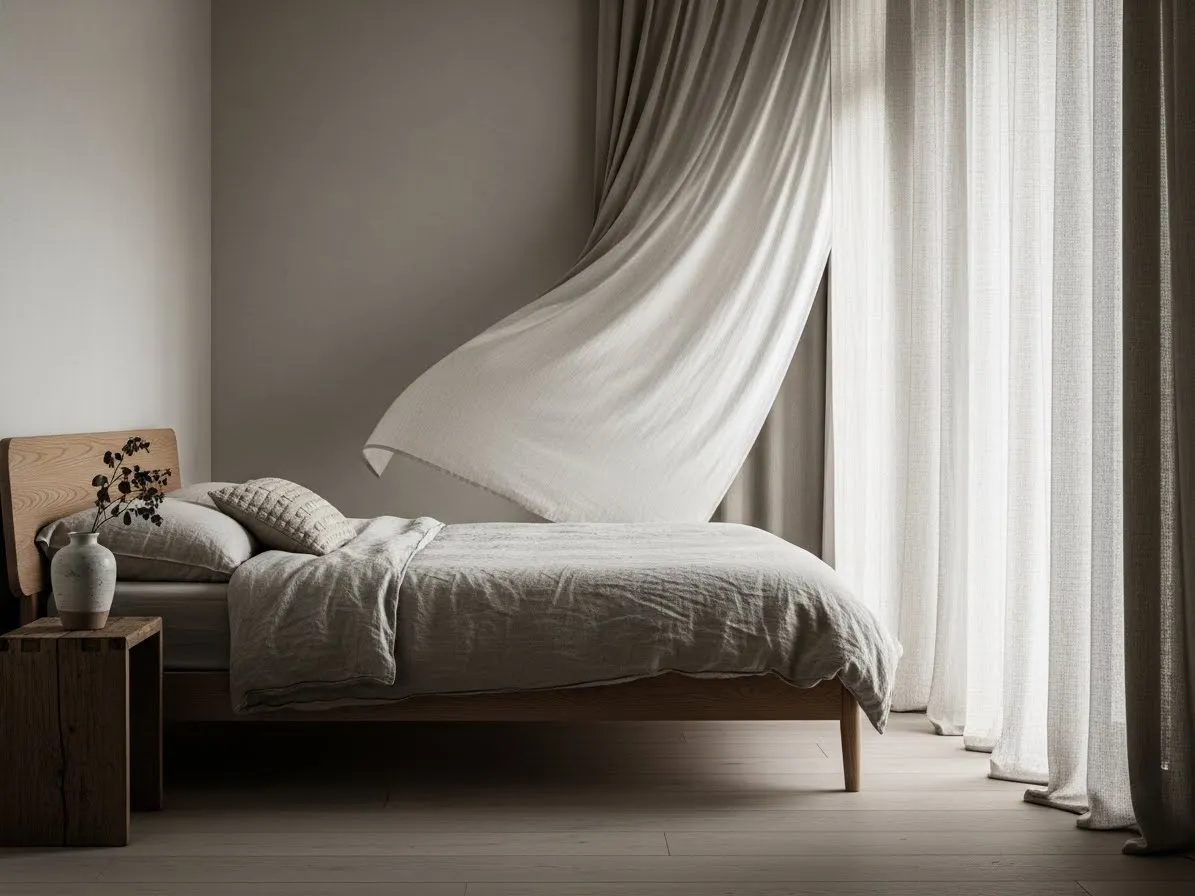
13. Simple Nightstands with Practical Styling
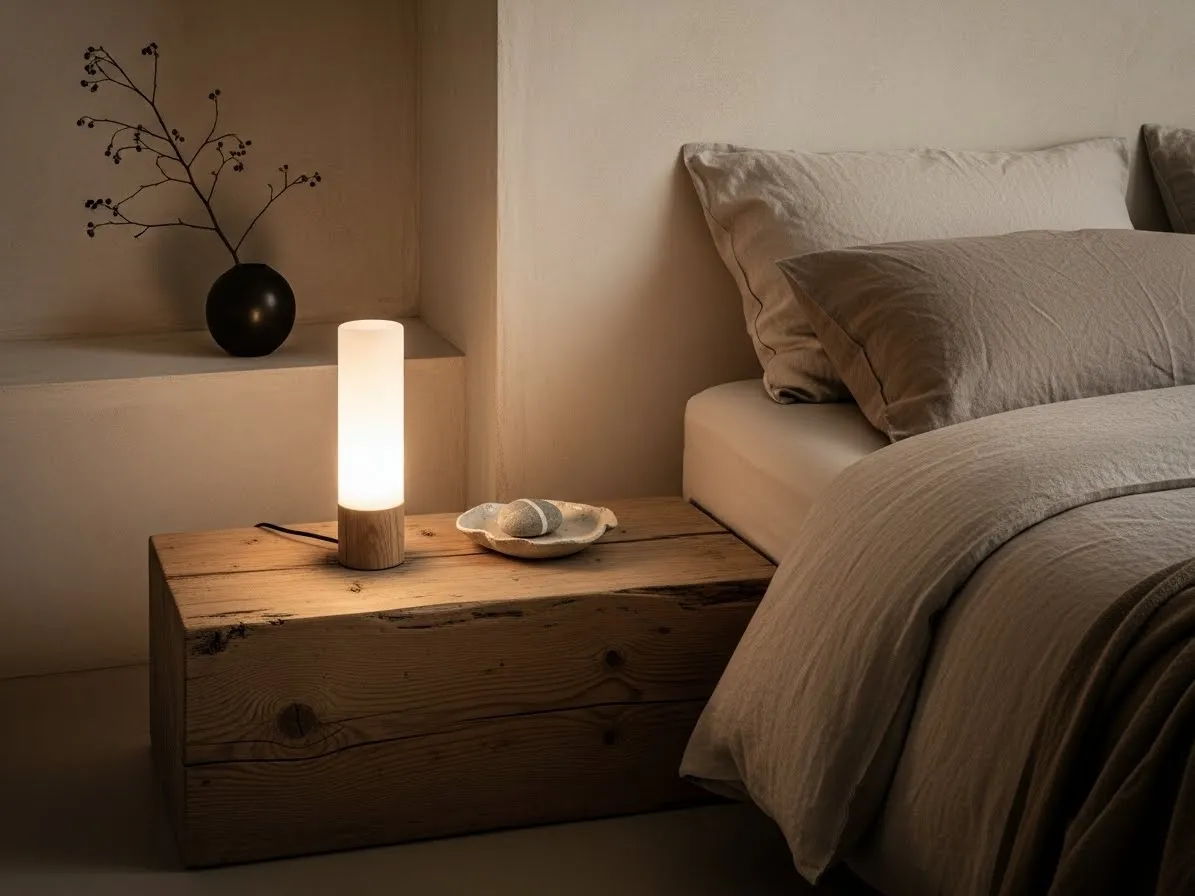
Wabi-Sabi styling is practical and minimal. Nightstands should be simple and functional — a small wood table, stool, or floating shelf works well. Keep the top calm: a lamp, a book, and one small item.
Quick tips:
- Use a small tray to keep essentials tidy
- Avoid overcrowding nightstands
- Choose one ceramic dish for rings or small items
14. Natural Elements from Outdoors
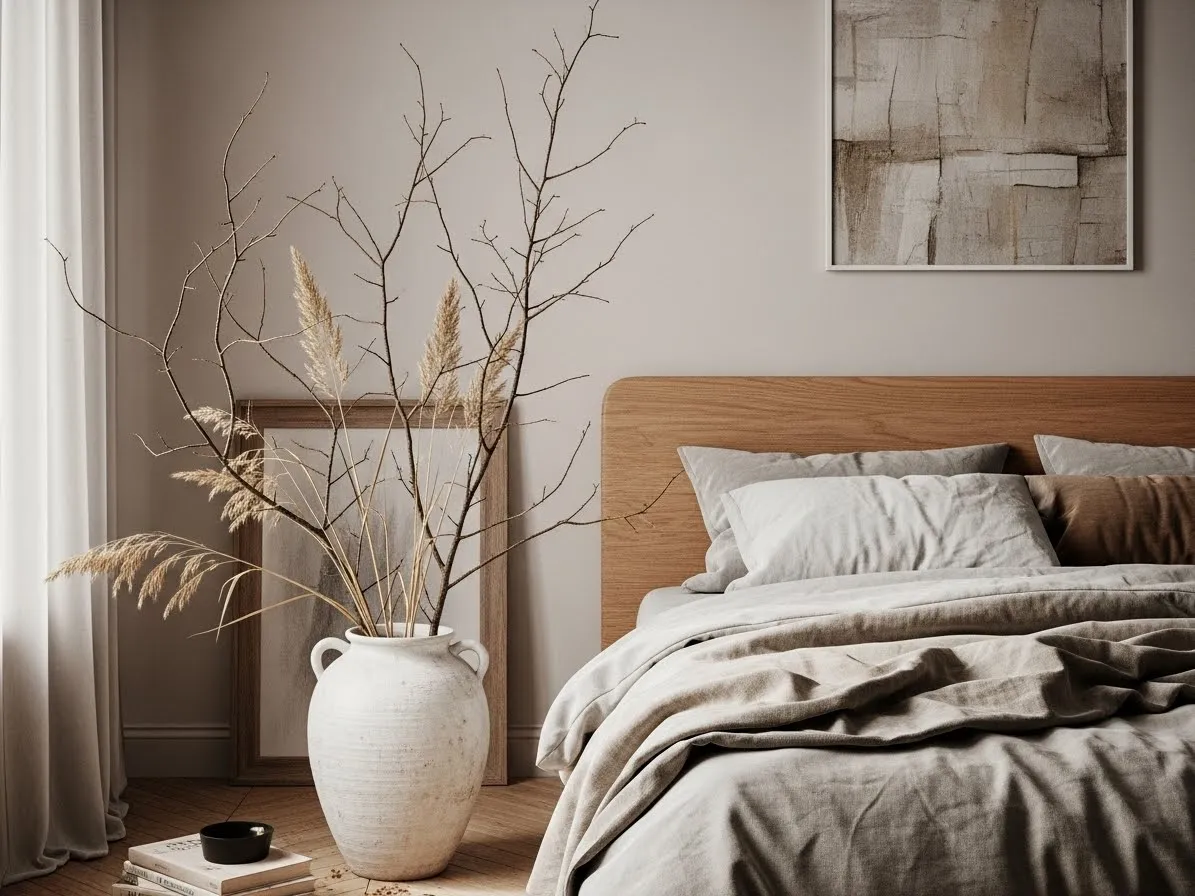
Bring nature inside in a quiet way. A branch in a vase, dried grasses, a small plant, or a bowl of stones can look beautiful without feeling “decorated.” These simple natural details reinforce the grounded, peaceful mood.
Quick tips:
- Dried stems look calm and last longer than fresh flowers
- Keep arrangements simple and organic
- One natural element is enough for impact
15. Space to Breathe
This may be the most important Wabi-Sabi idea of all: leave space. Not every corner needs something. Open space creates calm. It lets textures stand out and helps your bedroom feel restful rather than visually busy.
Quick tips:
- Remove one extra item from each surface
- Let one wall or corner stay quiet
- Aim for “peaceful,” not “filled”
FAQs
Not exactly. Minimalism can feel sharp and strict, while Wabi-Sabi feels warmer and more natural. Wabi-Sabi keeps fewer items, but welcomes texture, age, and softness.
Yes. Cozy Wabi-Sabi comes from warm neutrals, layered textiles, natural materials, and soft lighting. It’s calm comfort, not clutter.
No. Thrifted wood pieces, simple linen-style bedding, handmade ceramics, and gentle lighting can create Wabi-Sabi beautifully on a budget.
Warm neutrals like cream, beige, sand, taupe, soft gray, and earthy browns. Muted clay and soft charcoal also work well in small touches
Conclusion
A Wabi-Sabi bedroom is a quiet kind of luxury — not shiny or perfect, but warm, peaceful, and deeply comforting. It invites you to slow down and rest in a space that feels natural and honest. By choosing earthy colors, layering soft textures, adding a few handmade details, and leaving room to breathe, you create a bedroom that feels timeless and calming every single day. You don’t need more things — you need the right things, chosen with intention. That’s the heart of Wabi-Sabi.
Readers Also interests to get full guide on these topics:
Explore More Ideas
Check out our other articles on HomefulSpell for more inspiration and dynamic spaces!