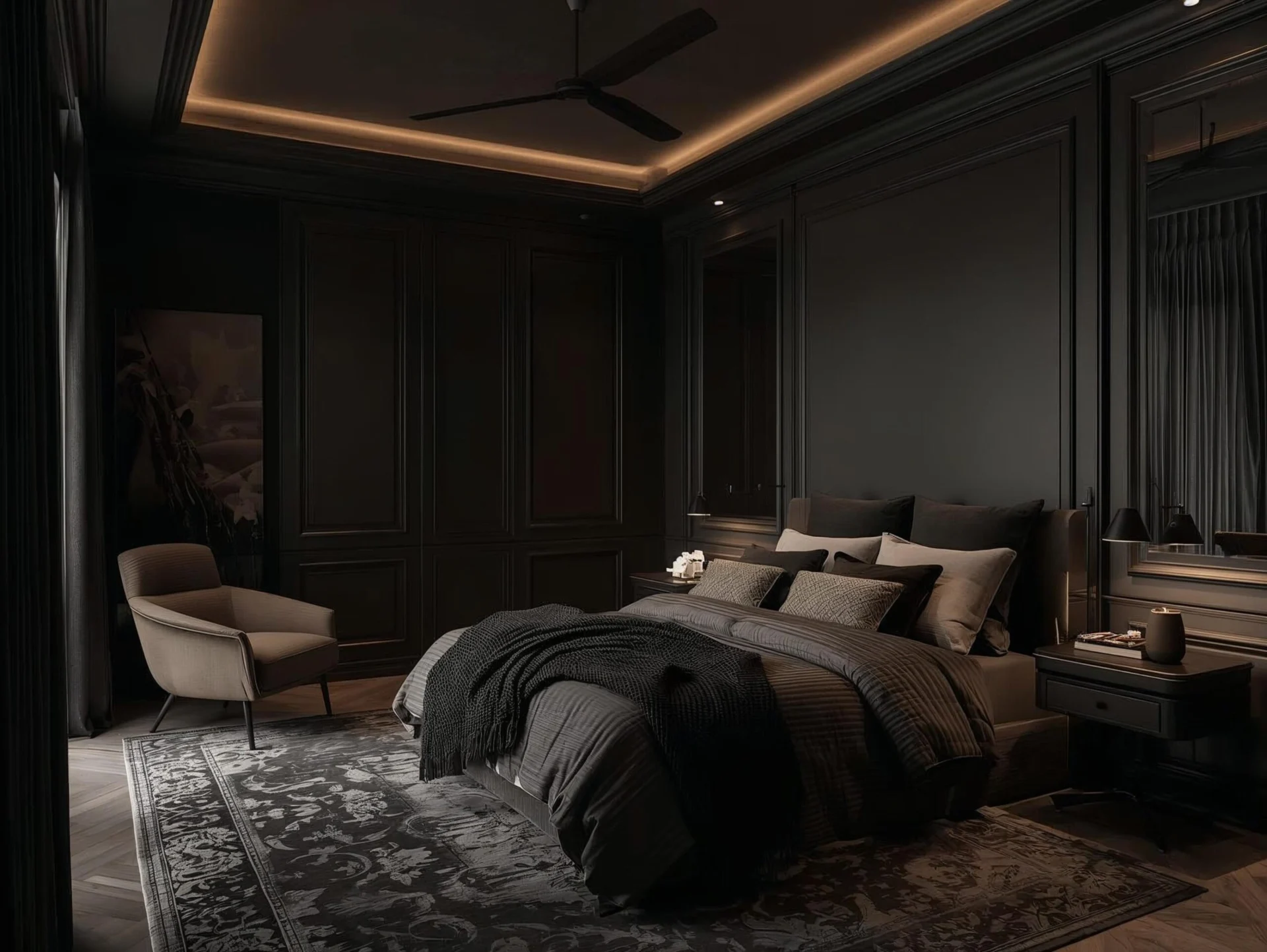

If you’ve ever found yourself drawn to kitchens that feel calm, uncluttered, and quietly warm, Japandi might be the style you’ve been searching for. I’ve always been fascinated by how this design blends Scandinavian simplicity with Japanese serenity in such an effortless way.
Japandi kitchens are all about balance. They combine clean lines with natural textures, creating a space that feels peaceful but still practical for everyday life. Everything has a purpose, yet nothing feels cold or overly minimal. It’s the kind of kitchen where cooking feels slower, more intentional, and genuinely enjoyable.
If that sounds like your kind of space, these Japandi kitchen ideas will help you imagine how this style could come to life in your own home.
What Defines a Japandi Kitchen Style
Japandi kitchens combine the calm simplicity of Japanese design with the warmth and practicality of Scandinavian interiors. The focus is on balance—between minimalism and comfort, beauty and function. Every element feels intentional, uncluttered, and soothing, creating a kitchen that supports everyday living without visual noise.
Key Takeaways
- Japandi kitchens blend Japanese elegance with Scandinavian simplicity
- Natural materials like wood, stone, and concrete are essential
- Color palettes stay neutral, warm, and calming
- Clean lines and uncluttered layouts improve functionality
- Texture and lighting add warmth without excess decor
- Quality matters more than quantity in Japandi design
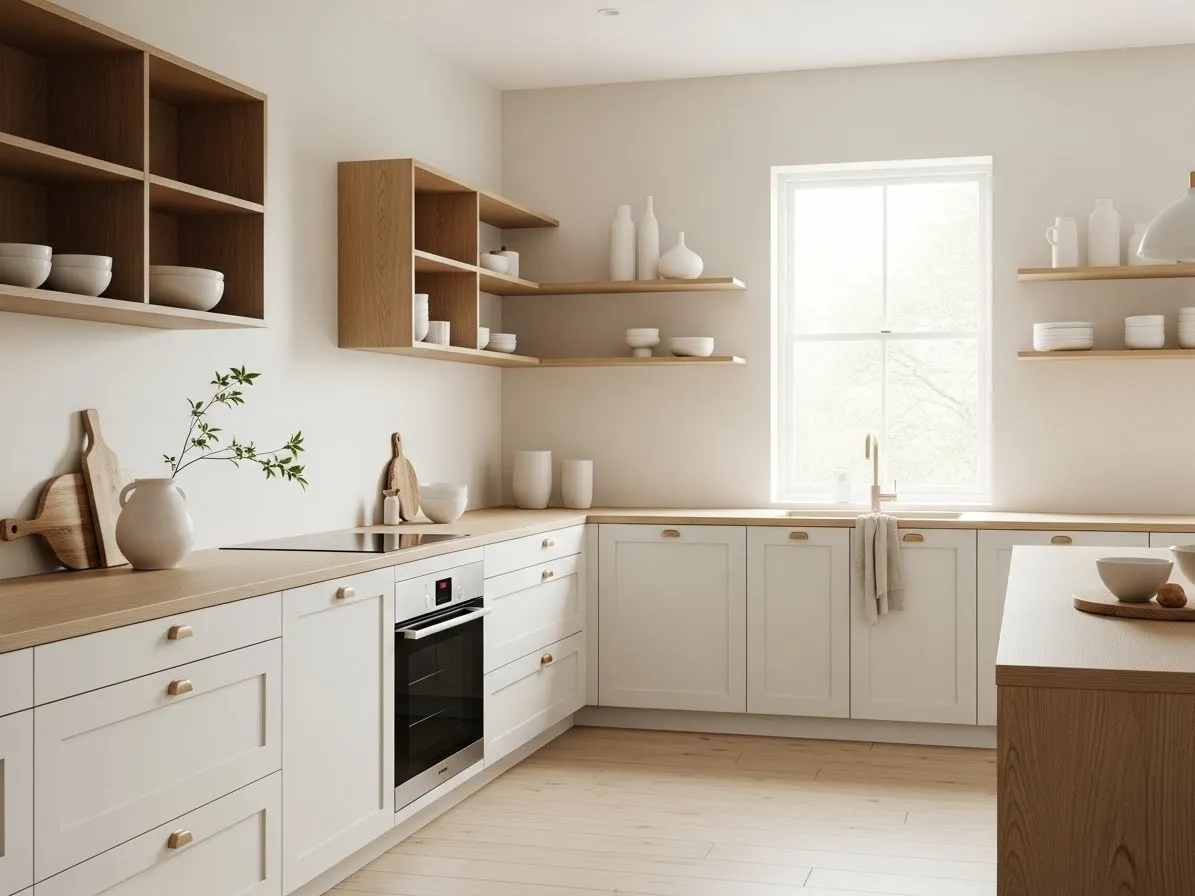
Light, Calm Foundations
Bright, neutral kitchens are at the heart of Japandi design. Soft whites and gentle off-whites create a clean backdrop that allows natural materials to shine. Instead of glossy finishes, matte surfaces keep the space feeling grounded and understated.
When paired with light wood floors or subtle stone textures, white cabinetry feels warm rather than stark. The result is a kitchen that feels open, airy, and quietly elegant.
Deep, Moody Wall Colors
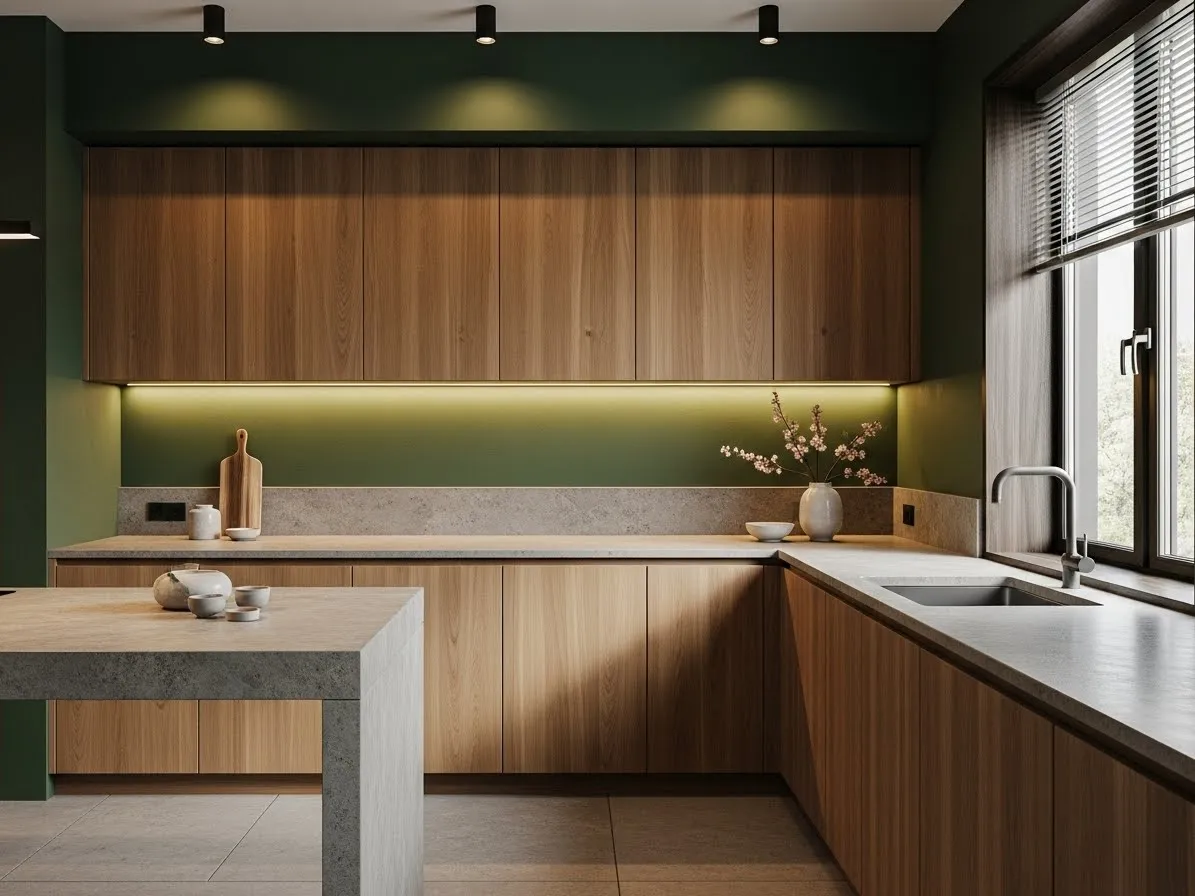
While Japandi kitchens are often light, darker tones can be just as beautiful when used thoughtfully. Shades like charcoal, forest green, or deep navy add depth and a sense of calm without overpowering the space.
These richer colors work best when balanced with lighter wood, soft lighting, and simple decor. The contrast creates a cozy, sophisticated atmosphere that still feels relaxed and welcoming.
Textured Countertops With Character
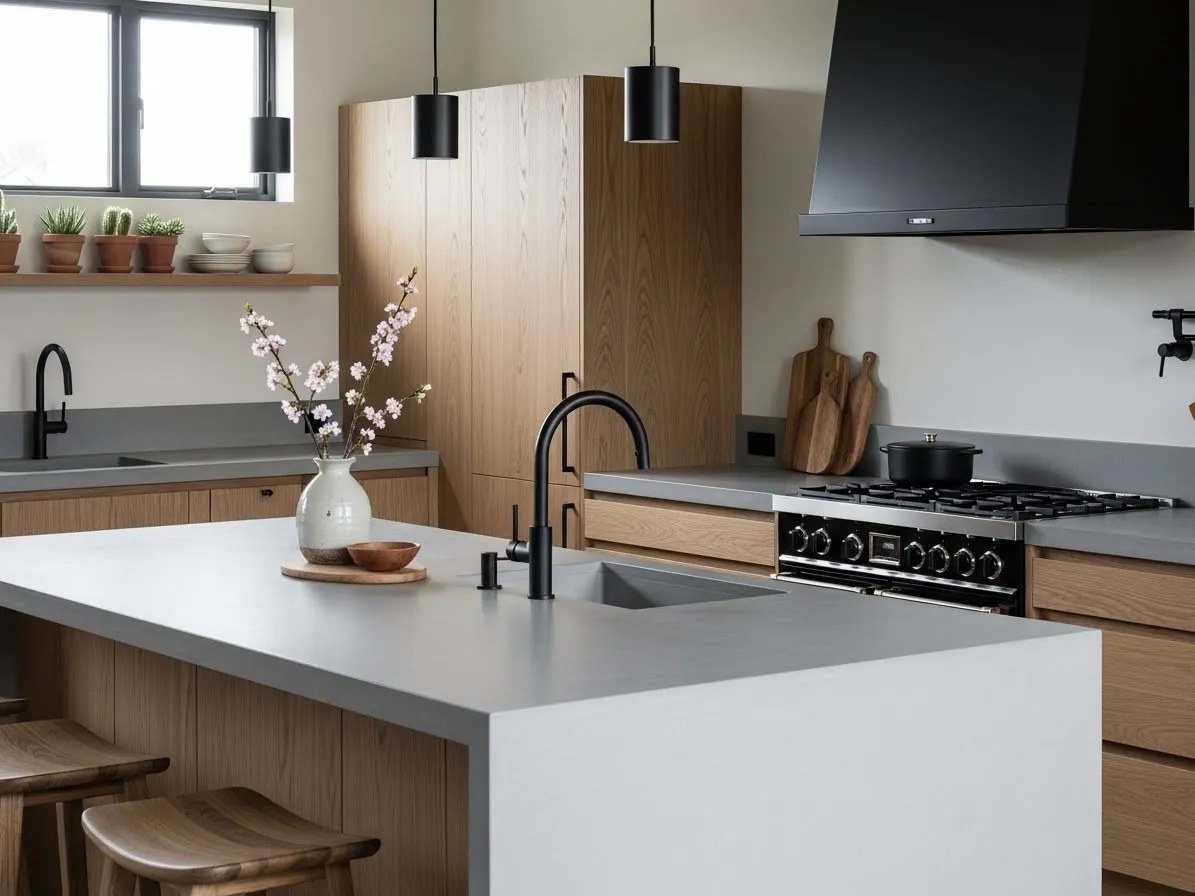
Japandi kitchens often feature surfaces that feel natural and tactile. Concrete countertops are a popular choice because they bring a subtle industrial edge while still feeling calm and neutral.
Paired with wood cabinetry and minimal hardware, textured countertops add interest without stealing attention. Over time, they develop character, which only adds to their charm.
Bringing Nature Indoors
Greenery plays an important role in Japandi spaces. Whether it’s a small collection of herbs, a single potted plant, or cabinetry in soft green tones, these natural touches bring life and balance to the kitchen.
Muted greens like sage or olive pair beautifully with wood and stone, creating a color palette that feels organic and soothing rather than trendy.
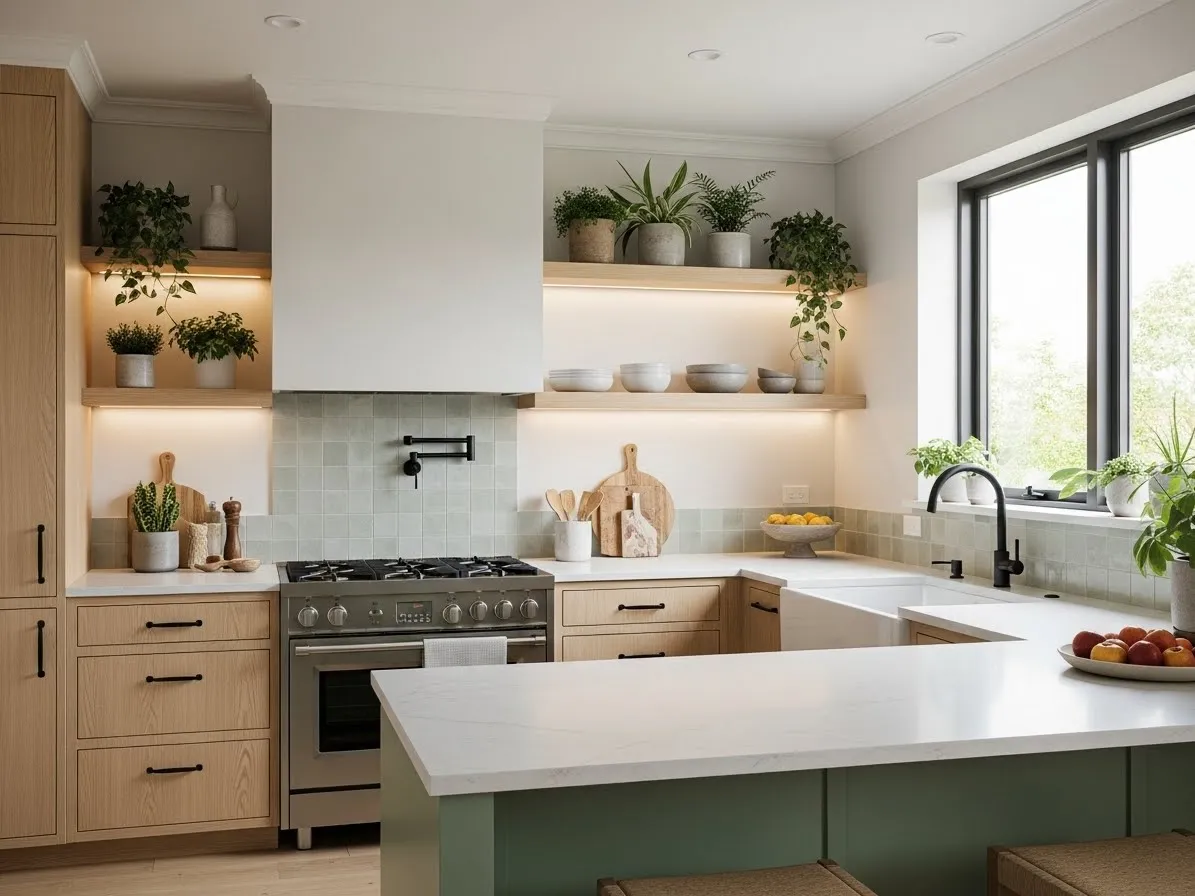
Simple, Thoughtful Kitchen Islands
Japandi kitchen islands are designed to feel useful first and decorative second. Clean shapes, natural materials, and uncluttered surfaces keep the space functional and calm.
Some designs lean toward straight, geometric lines, while others introduce subtle curves for a softer look. Either way, the focus is on flow, comfort, and ease of movement.
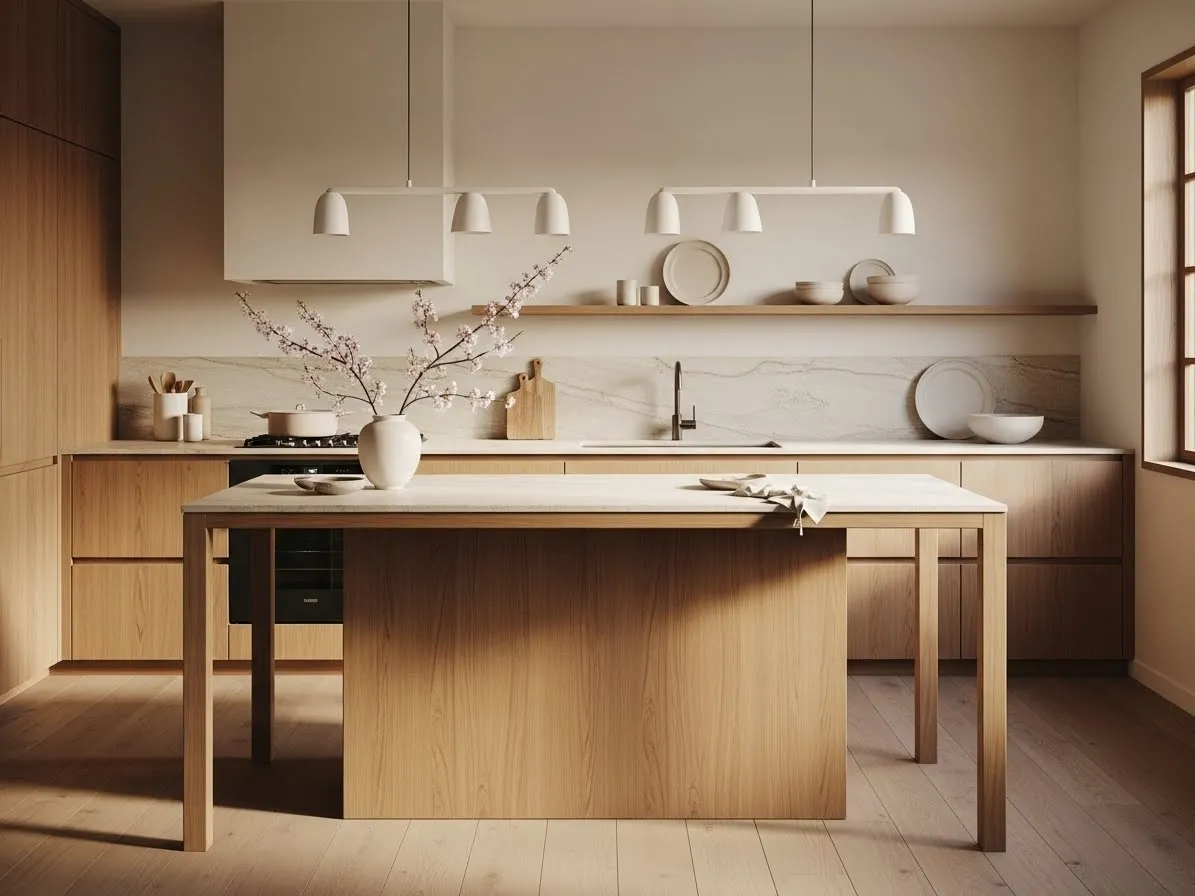
Open, Breathable Layouts
One of the most appealing aspects of Japandi kitchens is how open they feel. Open layouts allow light to move freely and make daily routines feel less rushed.
Using consistent flooring and simple cabinetry helps the kitchen blend seamlessly into nearby living or dining areas, creating a sense of continuity throughout the home.
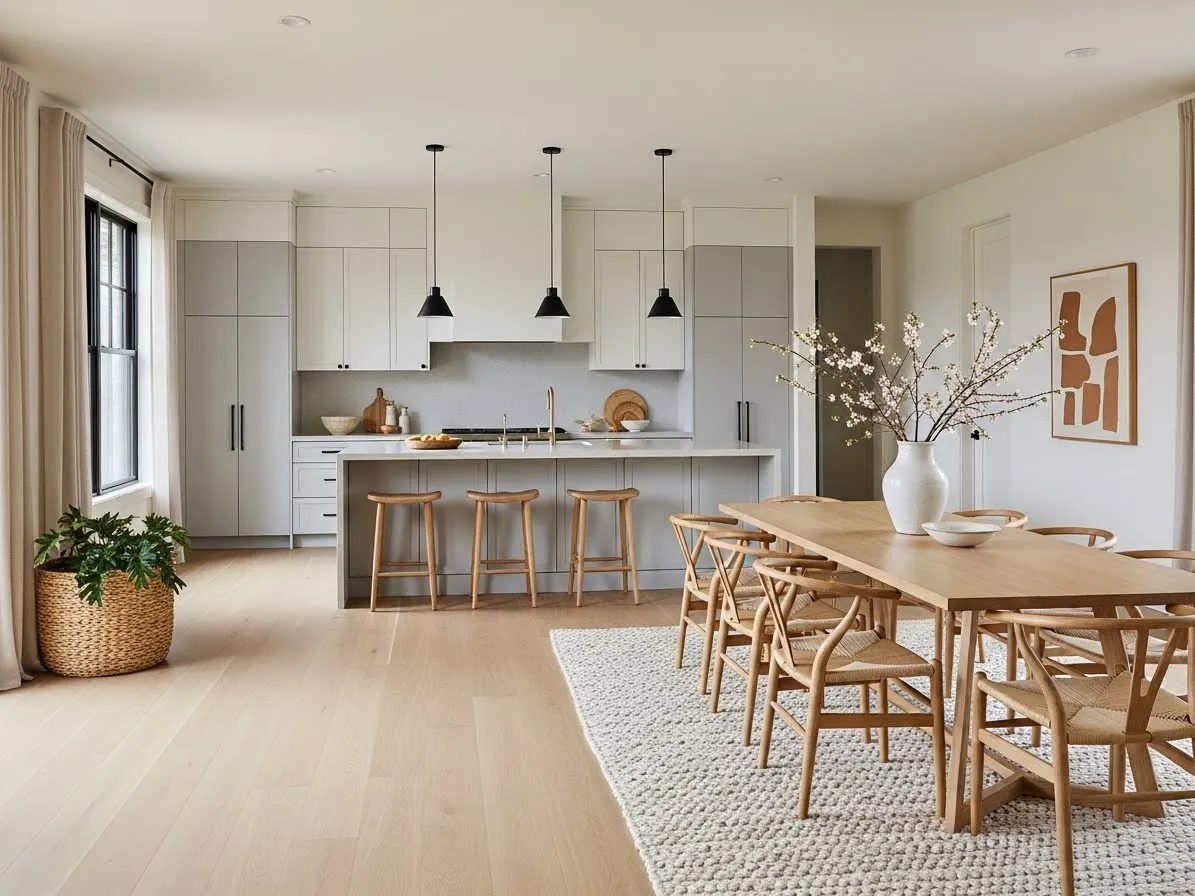
Dark Accents for Contrast
Small black details can make a big impact in a Japandi kitchen. Black faucets, pendant lights, or hardware add contrast and definition without overpowering the neutral palette.
When used sparingly, these darker elements help ground the space and highlight the softer tones around them.
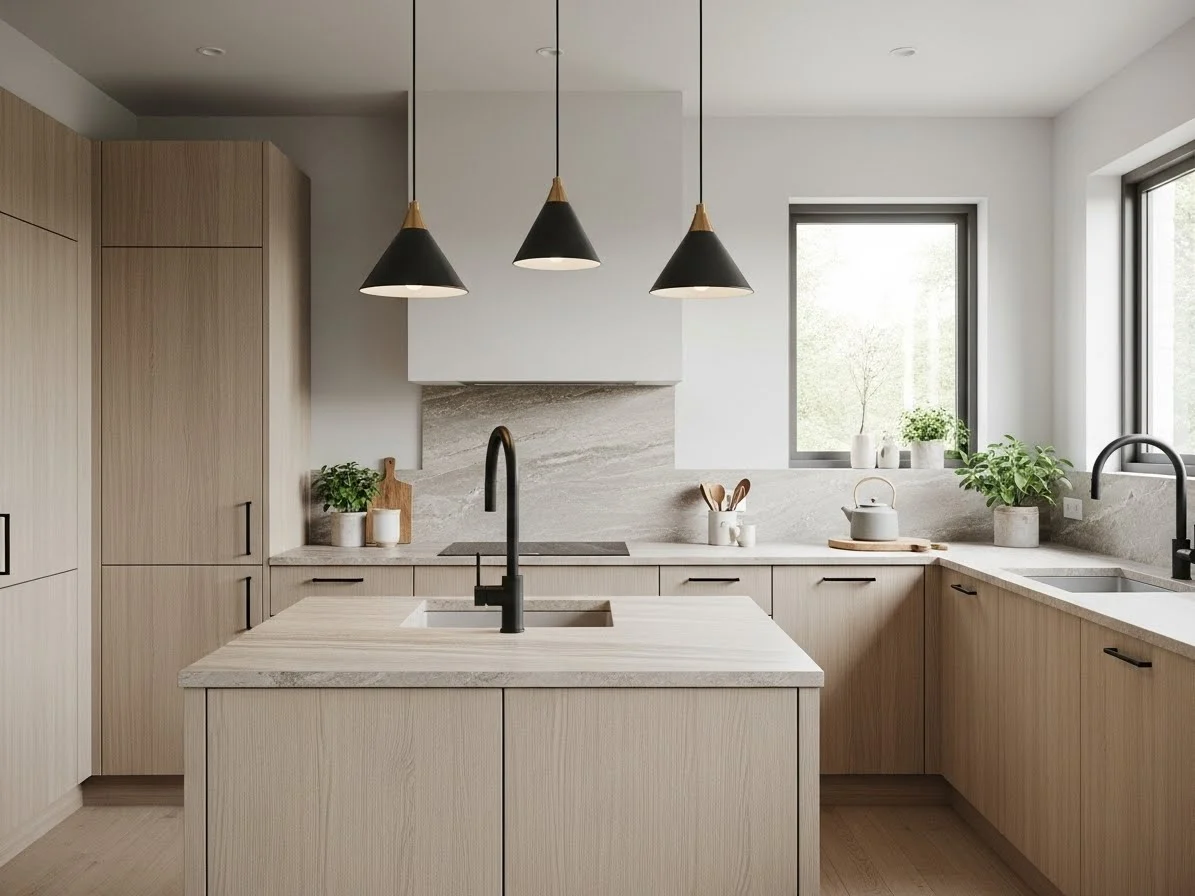
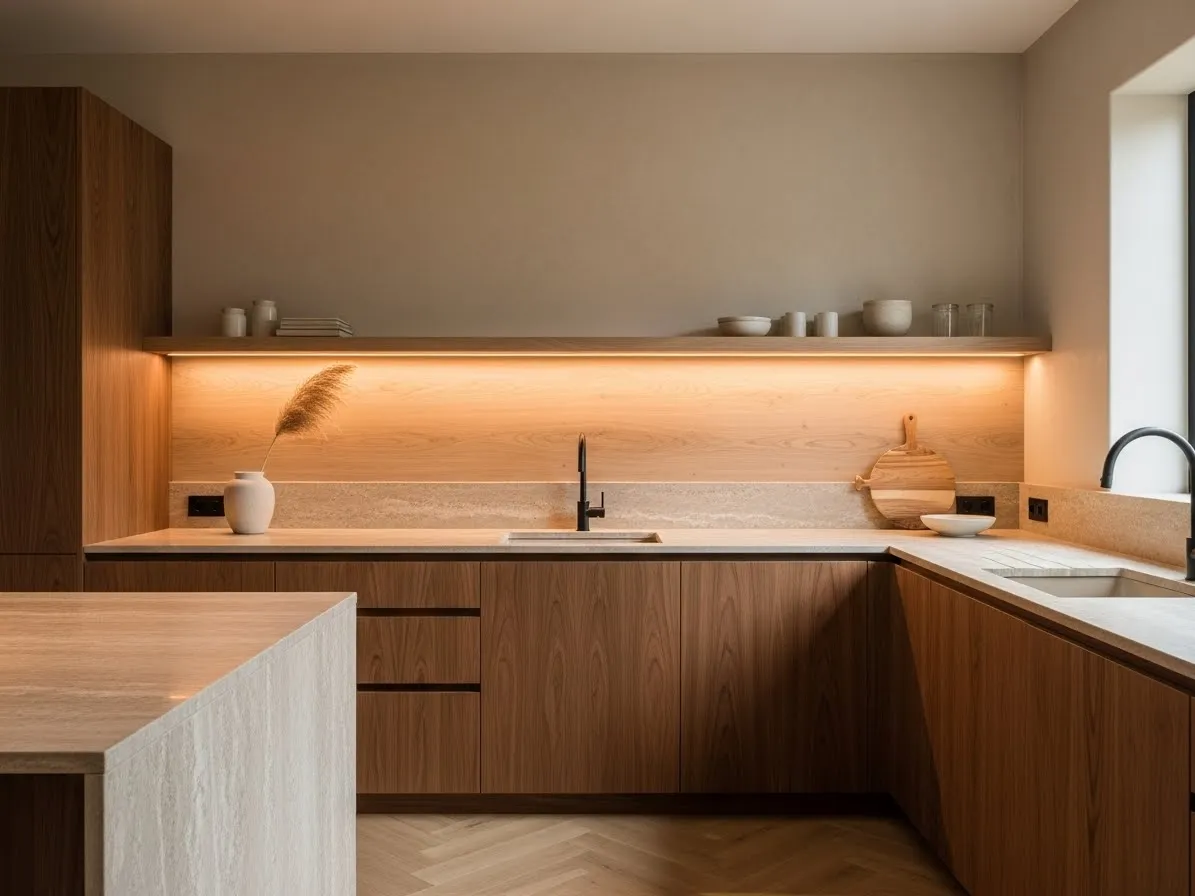
Warm Wood That Feels Timeless
Wood is essential in Japandi design, and warmer tones like walnut bring a sense of richness and depth. These finishes feel elegant yet approachable, making the kitchen feel lived-in rather than showroom-perfect.
Whether used for full cabinetry or select accents, warm wood instantly adds comfort and visual warmth.
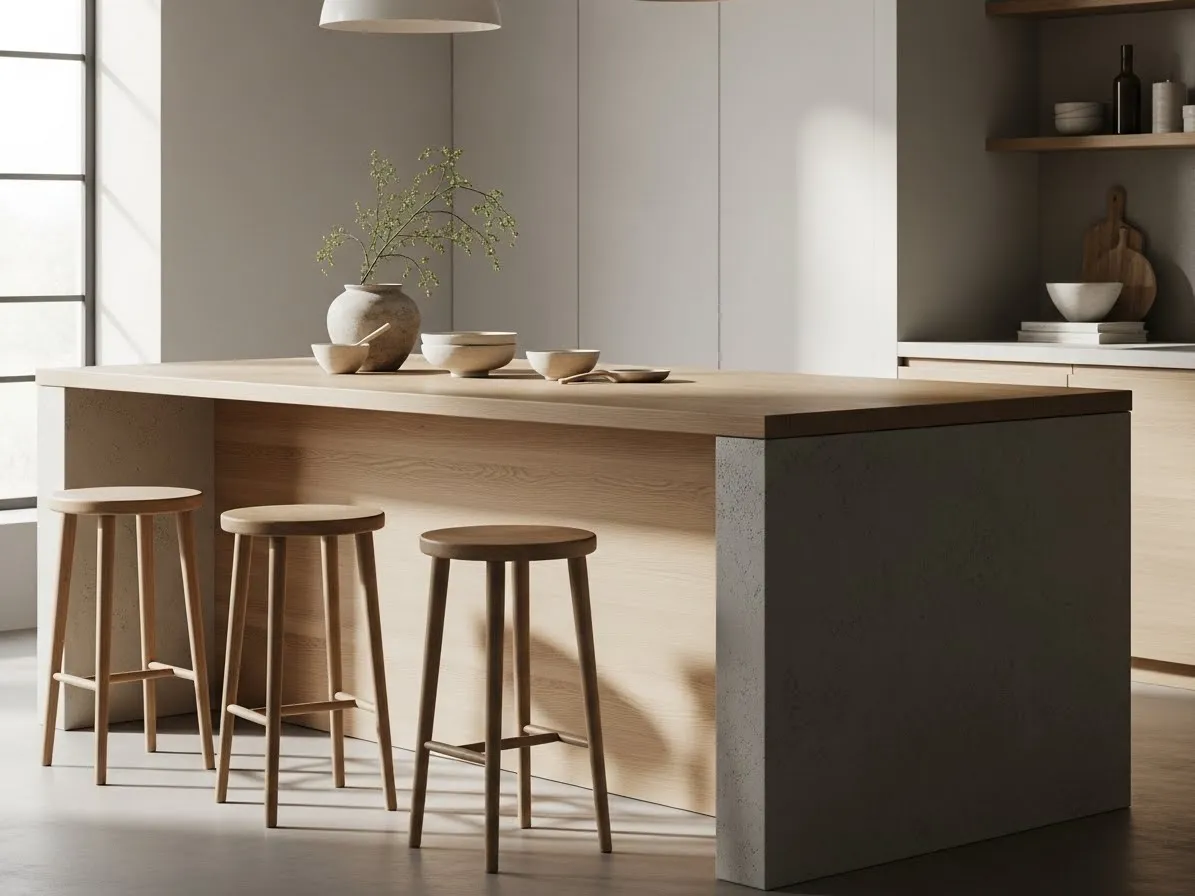
Practical Seating That Blends In
Seating in Japandi kitchens is simple, functional, and thoughtfully chosen. Wooden stools with clean lines tuck neatly under islands and counters without disrupting the overall flow.
Comfort matters just as much as appearance, which is why many Japandi kitchens favor understated designs that don’t compete with the rest of the space.
Soft, Neutral Color Layers
Gray tones often appear in Japandi kitchens as a softer alternative to white. Light gray cabinetry or stone surfaces pair beautifully with wood accents and warm lighting.
The key is layering similar tones and textures so the space feels cohesive rather than flat.
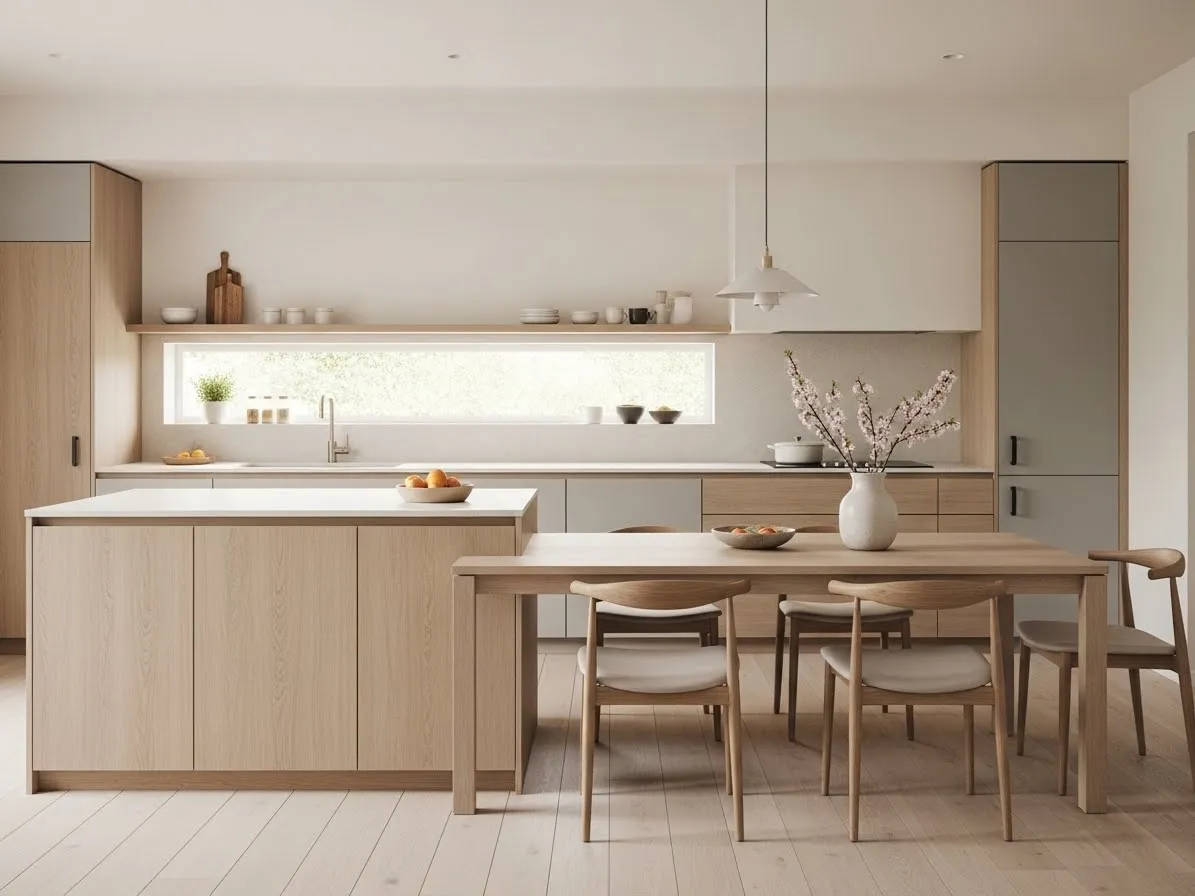
Flexible Dining Spaces
In smaller homes, Japandi kitchens often blend cooking and dining into one streamlined area. Simple dining tables and chairs keep the space light and adaptable, making it easy to shift between everyday meals and entertaining.
This flexibility is part of what makes Japandi design so livable.
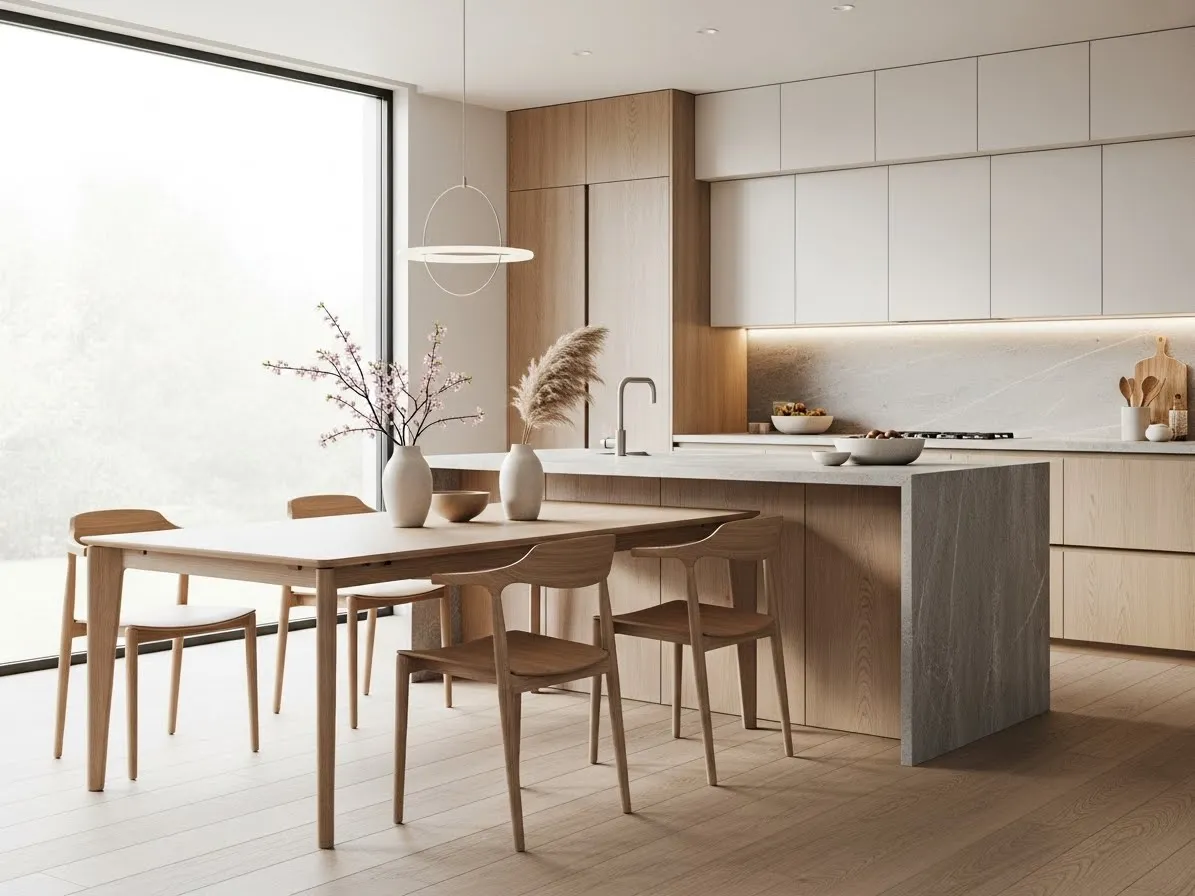
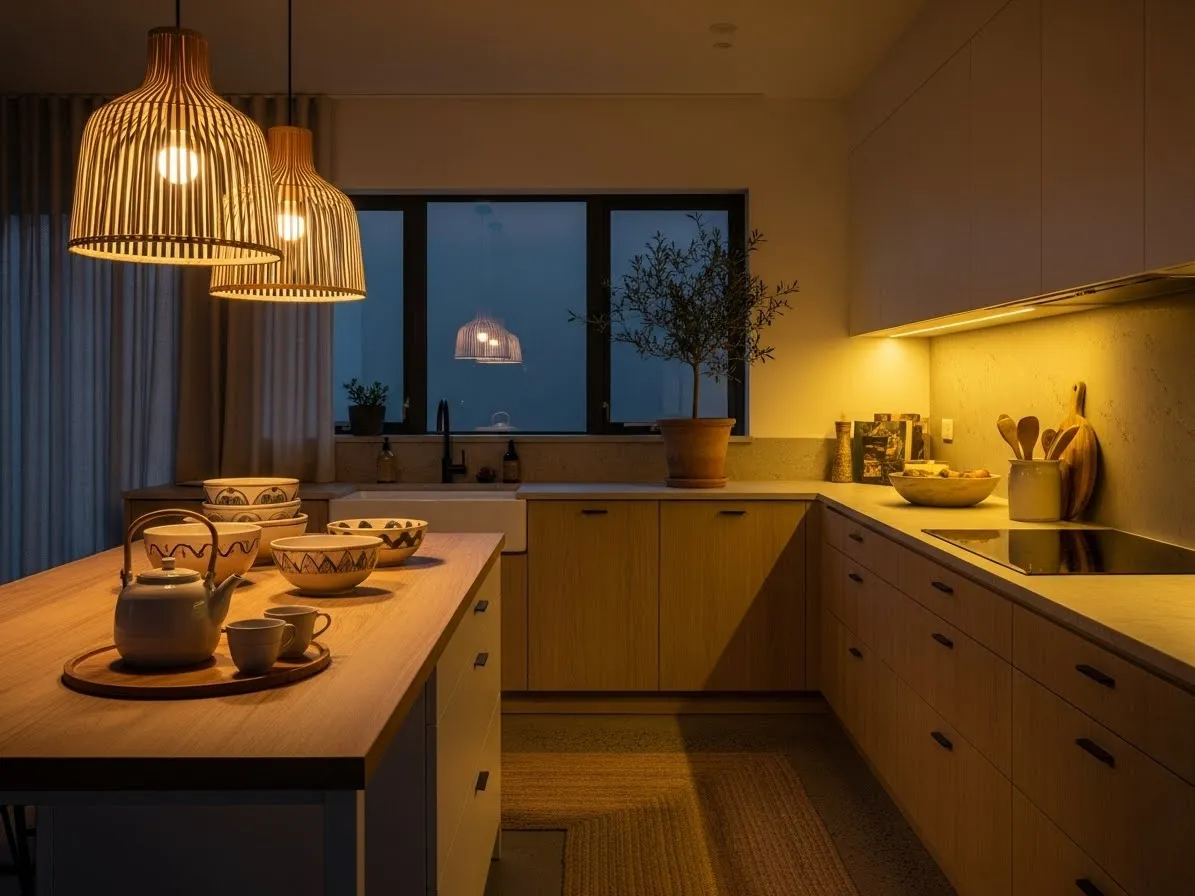
Warm, Minimal Lighting
Lighting sets the mood in a Japandi kitchen. Soft pendant lights, under-cabinet lighting, and warm bulbs create a cozy glow that changes with the time of day.
Simple shapes and natural materials keep lighting fixtures from feeling distracting, allowing them to blend seamlessly into the design.
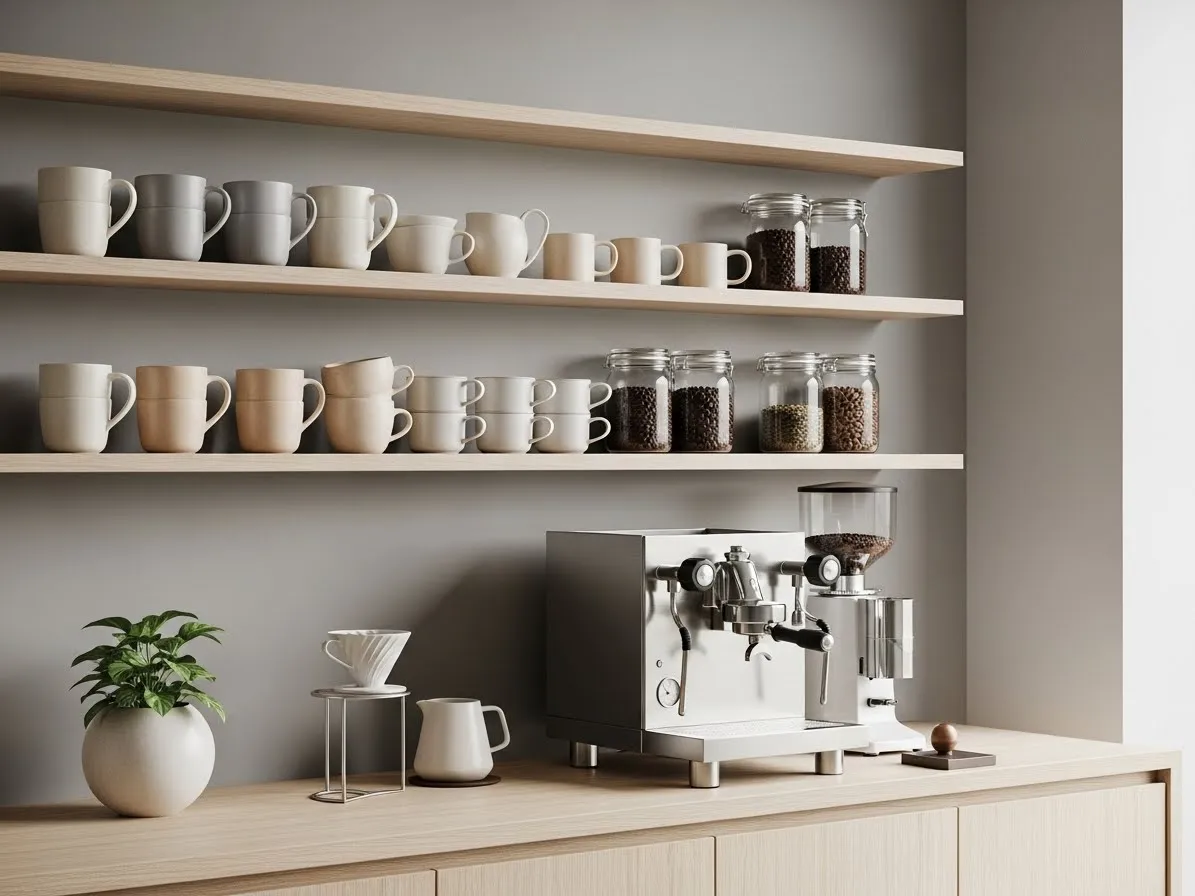
A Calm Coffee Corner
A small Japandi-style coffee bar can become a favorite daily ritual. Wooden shelves, neutral ceramics, and clear storage keep the area tidy while still feeling personal.
It’s a simple way to add character without clutter.
Final Thoughts
Japandi kitchens strike a beautiful balance between simplicity and warmth. By combining natural materials, thoughtful layouts, and soft color palettes, they create spaces that feel calm, functional, and timeless.
When designing a Japandi kitchen, focus on quality over quantity. Choose pieces that feel intentional, embrace natural textures, and allow the space to breathe. The result is a kitchen that feels just as good to live in as it looks.
FAQs
A Japandi kitchen blends Japanese minimalism with Scandinavian warmth, focusing on clean lines, natural materials, and calm, functional spaces.
Neutral shades like white, beige, soft gray, sage green, and warm wood tones work best for a balanced Japandi look.
Yes, Japandi design is ideal for small kitchens because it emphasizes simplicity, smart layouts, and clutter-free surfaces.
Wood, stone, concrete, ceramic, and matte finishes are commonly used to create texture and warmth without excess decoration.
Focus on decluttering, using neutral colors, adding natural wood accents, switching to warm lighting, and choosing simple, timeless decor.