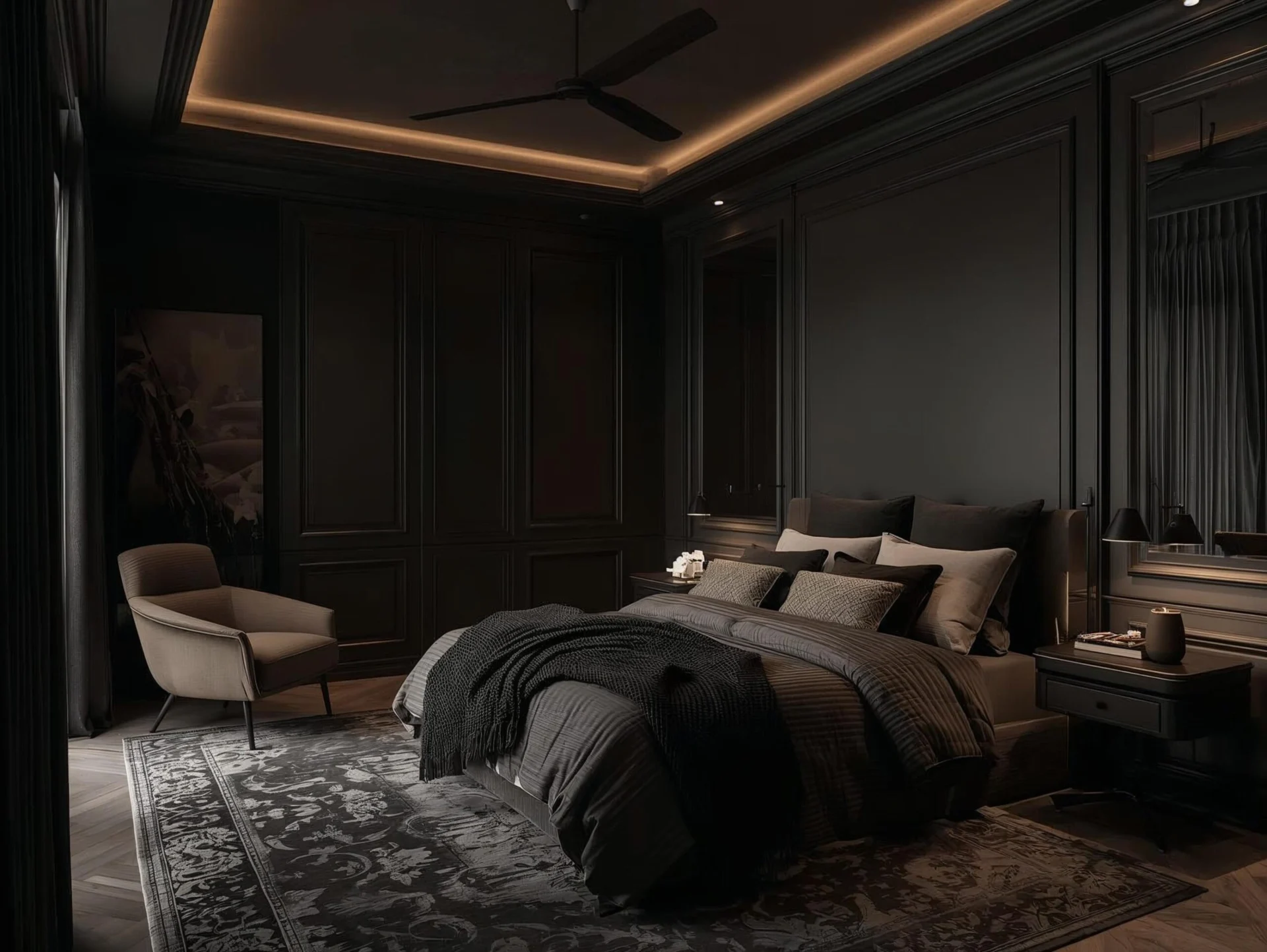
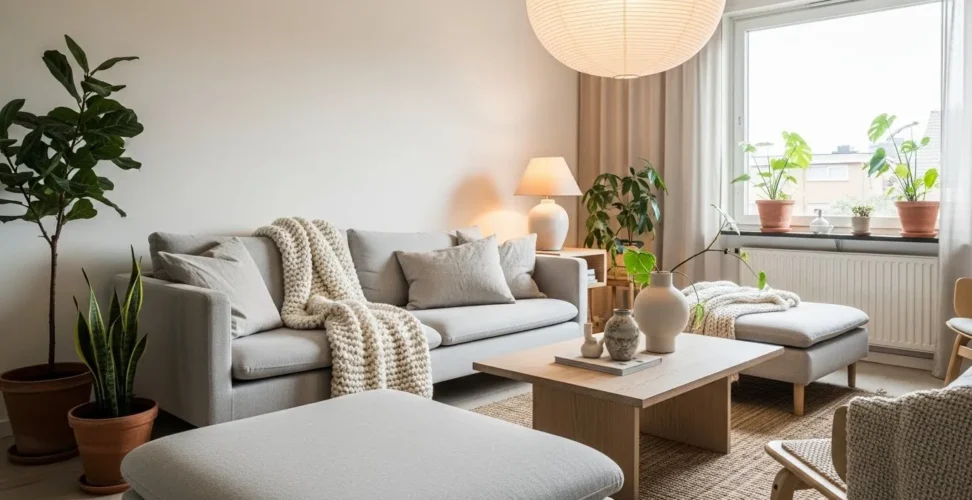
The Japandi living room style blends Japanese simplicity and Scandinavian warmth into a design that feels serene, purposeful, and welcoming. It’s more than a trend—it’s a way to create a living room that feels peaceful, beautifully balanced, and deeply intentional.
What Is Japandi Style?
Japandi style is a design approach that blends Japanese minimalism with Scandinavian functionality. In a Japandi living room, simplicity meets warmth—clean lines, uncluttered layouts, and natural materials are balanced with cozy textures and practical furniture.
This style focuses on quality over quantity, neutral color palettes, and a calm, grounded atmosphere. Japandi living room ideas often emphasize craftsmanship, natural light, and a strong connection to nature, creating spaces that feel both serene and inviting.
How to Create a Japandi Living Room
Creating a Japandi living room starts with intention. Instead of decorating quickly, the goal is to thoughtfully curate a space that feels peaceful, functional, and timeless.
Begin by choosing low-profile, minimalist furniture with clean lines. Stick to natural materials such as wood, linen, bamboo, and stone to build a warm foundation. Keep the color palette neutral—soft whites, beige, warm wood tones, and muted earthy shades work best.
Next, focus on functionality and flow. Every item in a Japandi living room should serve a purpose, whether practical or emotional. Avoid clutter and opt for smart storage solutions to maintain a calm environment.
Finally, add subtle texture and personality through handcrafted decor, soft textiles, and greenery. Below are practical Japandi living room ideas to help you design a space that’s both calming and stylish.
Focus on Clean Lines and Low-Profile Furniture
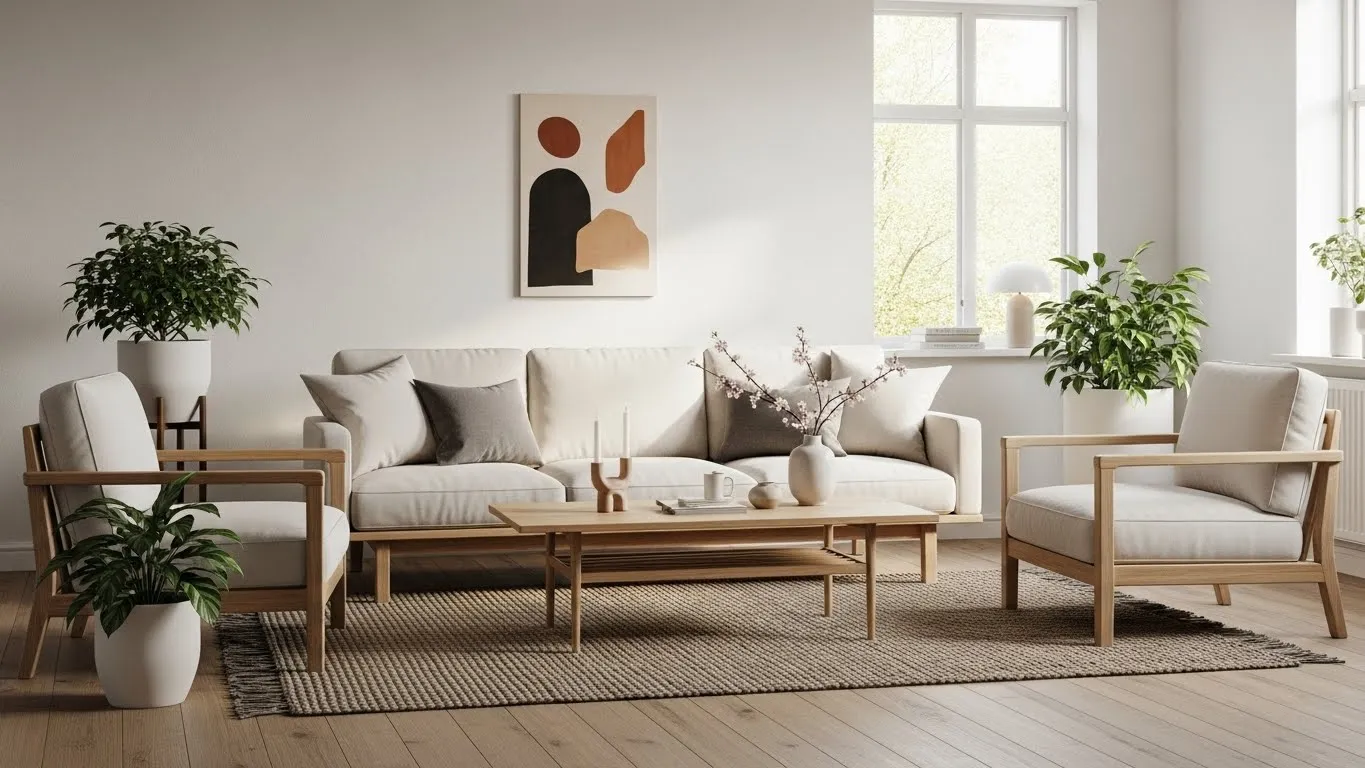
Japandi living rooms prioritize simplicity and flow. Start with furniture that has clean, low profiles—think floor-level sofas, minimalist coffee tables, and streamlined seating.
This approach opens up the room visually and reinforces the serene aesthetic typical of Japanese interiors while honoring the Scandinavian emphasis on functionality.
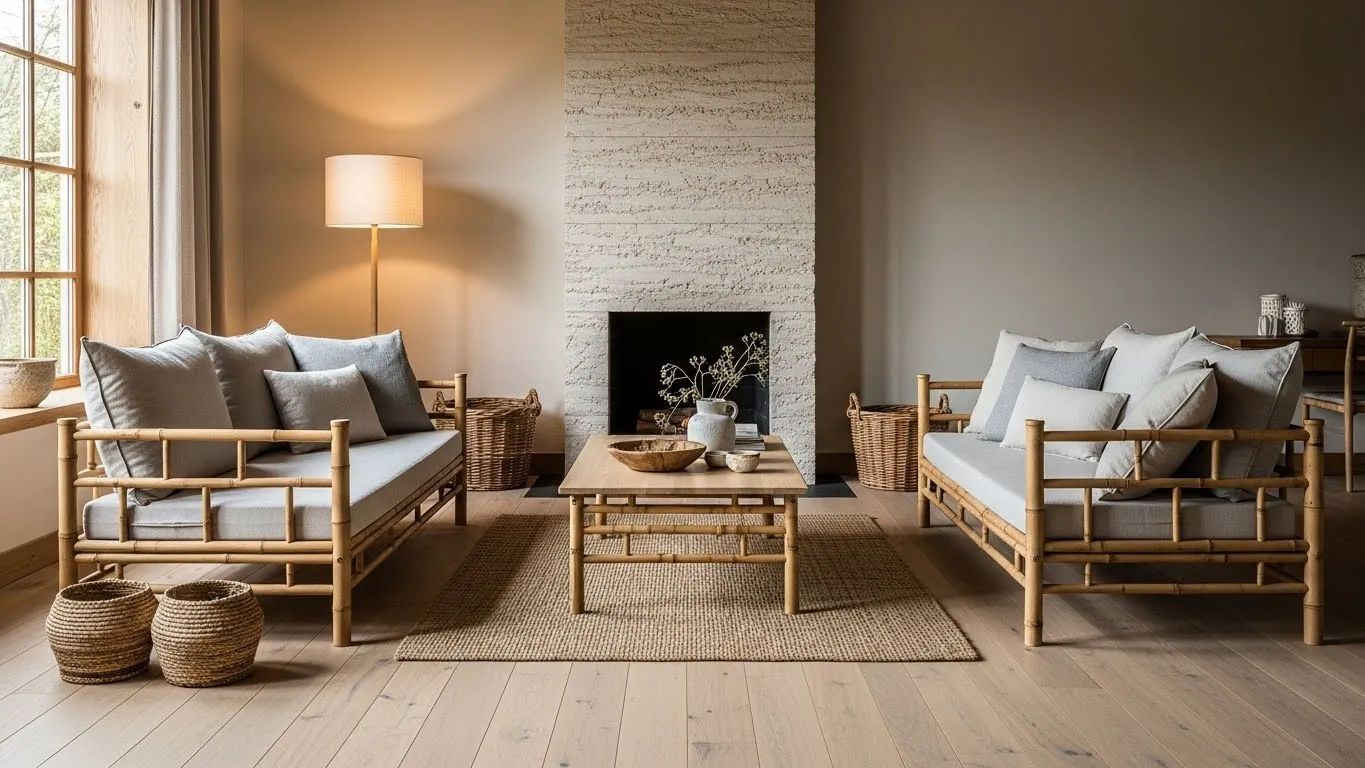
Embrace Natural Materials and Neutral Tones
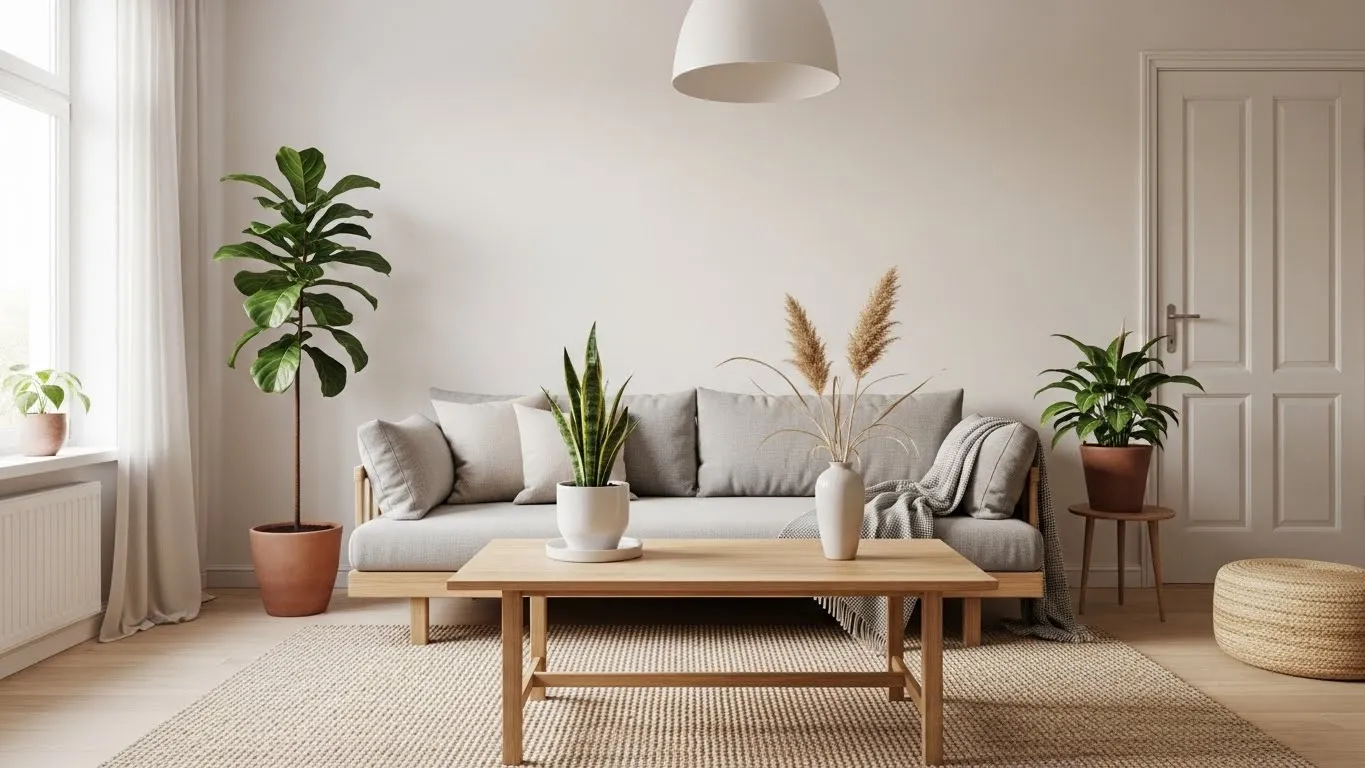
Neutral earthy tones and natural materials like light wood, bamboo, linen, and stone are core to Japandi design. These elements bring warmth and grounding balance to the space while maintaining a calm color palette.
Using materials that age gracefully creates a living room that looks timeless and intentional.
Bring Nature Indoors With Greenery
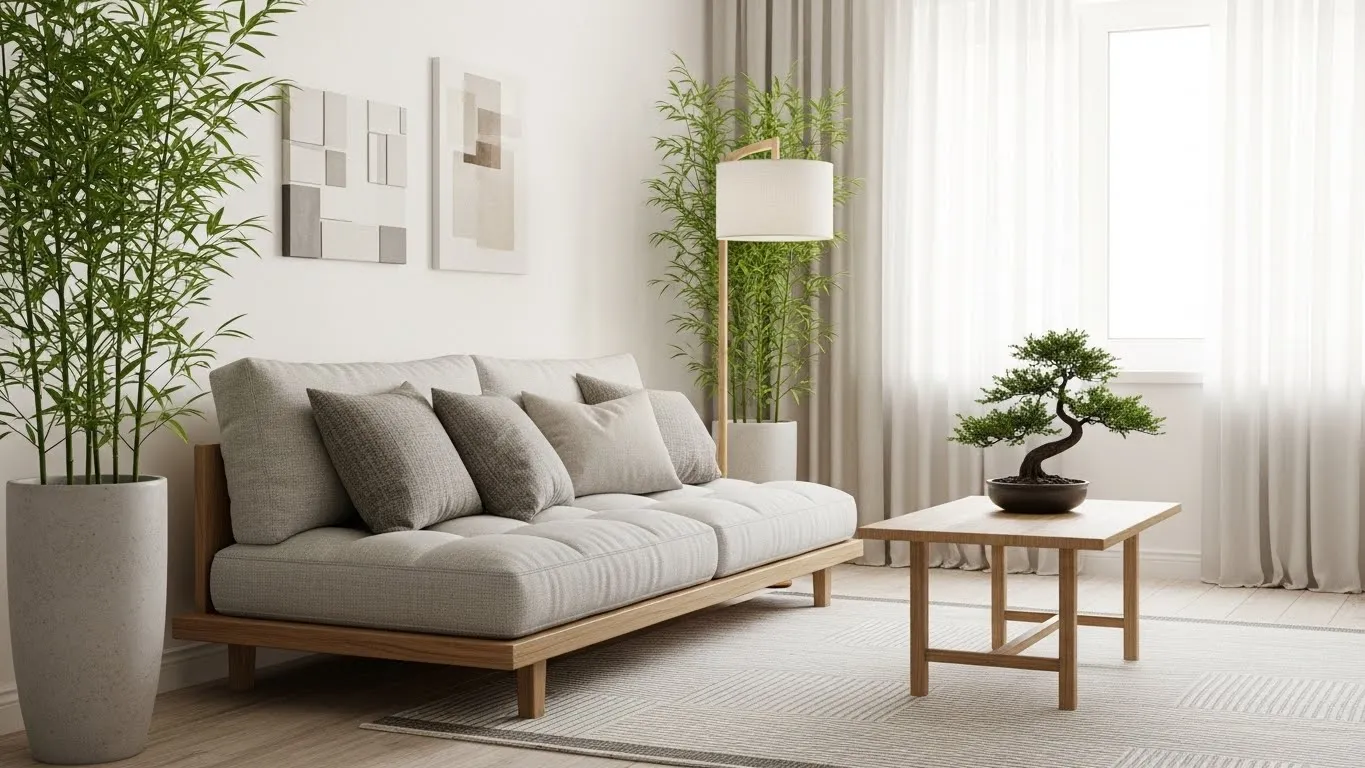
Plants are essential in a Japandi living room. Incorporating greenery—especially bonsai, bamboo, or broad-leaf houseplants—invites life into the space and maintains a connection to nature.
Choose simple, neutral planters to keep the aesthetic cohesive and elevate both form and function.
Layer Lighting for a Cozy Atmosphere
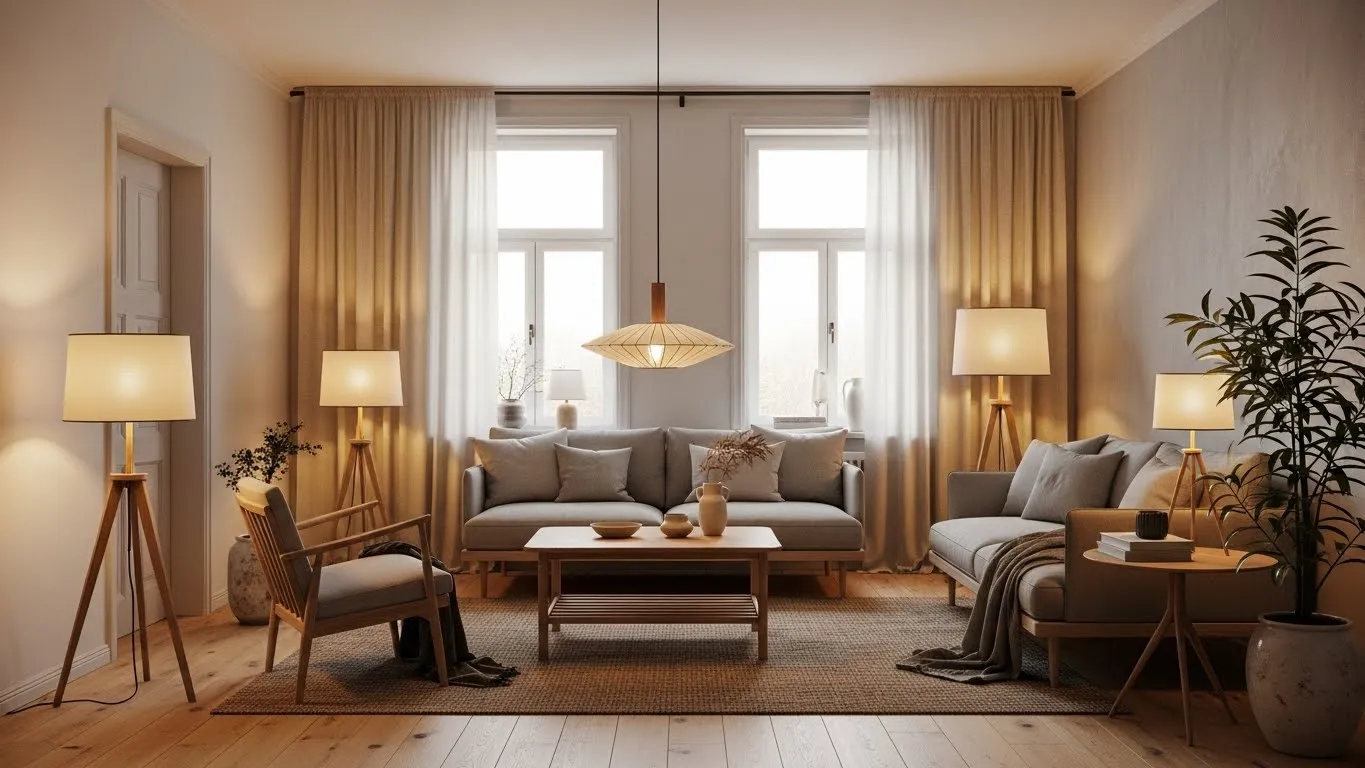
Don’t underestimate lighting in a Japandi living room. Combine natural light with soft, warm artificial light using pendants, floor lamps, and wall sconces.
Soft lighting enhances calm and makes the room feel cozy without undermining the minimalist elegance of the design.
Add Texture for Visual Depth
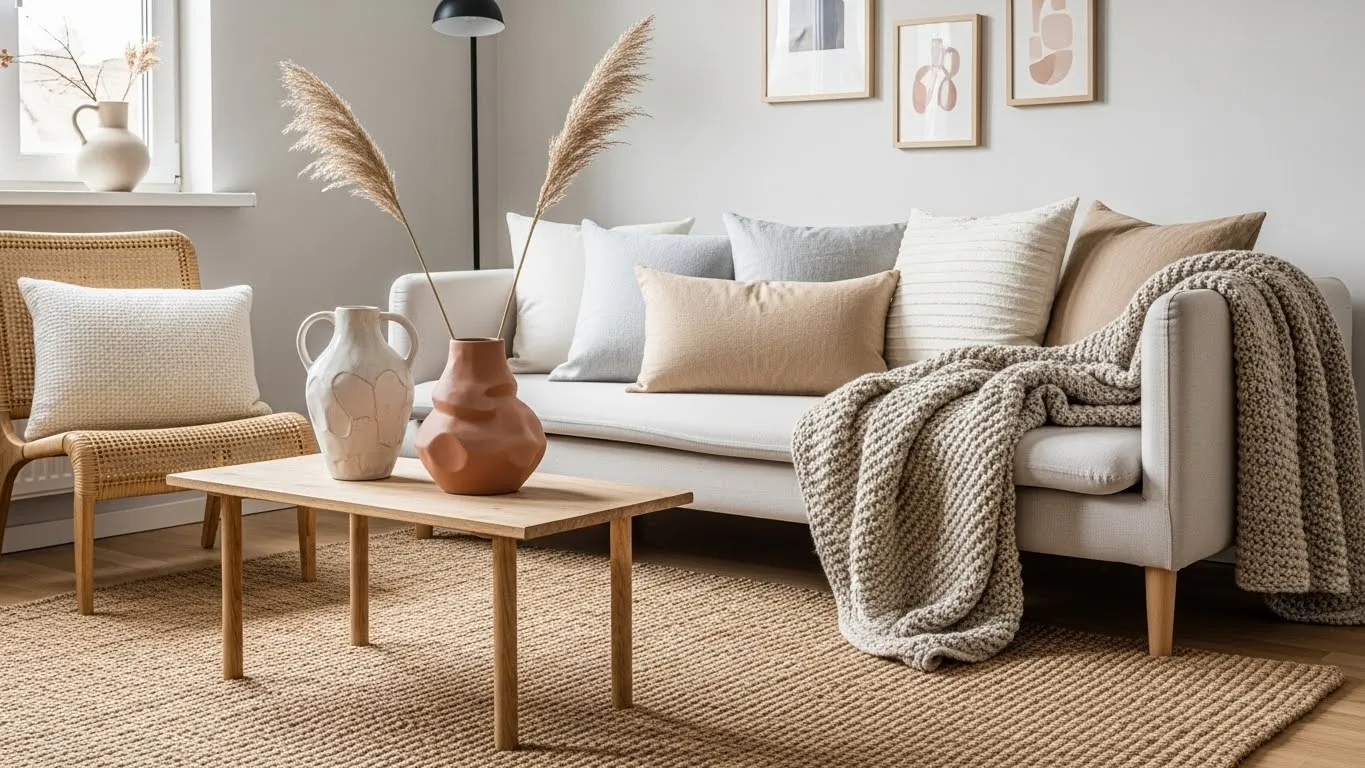
Japandi living rooms aren’t cold or sterile. Layer different textures—like linen throw blankets, wool cushions, jute rugs, and handcrafted ceramics—to keep the space tactile and inviting.
This interplay between smooth and rough textures adds depth while staying true to the style’s serene aesthetic.
Use Wabi-Sabi Accents for Authenticity
Wabi-sabi—the Japanese philosophy of finding beauty in imperfection—fits naturally with Japandi design. Embrace handcrafted items, subtle imperfections, and natural finishes to add character.
This gives your living room an honest, lived-in feel that still looks thoughtfully curated.
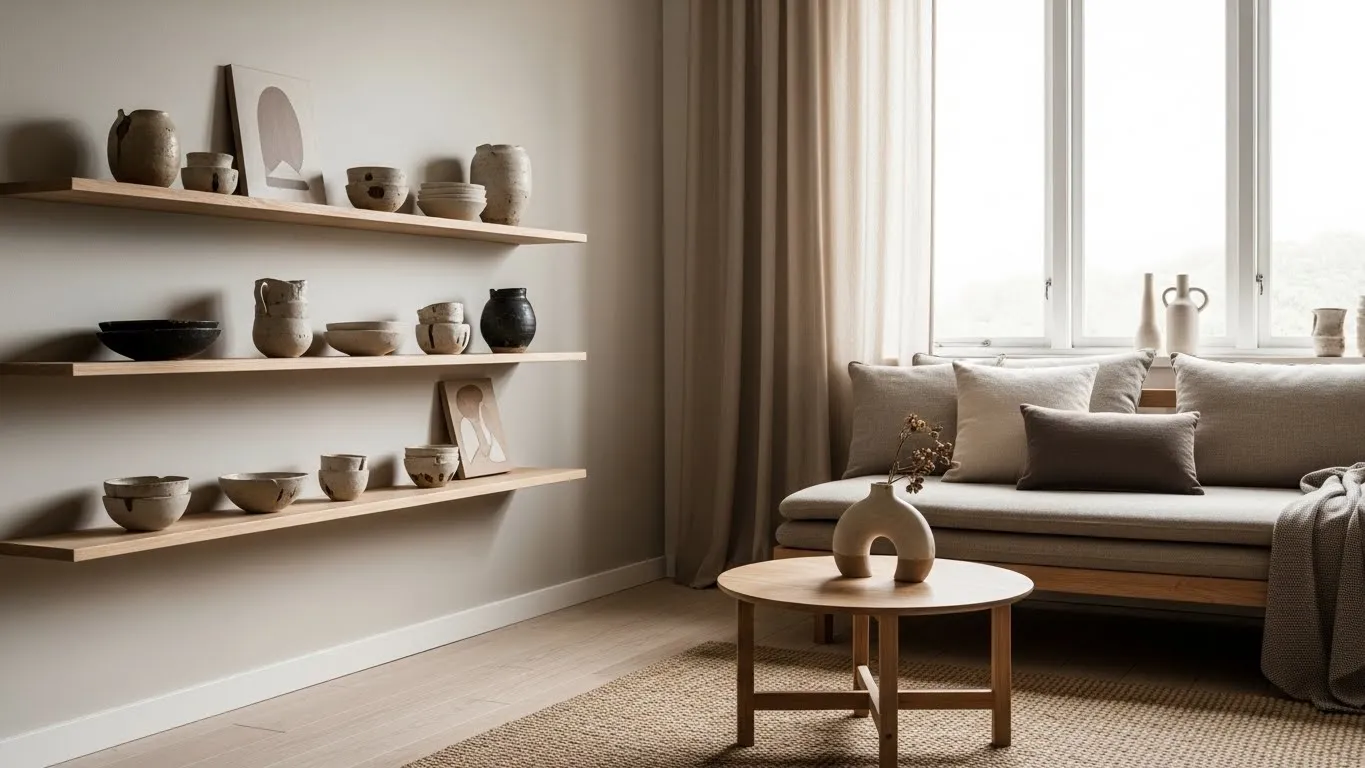
Keep the Space Clutter-Free and Functional
Clutter disrupts the calming balance of a Japandi living room. Keep décor purposeful and storage solutions discreet so everything has its place.
With simplicity at the heart of the look, every object should be either functional or meaningful.
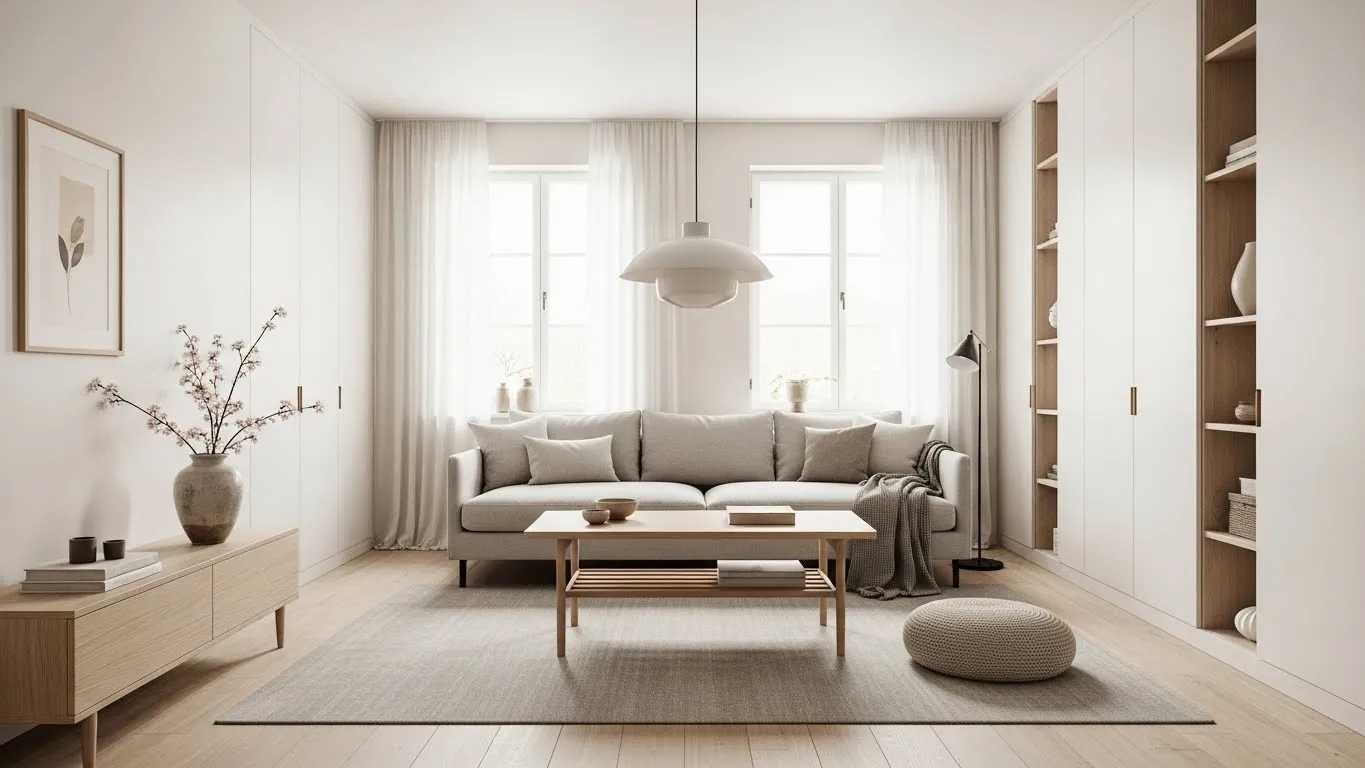
Create Cozy Nooks
If space allows, consider adding a reading nook or meditation corner with a simple chair, a small side table, and warm lighting. These areas enhance comfort and make your living room feel more inviting and purposeful.
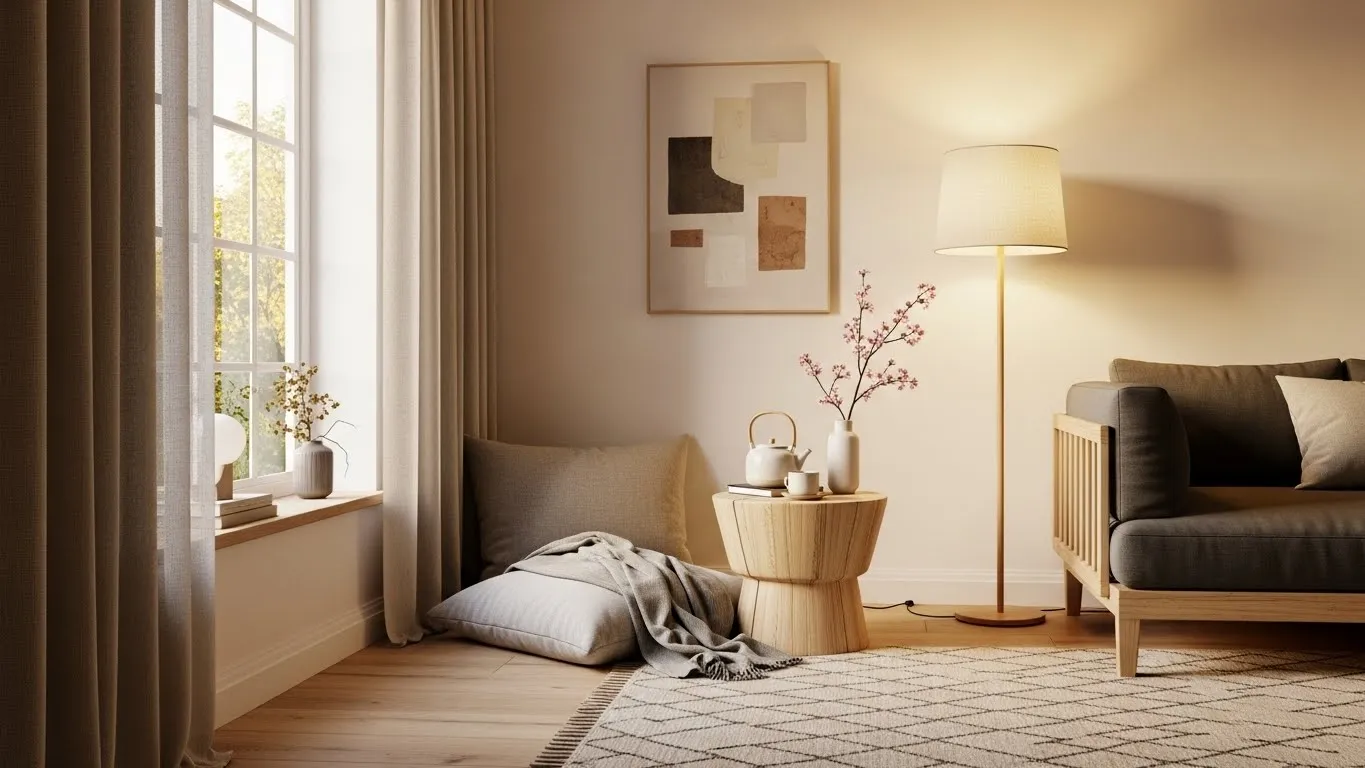
Highlight Minimal Art and Thoughtful Decor
When choosing artwork or décor, less is more—just thoughtful. Subtle Japanese prints, abstract ink sketches, or simple wood carvings contribute to a tranquil environment without overwhelming the design.
One or two impactful pieces reinforce balance rather than clutter. (Cozy Home Vibes)
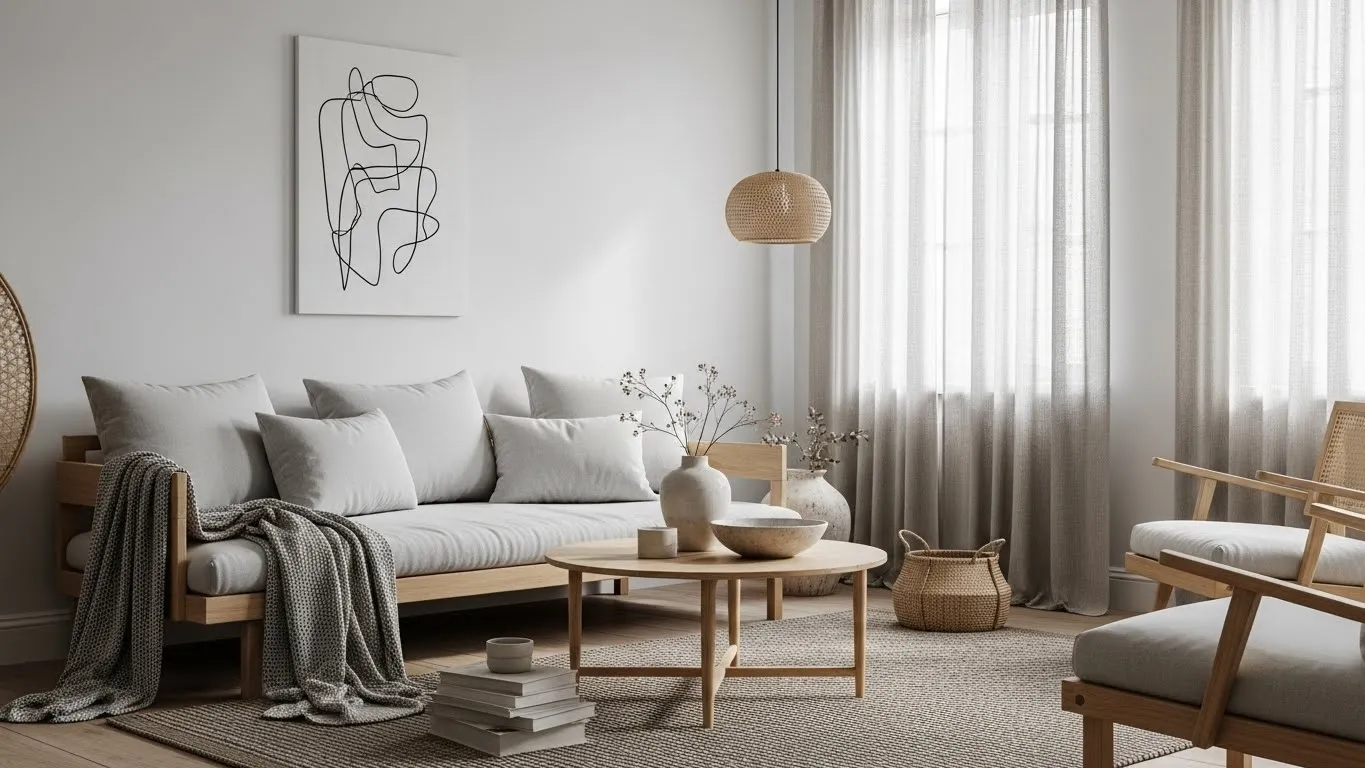
Add Subtle Color Accents
Japandi doesn’t have to be limited to beige and wood tones. Small amounts of muted, earthy hues like sage green, deep navy, or mustard can be added through pillows, throws, or decor.
These accents bring character while retaining overall serenity.
Related: https://homefulspell.com/the-pantone-color-of-the-year-2026/
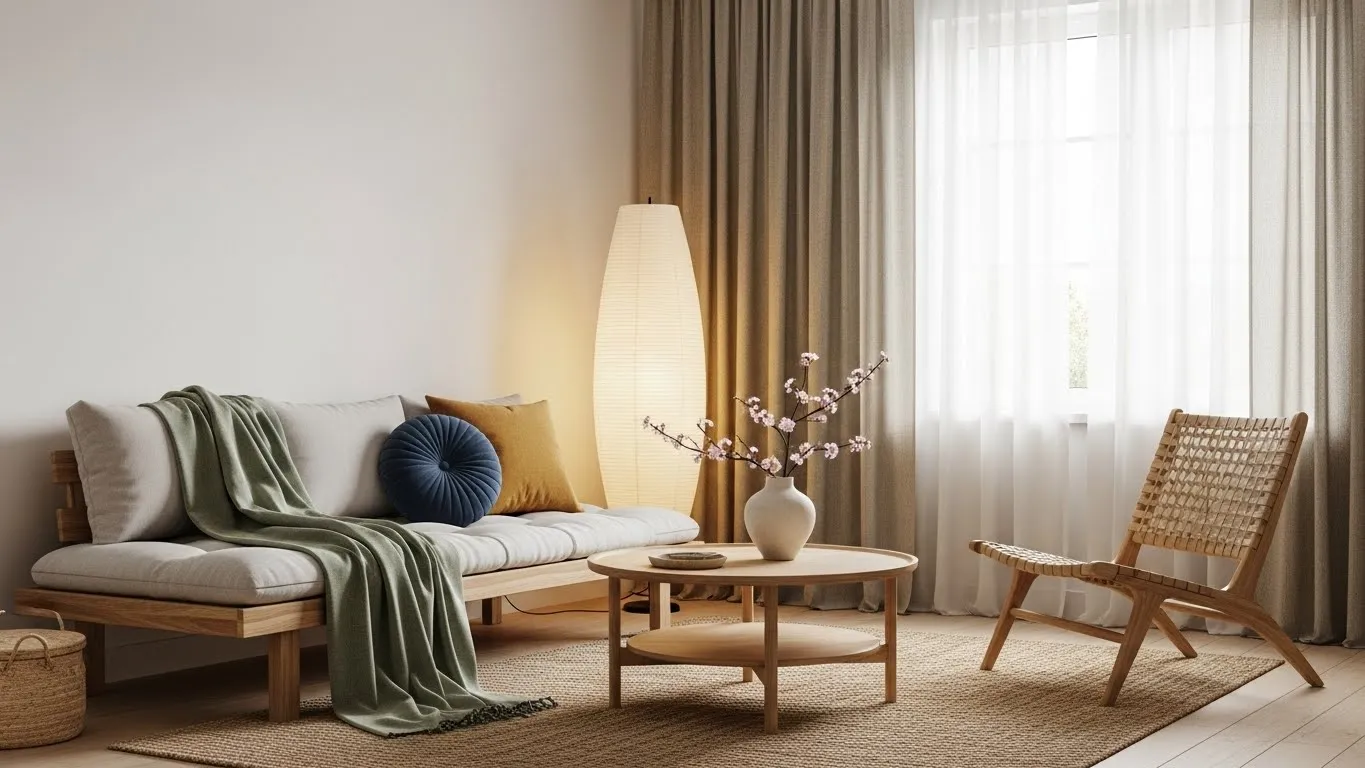
Connect to Open Layouts With Consistent Materials
If your living room flows into adjacent spaces—like a kitchen or dining area—use consistent materials and color themes to enhance flow. Light wood, terracotta accents, and natural fabrics ensure a smooth transition while reinforcing the Japandi aesthetic.

Final Thoughts on Japandi Living Room Design
A Japandi living room creates a sanctuary that feels calm, functional, and beautifully balanced between minimalism and warmth. With thoughtful furniture choices, natural materials, subtle accents, and a clutter-free layout, you can design a space that offers restful comfort without sacrificing style.
FAQs
A Japandi living room blends Japanese minimalism with Scandinavian warmth for a calm, functional, and stylish space.
Use low-profile furniture, natural materials, neutral colors, soft textures, and greenery while keeping the space clutter-free.
Neutral and earthy tones like beige, cream, light wood, muted greens, and soft grays, with small subtle accents.
Yes. Focus on functional furniture, uncluttered layouts, and vertical space to maintain serenity.
Wabi-Sabi celebrates imperfection and natural beauty with handcrafted décor and subtle textures.