By fari | Interior Design Enthusiast & Decor Expert
A minimalist living room doesn’t have to feel cold or boring. With the right balance of calm, function, and personality, you can create a space that feels both stylish and peaceful. Minimalism is about purposeful choices — only keeping what matters, enhancing every piece with intent, and letting light and space breathe. This guide shares practical minimalist living room ideas that make simplicity look stunning and feel warm.
Table of Contents
Key Takeaways
- Minimalist living rooms focus on intentional simplicity, using fewer items with clear purpose.
- Neutral tones, quality furniture, and thoughtful textures keep spaces calm and inviting.
- Subtle accents and natural light enhance the minimalist look without clutter.
- Minimalism can be warm, stylish, and full of personality.
What Is a Minimalist Living Room?
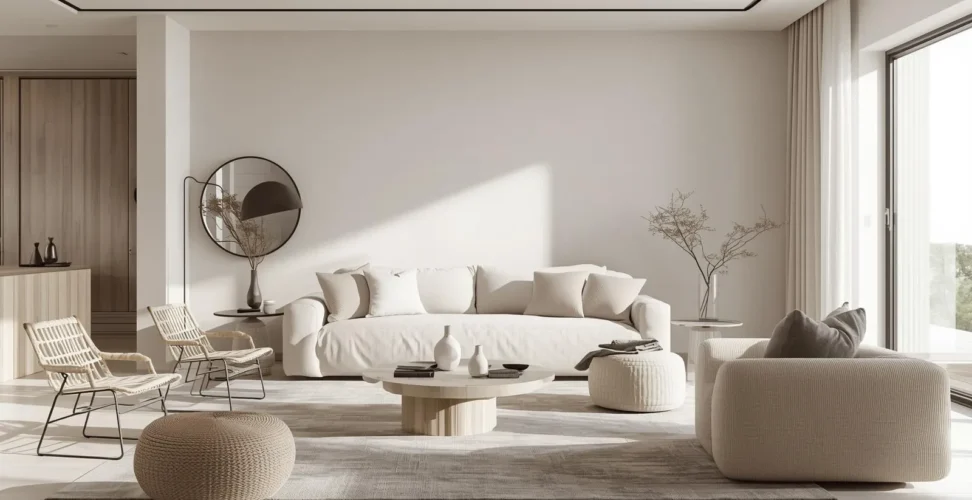
A minimalist living room focuses on clean lines, intentional design, and a calming atmosphere created by reducing clutter, simplifying shapes, and using a restrained color palette. It’s not about emptiness — it’s about letting each piece serve a purpose, whether practical, sculptural, or emotional. Neutral tones, sleek furniture, and thoughtful decor keep the space serene while still reflecting your style.
Essential Features of Minimalist Living Rooms
- Clean lines and simple shapes
- Clutter-free surfaces and intentional items
- Neutral or muted color palette
- Quality over quantity in furniture and design
- Natural light and space for breathing room
- Textures that add warmth without visual noise
- Balanced use of color accents (optional)
- Functional and comfortable layout
These features help create a minimalist living room that feels both calm and compelling — a space that invites you to relax without distraction.
How to Create a Minimalist Living Room Using These Ideas
Minimalist design is not about removing everything; it’s about curating what stays. Start with key pieces like a quality sofa, simple coffee table, and a soft rug. Add subtle textures and minimal decor to add warmth, then focus on natural light. Each of the ideas below explains how to incorporate minimalist principles in a way that feels personal, intentional, and aesthetically pleasing.
Minimalist living rooms focus on simplicity, but the right details make all the difference. These ideas include practical tips and styling guidance to help you create a space that feels calm, functional, and visually balanced.
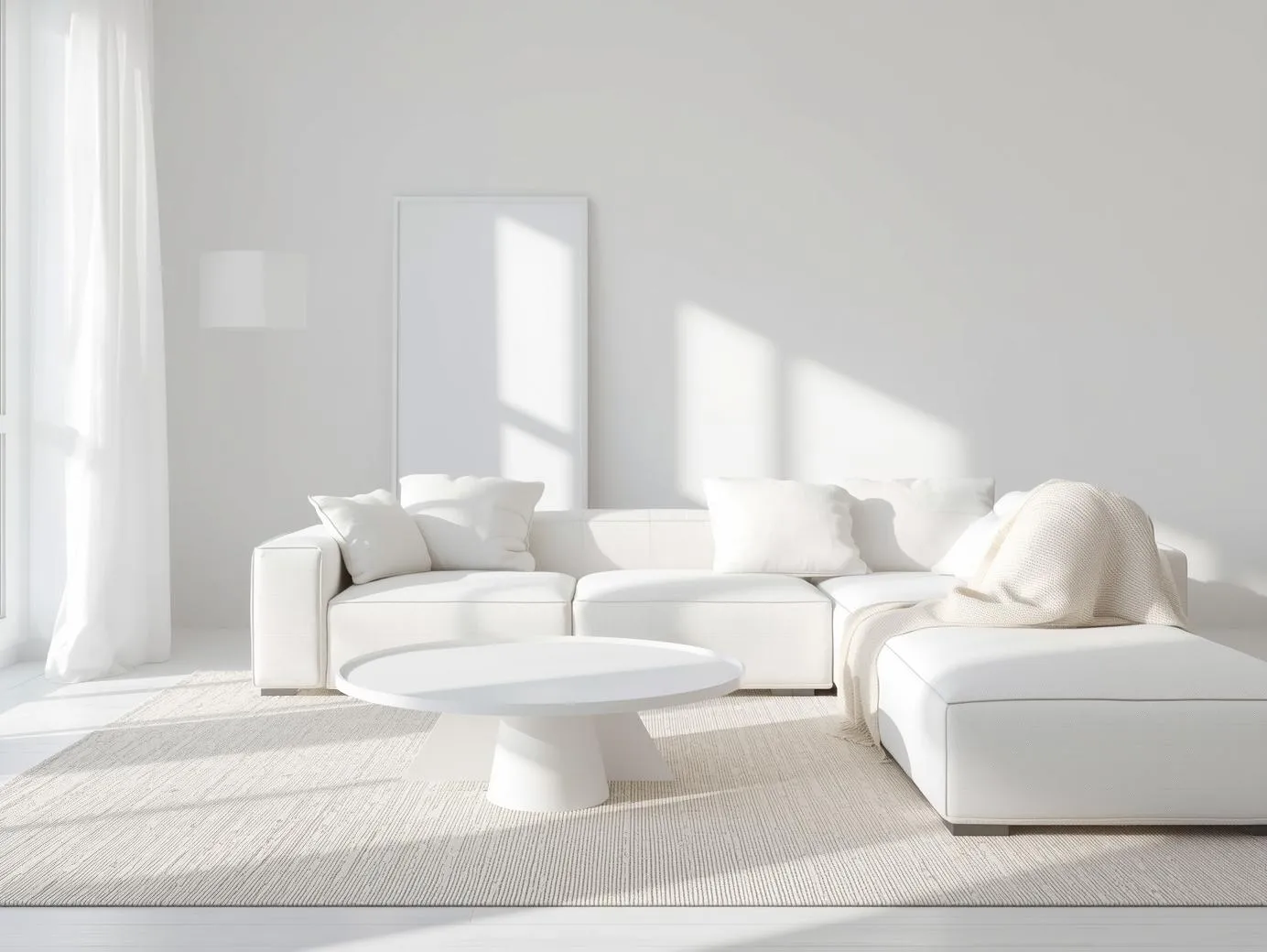
1. Pure Minimalist in All-White
All-white spaces feel bright, clean, and peaceful. Use white furniture, walls, and decor for a calming base. Introduce texture with soft throws, a woven rug, or linen cushions to prevent the space from feeling stark. A single green plant can break up the monotone beautifully.
2. Add Warmth With Earthy Tones
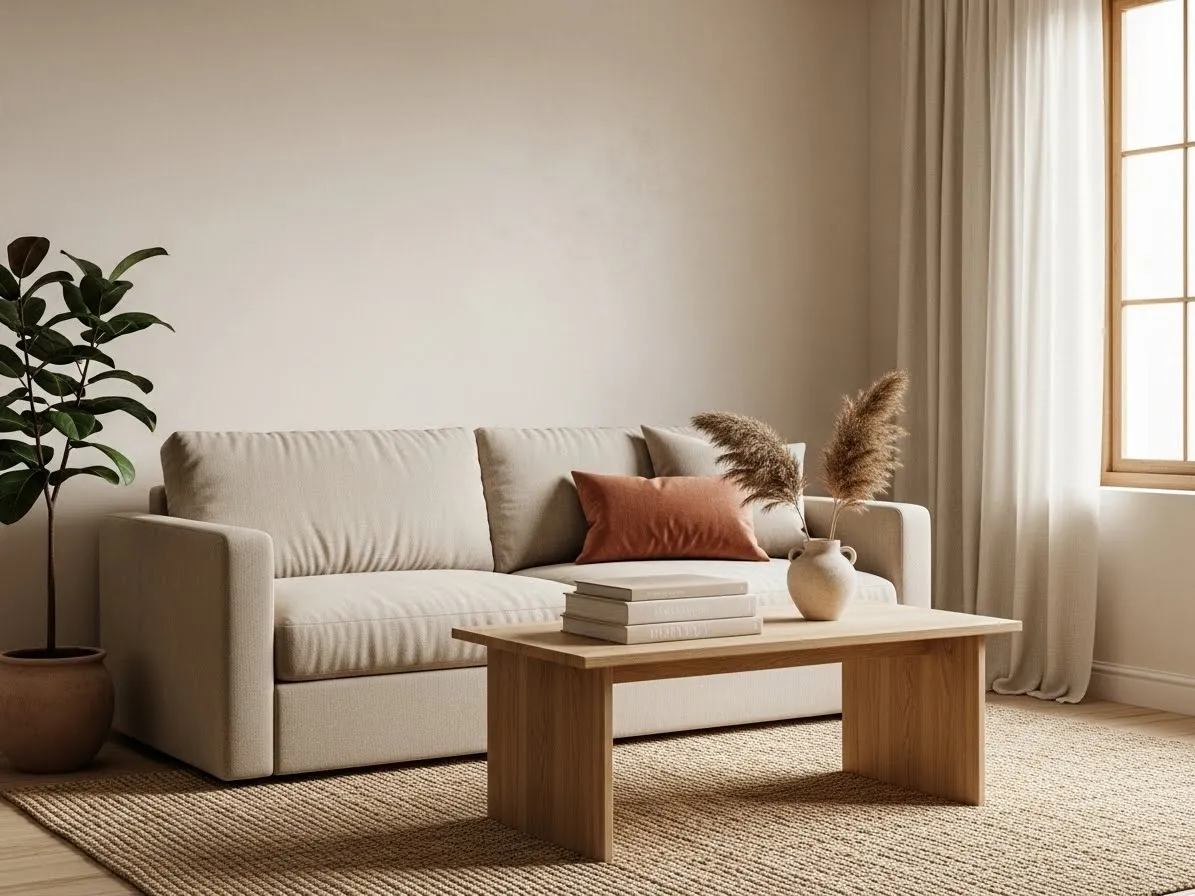
Neutral minimalism doesn’t have to be cold. Earthy tones like warm beige, soft brown, or terracotta bring a grounded, inviting vibe. Pair these with clean lines and simple furniture to avoid losing the minimalist essence.
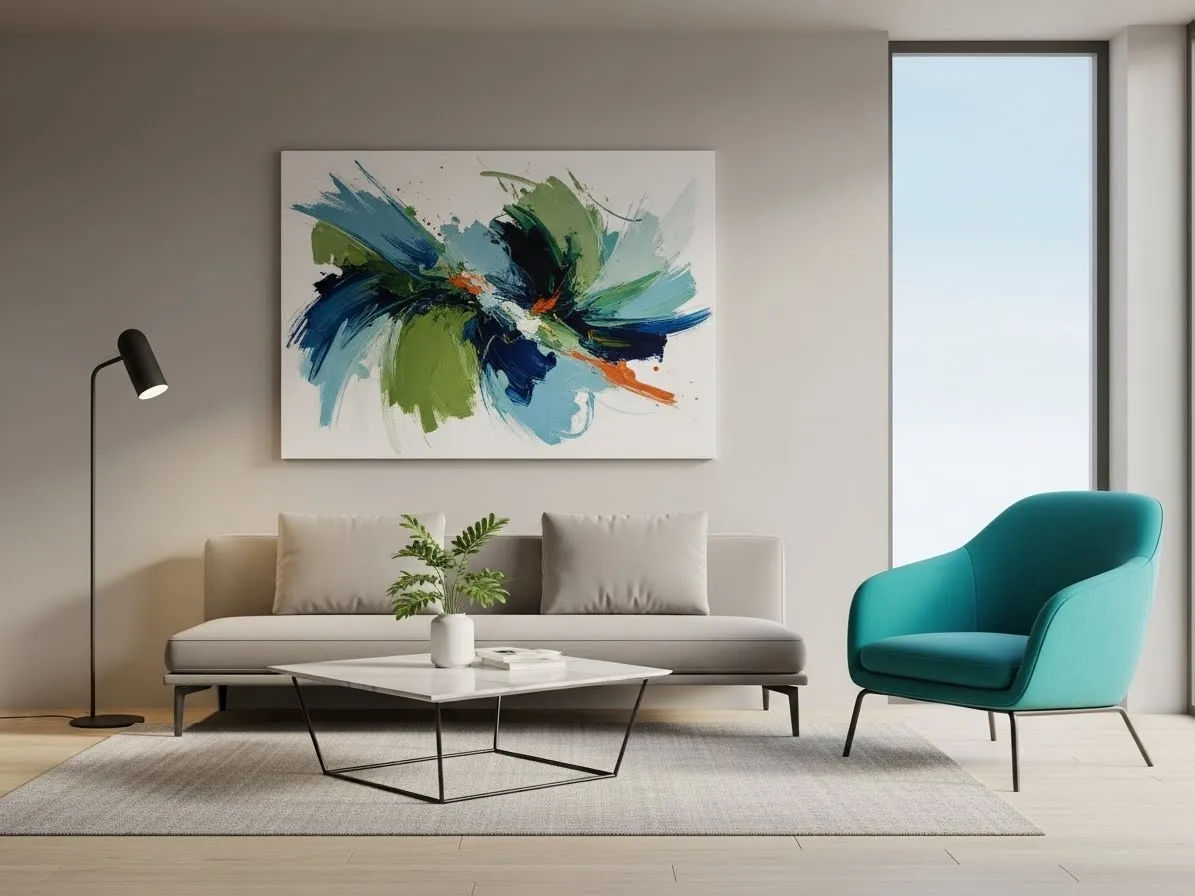
3. Relax in Vibrant Minimalism
Minimalism isn’t limited to neutrals. Add a pop of color — like a blue or yellow armchair or bold abstract art — against a neutral backdrop. Keeping most furnishings simple ensures the vibrant accent doesn’t overwhelm the space.
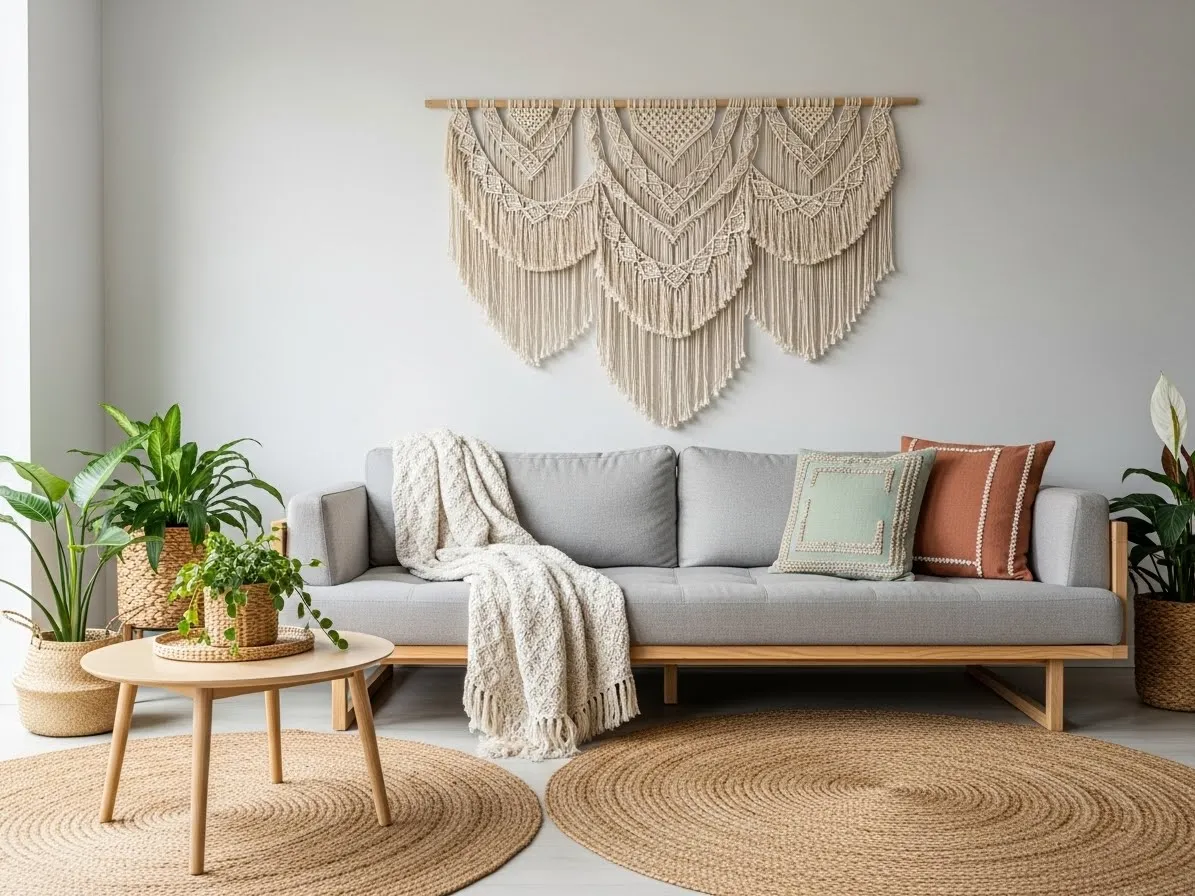
4. Blend Minimalism With Boho
Combining boho accents with minimalism creates a relaxed, textured space that still feels intentional. Use clean furniture and add woven baskets, macramé wall hangings, and jute rugs to introduce subtle, cozy textures.
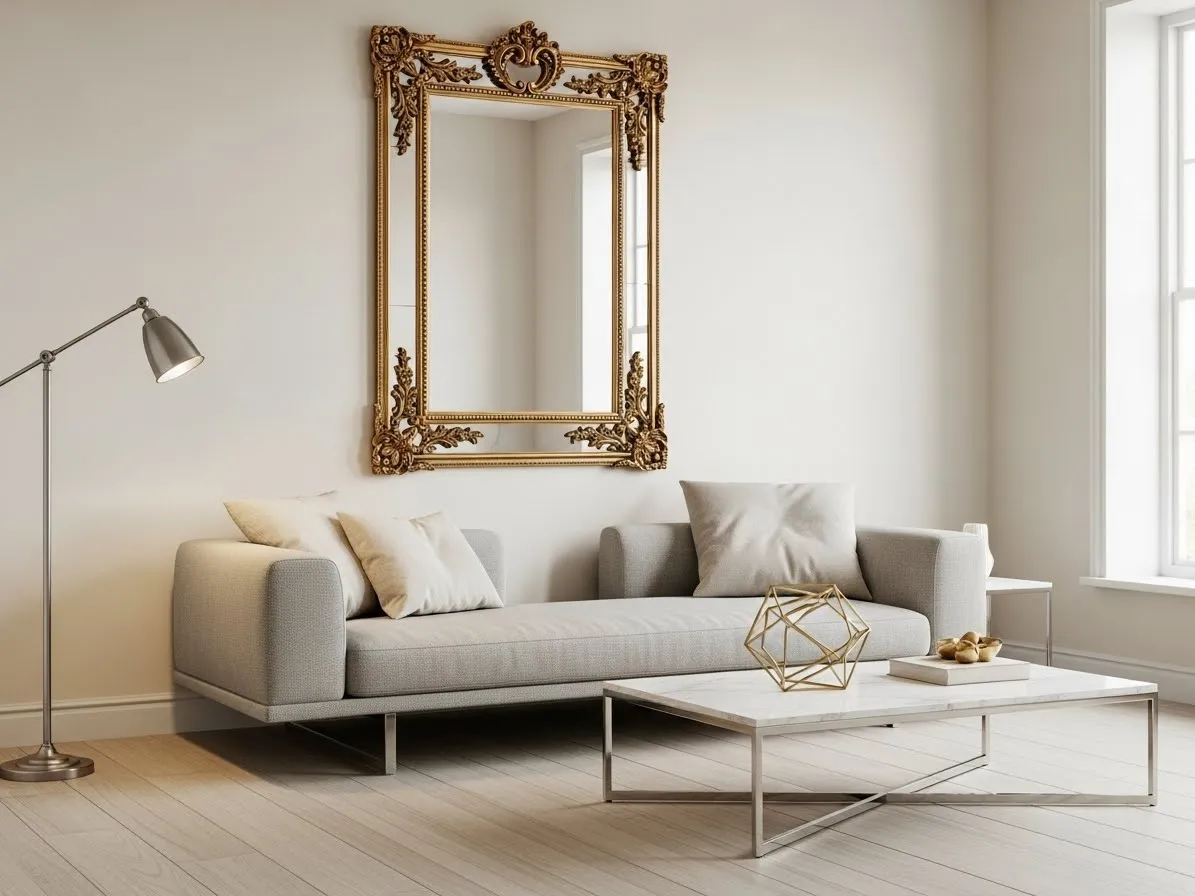
5. Minimalist Luxury With a Touch of Glam
Add metallic accents like brass or gold-trimmed lighting, mirrors, or a coffee table frame to elevate a minimalist space. These elements add subtle elegance without compromising simplicity.
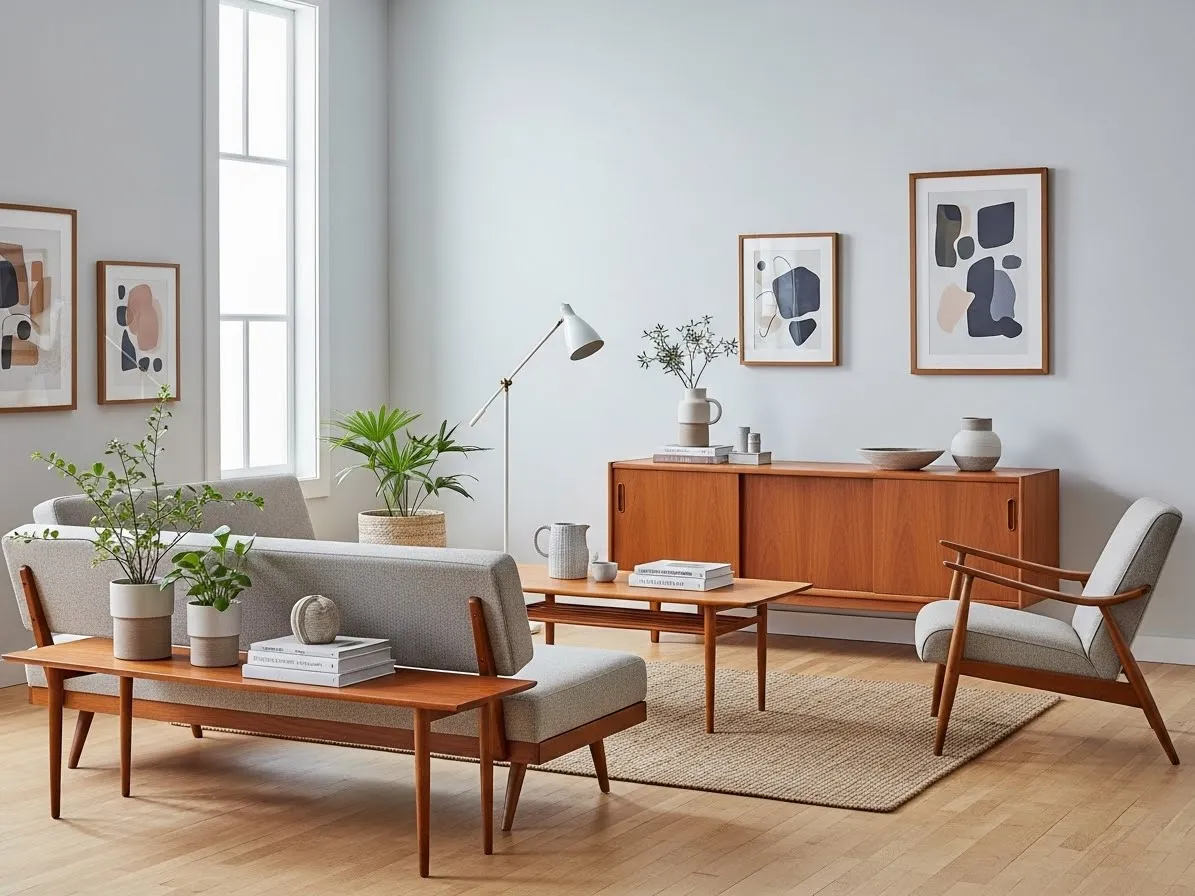
6. Mid-Century Minimal Inspiration
Mid-century modern furniture with tapered wood legs and clean lines fits perfectly into minimalist design. Choose a simple sofa and wooden sideboard and keep decor minimal for functional elegance. (Room of Inspo)
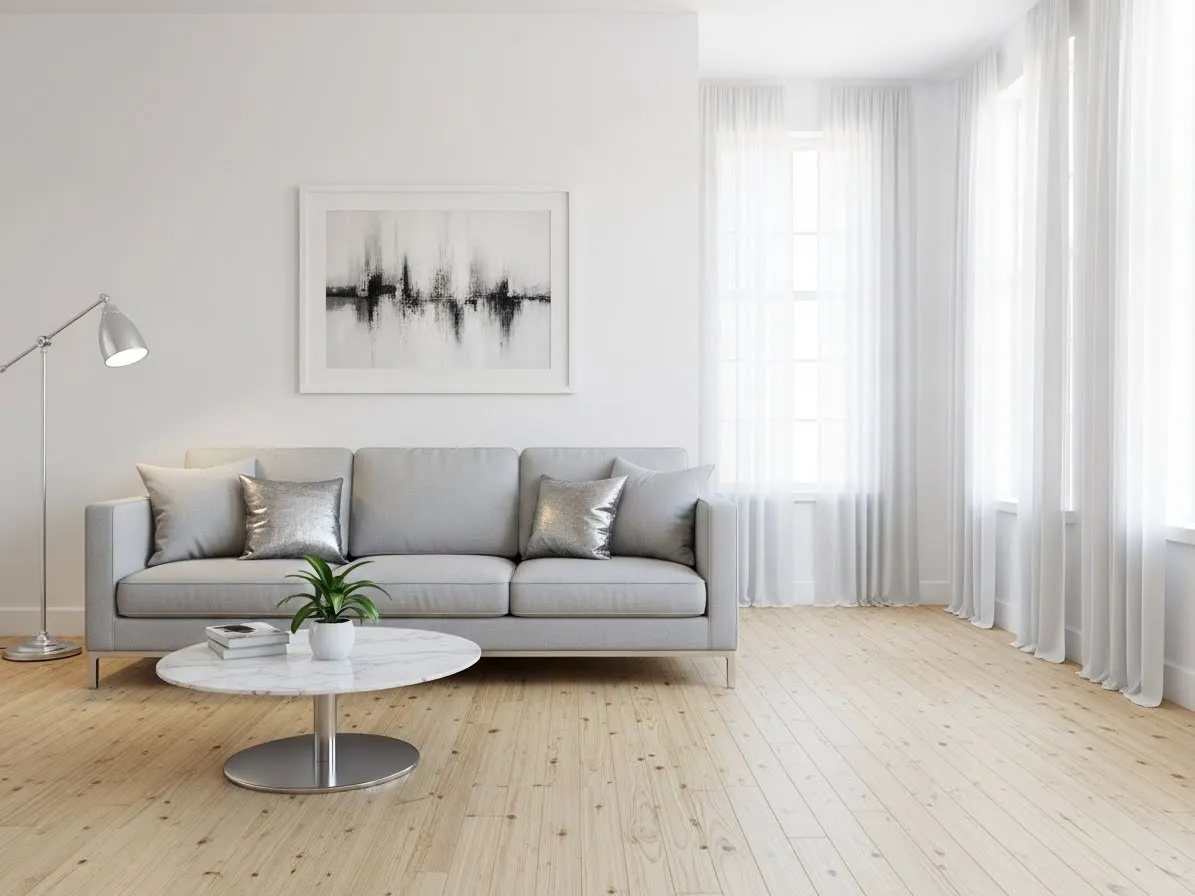
7. Neutral Minimalism With White and Gray Tones
Pair white walls with light gray furniture for timeless calm. Variations in shade prevent monotony, and chrome or silver accents can add subtle interest.
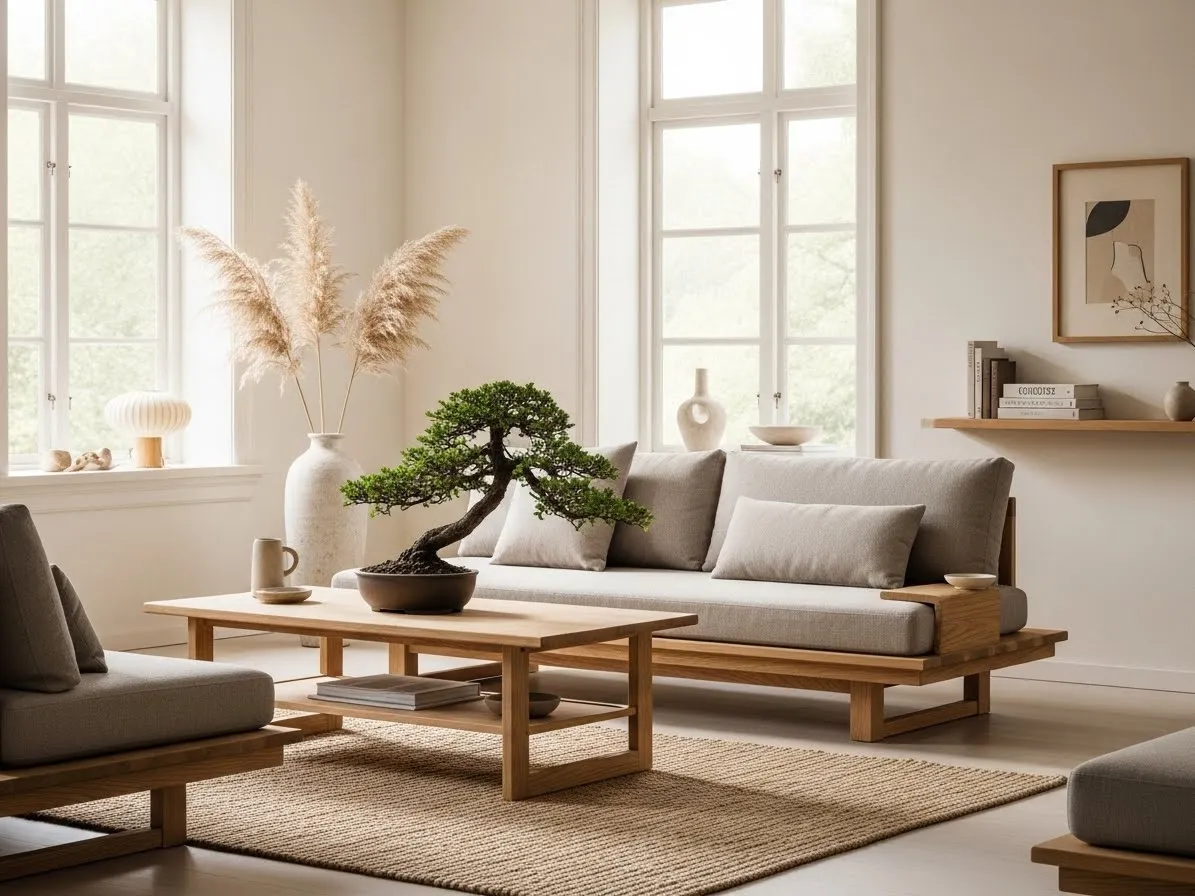
8. Mastering Japandi Calmness
Japandi blends Japanese minimalism and Scandinavian simplicity for serene elegance. Use light wood, low-profile furniture, and a few carefully chosen plants for harmony and balance.
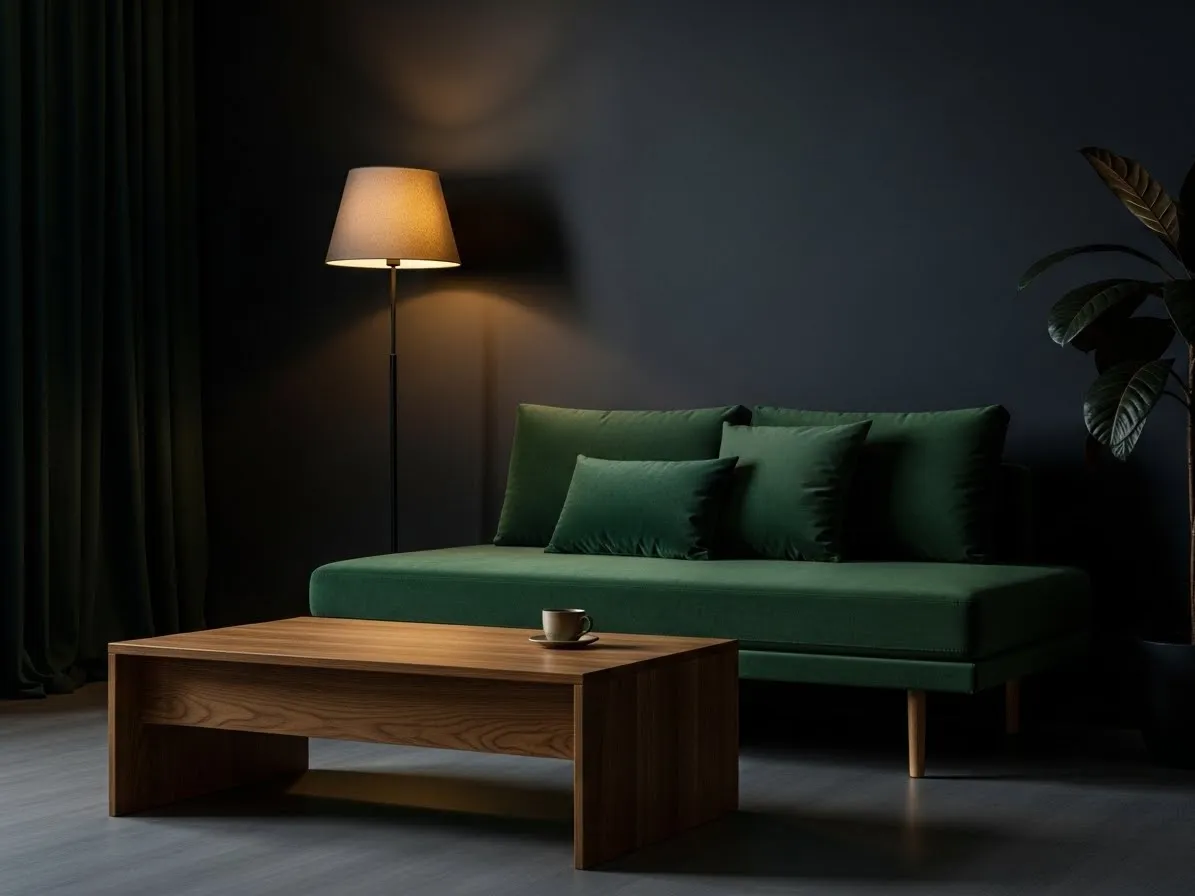
9. Moody Minimalism for Elegant Depth
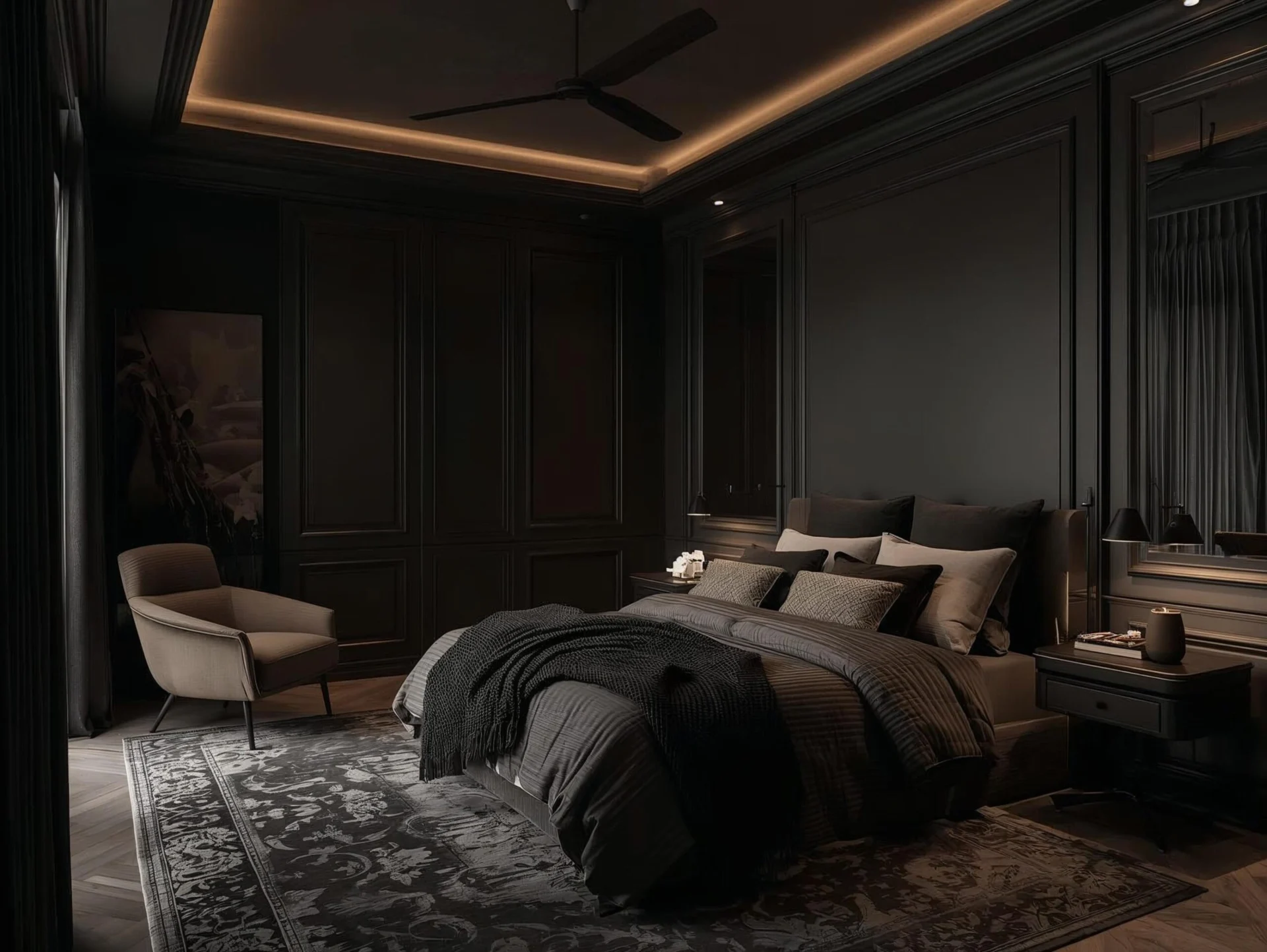
If you love drama, deep greens, blues, or charcoal add richness while keeping furniture simple. Warm lighting and plush textures like velvet keep the space cozy, not stark.
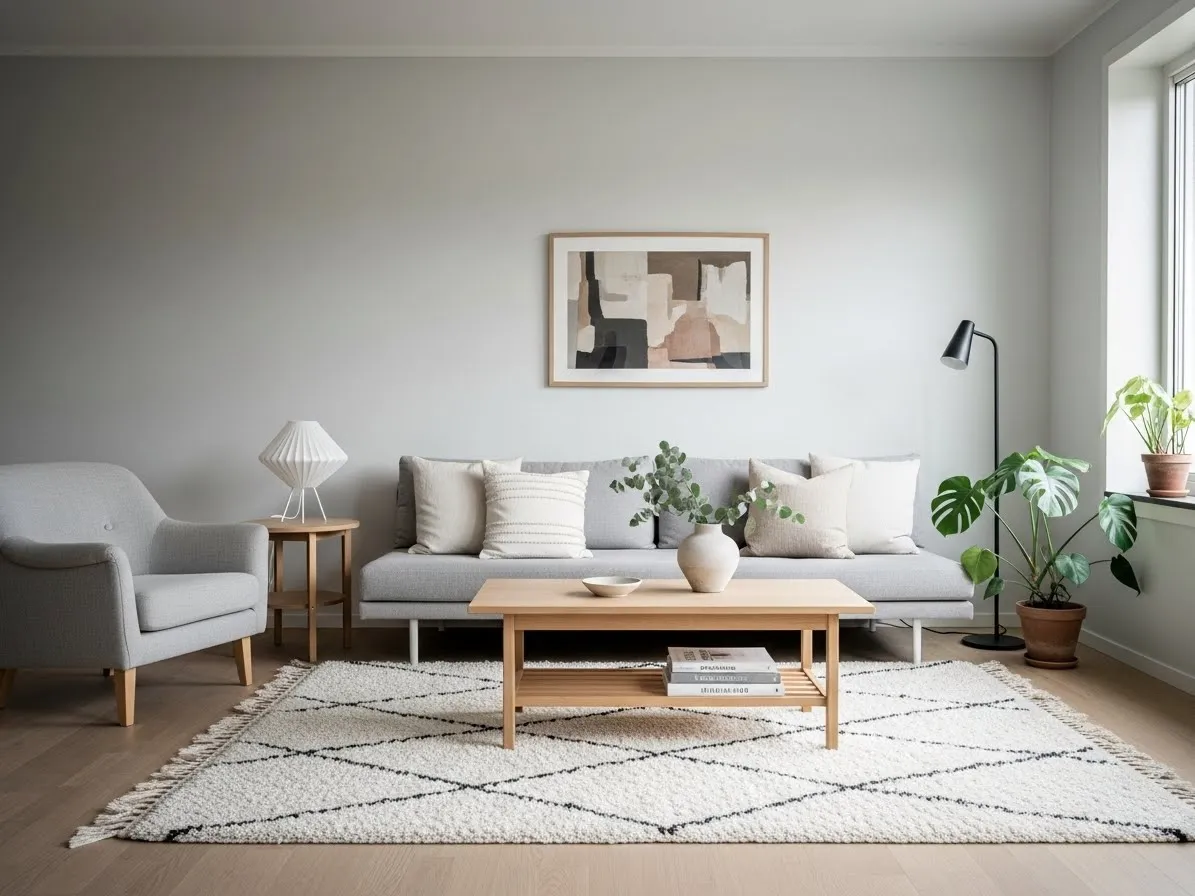
10. Scandinavian Simplicity Meets Comfort
Bright wood and soft textures define Scandinavian minimalism. Layer wool throws and choose light wood coffee tables for a calm, inviting vibe that stays minimalist.
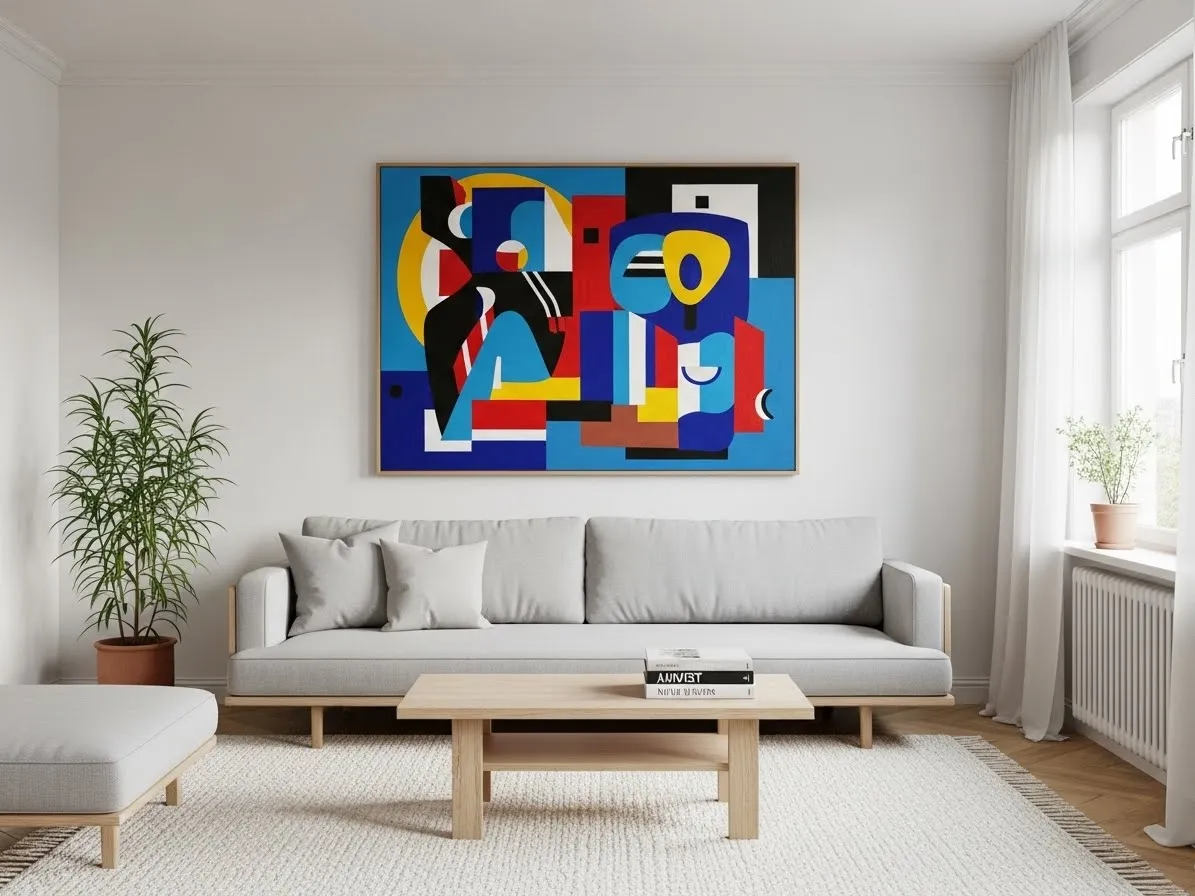
11. Artistic Minimalism With Eclectic Decor
Even minimal spaces can have personality. Add a single bold piece, like abstract wall art or a vintage sideboard, while keeping surrounding elements simple to maintain balance.
Tip: Leave negative space around artwork so it becomes a focal point rather than visual noise.
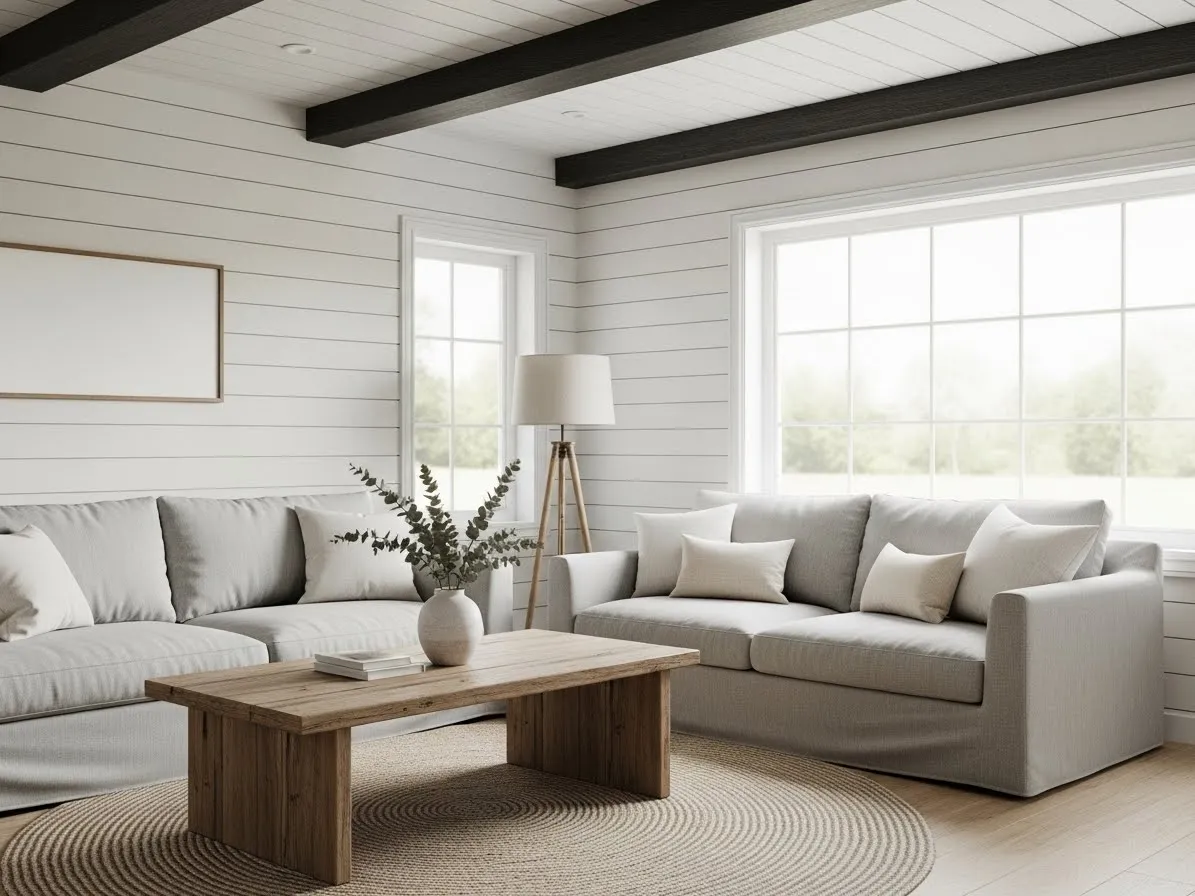
12. Minimalist Farmhouse Charm
Blend clean lines with rustic charm through simple wood beams, shiplap walls, and muted tones. Keep furniture and decor minimal to ensure the space remains serene and timeless.
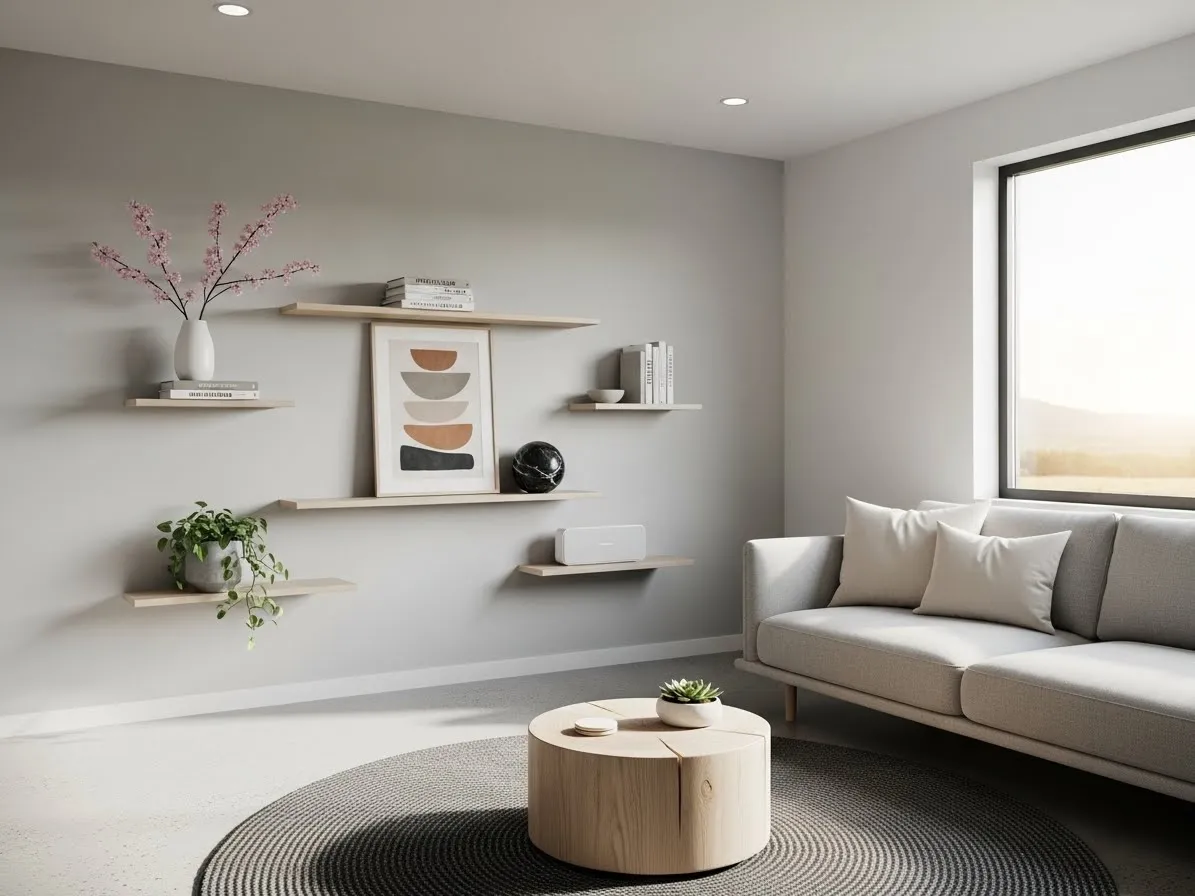
13. Floating Furniture for an Airy Feel
Wall-mounted shelves and furniture floating off the floor keep the space light and uncluttered. This is especially useful in small living rooms, maintaining clear floor space and visual simplicity. (Architecture Courses)
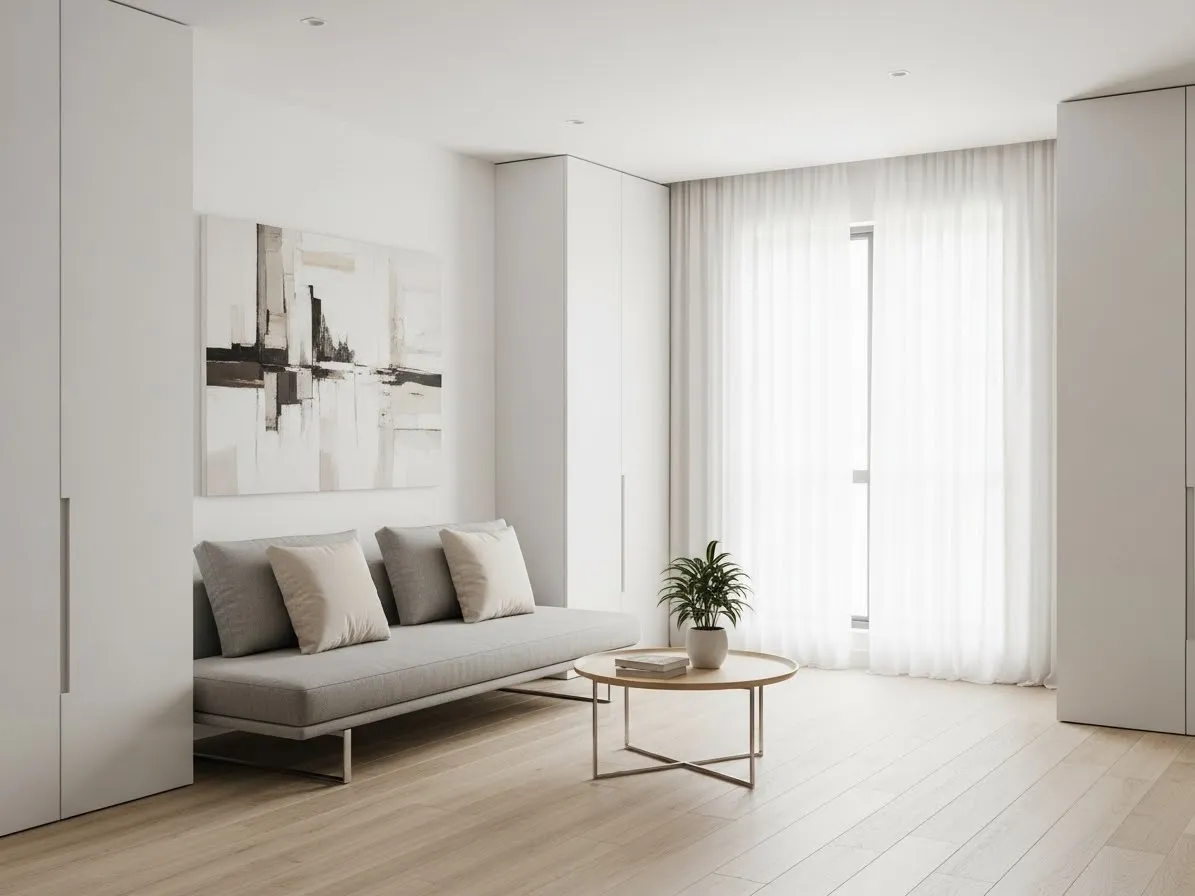
14. Functional Storage Hidden From Sight
True minimalism requires storage strategies that keep clutter out of view. Use built-in cabinets, hidden compartments, or sleek storage ottomans to maintain a clean, organized space.
Related: 14+ Trending Small Space Storage Ideas to Maximize Every Inch
FAQs
What is minimalist living room design?
It’s a design approach focused on clean lines, uncluttered spaces, and intentional décor. (Room of Inspo)
Can minimalism still feel cozy?
Yes, through warm neutrals, texture layering, and natural materials like wood and textiles. (Room of Inspo)
How do I start a minimalist living room makeover?
Begin by decluttering, choosing a neutral palette, and adding only pieces you love and use often. (Room of Inspo)
Conclusion
A minimalist living room combines simplicity and style to create a calm, functional space you’ll enjoy every day. By focusing on quality over quantity, using neutral tones, and adding subtle accents, you can build a serene living room that feels intentional, cozy, and mode.
If you enjoy clean interiors, explore our related guides on neutral, modern, and cozy living room styles.
- https://homefulspell.com/18-tropical-jungle-living-room-ideas-to-bring-the-outdoors-in/
- https://homefulspell.com/14-warm-earthy-living-room-ideas/
- https://homefulspell.com/12-beautiful-living-room-interior-ideas/
- https://homefulspell.com/12-inspiring-brown-couch-living-room-ideas-to-transform-your-space/
Explore More Ideas
Check out our other articles on HomefulSpell for more inspiration and dynamic spaces!