
Slim furniture: consoles, benches and shoe cabinets
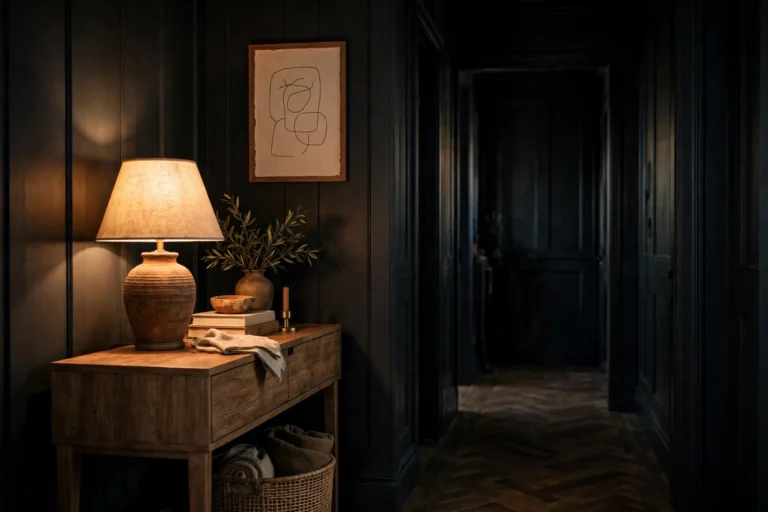
What should you choose? A slim console table, 10 to 12 inches deep, is the classic small hallway piece.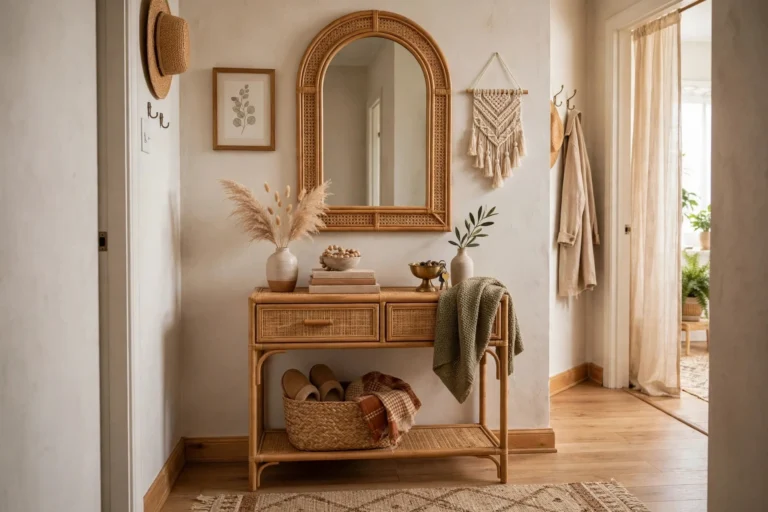 Why? It gives you a surface for keys, mail, and a small plant, without blocking the walkway.Choose a console with a lower shelf or a drawer for keys and sunglasses. That way the top stays clear.
 A bench with shoe storage underneath does two jobs at once. You can sit to put shoes on, and you can store shoes out of sight. A bench that’s 12 to 14 inches deep fits most hallways.Need more shoe storage? A slim shoe cabinet, 6 to 8 inches deep, with tilt-out drawers, holds 8 to 12 pairs. And it looks like a sideboard, not a shoe rack.
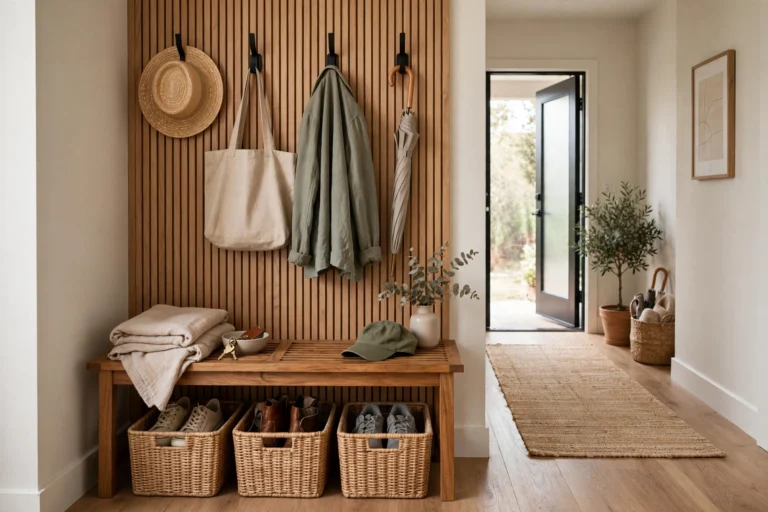 Avoid a full-depth dresser or a wide bookcase in a small hallway. They block the walkway. They make the hallway feel like a room you can’t walk through.If the hallway is very narrow, skip furniture altogether. Use wall hooks and a slim shoe cabinet only, with a small tray on top for keys.

Hooks, mirrors and the wall that does the work
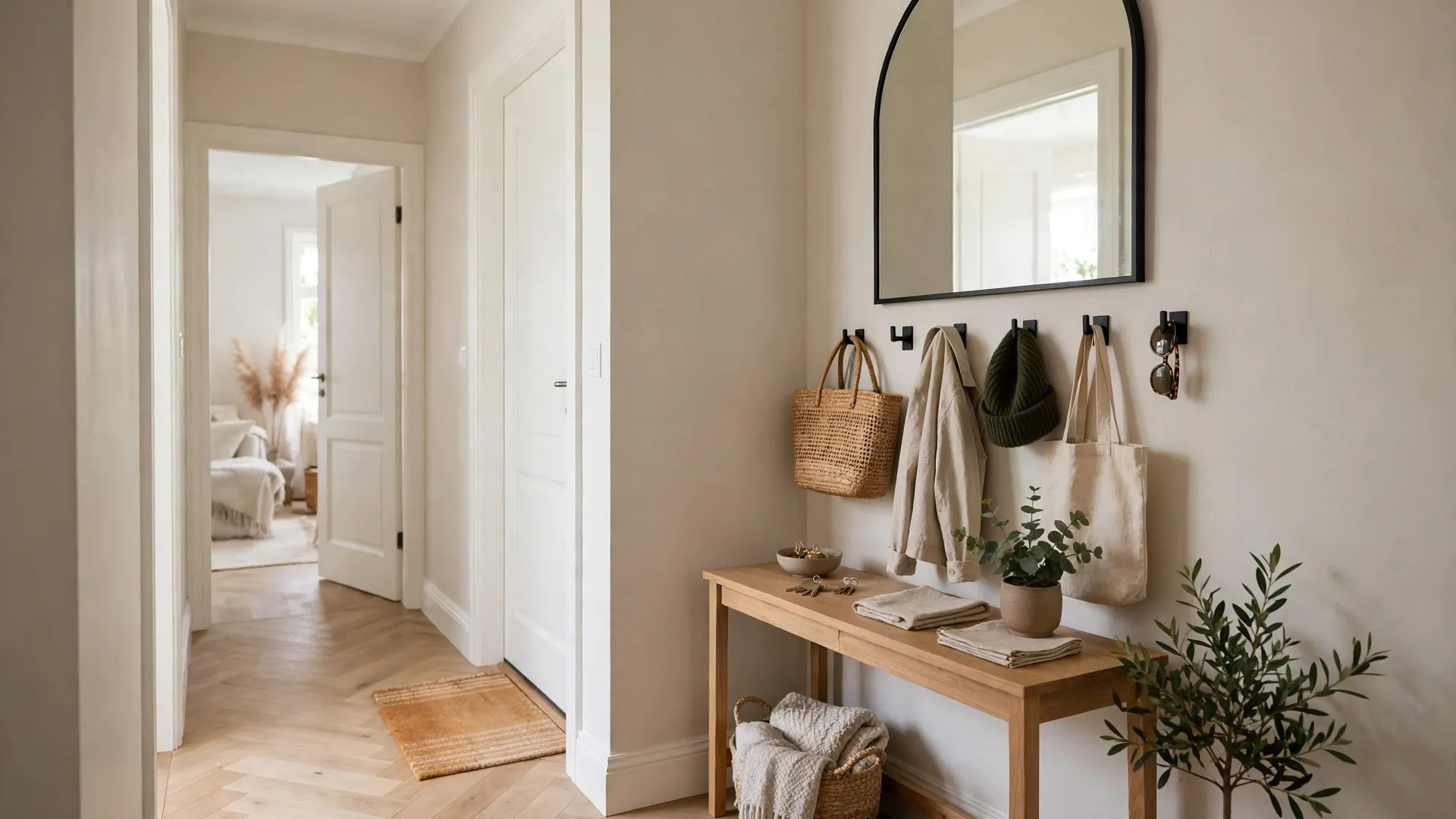
In a small hallway, the wall does more work than furniture. That’s a good thing — walls don’t block your path.Try a row of hooks at adult height. Add lower hooks for children’s coats and bags. That way coats stay off a bulky coat stand. Use hooks fixed into studs or solid wall anchors for coats and bags. Not adhesive hooks. Coats are heavy, and a fallen hook damages the wall.A large mirror above a console helps, too. Or place it on the opposite wall. It doubles light and makes a narrow hallway feel wider, especially opposite a door with glass or a window at the end of the hallway.Choose a mirror that’s proportionate to the wall. A large rectangular or arched mirror works well. A tiny decorative mirror just looks lost.
 For art, one large piece works better than a gallery wall in a narrow hallway. A pair of matching frames works, too. A gallery wall can feel busy here, and people brush against frames as they pass.A small shelf above the console can be useful for keys and a plant. But only if it doesn’t stick out further than the console itself.
Lighting a narrow hallway
How do you light a narrow hallway? Hallways are often dark, with no window and a single ceiling light. Layering helps here, too.Use a ceiling light on a dimmer for general light. Add a small table lamp or wall sconce on the console for warmth. Then add a sensor light inside a shoe cabinet or under a shelf, so you can find keys at night.Stick to warm-white bulbs at 2700K. They make a hallway feel welcoming. Cool white bulbs, by contrast, make it feel like a corridor.If the hallway has a window at the end, keep it unobstructed. Use a sheer curtain, or no curtain at all, so daylight travels down the hallway.If the hallway is long and dark, a runner rug helps. Choose one in a light colour with a subtle pattern. It draws the eye down the hallway and makes it feel longer and brighter. A dark runner, on the other hand, makes it feel narrower.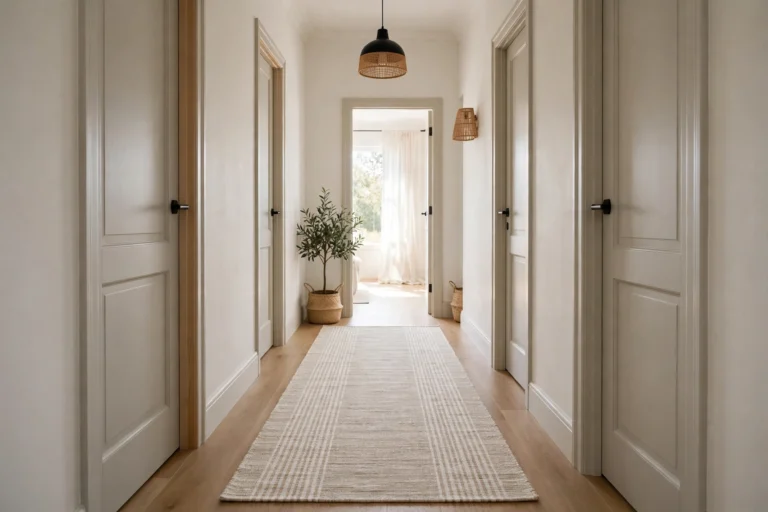 Choose a low-pile, washable runner. Hallways get the most foot traffic and dirt in a home. And a thick rug that slides is a trip hazard.

Shoes, keys and the daily drop zone
What stops a hallway becoming a pile? A daily drop zone. It’s a simple system, and it needs four places, all within arm’s reach of the door: shoes, coats, keys, and bags.Shoes go in the shoe cabinet or bench. Not on the floor by the door.Coats go on hooks. Not on a chair or a stair rail.Keys go in a small tray, bowl, or hook on the console. Not in a pocket or a bag where they’re lost.Bags go on a hook or in a basket by the door. Not on the floor in the walkway.Got children? Give each child a hook and a basket with their name on it. Then their coats and bags have a place that’s theirs. At the end of each day, spend two minutes returning shoes, coats, and bags to their places. A hallway that’s reset daily stays welcoming.A hallway that’s only “tidied on Sunday” is cluttered by Tuesday. We’ve all been there.And don’t store out-of-season coats, shoes, and bags in the hallway. Move them to a wardrobe or under-bed storage. That way the hallway only holds what you use this week.

How to do it in one weekend
How to do it? On Saturday, measure the hallway. Clear everything out. Clean the floor and walls.Then decide on furniture depth, based on the walkway you need to keep clear. Also follow guidance on keeping escape routes and hallways clear of clutter when planning the layout. Buy or order a slim console, bench, or shoe cabinet to fit that depth.Don’t buy before measuring. A console that’s 2 inches too deep can block a hallway.On Sunday, fit hooks into studs. Hang the mirror. Lay the runner. Set up the drop zone: a tray for keys, a basket for bags, and a shoe cabinet for shoes. Don’t add decor on the first weekend. Live with the layout for a week first.Notice what you still drop on the floor. Notice what you still search for. That tells you what’s missing.Here’s the most common hallway mistake. People buy a beautiful console that’s too deep. Then they realise they can’t open the front door fully, or walk past with shopping bags.In a small hallway, depth and walkway matter more than style.
What it actually costs
What does it cost? For a small hallway entryway refresh, without replacing flooring or doors, here’s the breakdown:A slim console or bench costs $120–$300. A slim shoe cabinet costs $100–$250. Hooks and a rail cost $30–$70.A large mirror costs $80–$200. A runner rug costs $60–$150. A table lamp or sconce costs $50–$120.A key tray and basket cost $30–$60. Paint or a small wall repair costs $40–$90. That totals roughly $510–$1,240.Already have a console or bench? Then the refresh can cost $250–$500 for hooks, mirror, runner, and lighting.On a tighter budget? If you have under $200, spend it on hooks, a key tray, and a runner first. Those three change how the hallway works every day. And that’s what an entryway is actually about.Keep receipts for the console and shoe cabinet. Depth and capacity are the two things you’re most likely to want to exchange after living with them for a week.
What to avoid
What should you avoid? Furniture that’s too deep for the hallway, for a start. Also a rug that slides or bunches, and hooks that aren’t fixed into studs for heavy coats.Avoid a gallery wall in a very narrow hallway, where frames get brushed and damaged. And avoid a dark runner in a dark hallway, which makes it feel narrower.Avoid storing out-of-season items, sports gear, and parcels in the hallway. They block the walkway and make the entryway feel like a storage room.Avoid a console with no drawer or shelf, too. Without one, keys and mail will pile on top.Avoid a shoe rack with open shelves that shows every pair and collects dust.Finally, avoid a hallway with no light at night. A small sensor light or a lamp on a timer makes coming home in the dark feel safe and welcoming. Not like entering a dark corridor.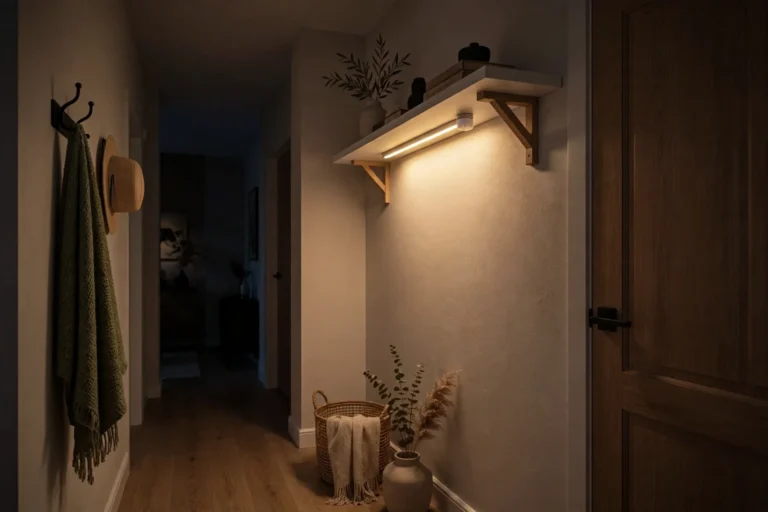 See more: Ideas by Room, Ideas by Style, 14 Maximalist Entryway Ideas, Easy DIY Home Updates, and Living Room.
FAQ
How can I make a small hallway entryway functional?
Use slim furniture 10 to 14 inches deep, hooks fixed into studs, a large mirror, a washable runner, and a drop zone for shoes, coats, keys, and bags. Keep at least 18 to 24 inches of clear walkway.
Thank you for reading this post, don't forget to subscribe!What furniture fits a narrow hallway?
A slim console, a bench with shoe storage, or a slim shoe cabinet with tilt-out drawers. If the hallway is under 36 inches wide, use wall hooks and a slim shoe cabinet only, with no console.
How do I keep a small entryway clutter-free?
Give every daily item a place — shoes in a cabinet, coats on hooks, keys in a tray, bags in a basket — and reset the hallway for two minutes each evening. Store out-of-season items elsewhere.