
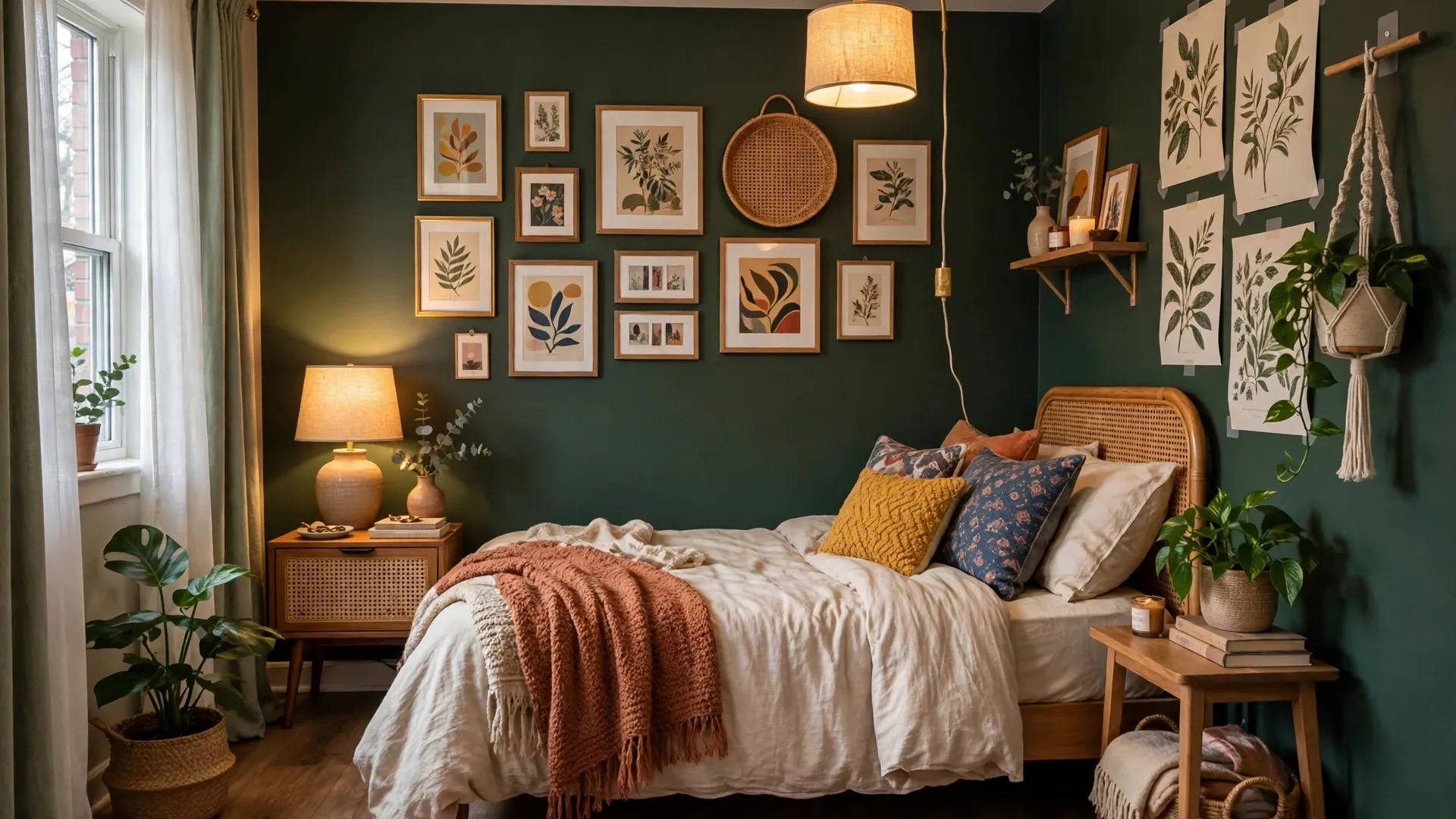
 Most renter regrets come from a simple mismatch. A beautiful headboard that blocks a door. Or a wardrobe that leaves no room to open a drawer.
Layout first: put the bed in the right place
In a small bedroom, the bed is the room. So place it well.Push it against the longest wall. Don’t put it under the window if that window is your only light source and you need a desk. And leave at least 24 inches on one side to get in and out comfortably. If the room is very narrow, try a different approach. Put the bed against the wall with a long bolster pillow. That often works better than squeezing a nightstand into a gap you can’t use.Need more storage? Choose a bed frame with drawers underneath. Or use risers that lift a standard frame by 6 inches. That creates a full drawer’s worth of storage without a new wardrobe.If you work from the bedroom, put the desk at the foot of the bed or beside the window, facing the wall. Then the bed won’t sit in your video-call background. And the desk won’t block the wardrobe.
 Keep the path from door to window clear. A room feels twice as large when you can walk a straight line through it without sidestepping furniture.
Colour without paint
You don’t need to paint to add color. A duvet cover, two pillowcases, a throw, and a rug can change the whole room.Stick to a limited palette. For example, try warm white bedding, terracotta cushions, and a natural jute rug. That combo will change the room more than a feature wall you’re not allowed to paint. If your landlord allows removable wallpaper, use it on one wall only. Put it behind the bed. Choose a small-scale pattern so a tiny room doesn’t feel busy.Peel-and-stick wall panels in a wood or beadboard effect can create a headboard wall without nails. But test one panel in a hidden corner first. Some adhesives pull paint on older walls. And repainting costs more than the panels.A safer headboard? Go freestanding. An upholstered headboard that slots behind the bed works well. So does a row of large cushions against the wall. Or a folding screen. All three give you a focal point. And all three can move with you to your next flat.

Hanging art and mirrors with no damage
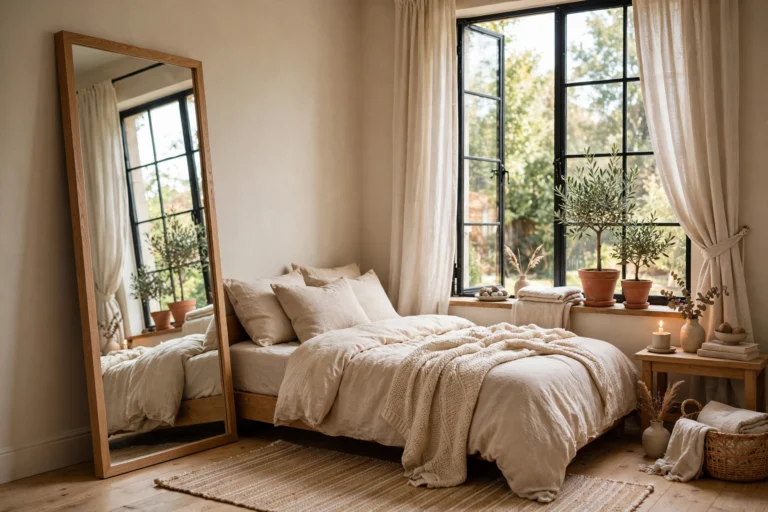
Command strips and similar adhesive hooks are the renter standard. Choose damage-free hanging strips that remove cleanly for frames within their weight limit. But they only work if you follow the weight limit and the surface rules.Here’s the routine that works. Clean the wall with rubbing alcohol. Wait for it to dry. Press the strip for 30 seconds. Then wait an hour before hanging.Skipping that hour is why frames fall. It’s tempting to rush it. Don’t. For heavy mirrors, don’t rely on strips alone. Lean a full-length mirror against the wall instead. Secure it at the top with a small adhesive hook or a furniture strap to the bed frame, so it can’t tip.A leaning mirror also makes a small bedroom feel larger. It works best opposite a window.For art, use a picture ledge that rests on a dresser. Or use a clip frame hung from a tension rod inside a window recess. Washi tape frames look playful in a dorm. In an adult rental, though, they can read as unfinished. A simple clip frame or a poster with magnetic poster hangers looks intentional. And it leaves no marks.
Storage that does not need drilling
Small rental bedrooms tend to have the same three storage problems. Clothes. Shoes. And “everything else” — chargers, books, bags, and laundry. Solve them in that order.For clothes, under-bed boxes on wheels beat a new dresser in a tiny room. They use dead space. And they slide out easily.A tall, narrow bookcase beside the wardrobe holds more than a wide chest of drawers. It also leaves floor space clear. For shoes, try a slim shoe cabinet by the door. Or use a hanging shoe organiser inside the wardrobe door. Either way, pairs stay off the floor.For everything else, use a bedside caddy that slips between mattress and frame. It’s perfect for a phone, book, and charger. Then add a single attractive basket for laundry. With a tray on top, it doubles as a side table.Avoid open shelving that needs wall brackets. Use a freestanding ladder shelf instead. It leans, holds books and plants, and moves with you.
 If you must use adhesive shelves, keep them light. Books are heavier than they look. And a fallen shelf damages both the wall and the books.
Lighting, bedding and texture
Rental bedrooms often have one harsh ceiling light and nothing else. Layering fixes that without an electrician.What should you choose? A warm-white bedside lamp at 2700K. A small clip-on reading light for the headboard. And a battery-operated LED strip behind the headboard or under a shelf. Together, those give you three light levels: for reading, relaxing, and getting dressed. Avoid cool daylight bulbs in a bedroom. They make white walls look grey. They make bedding look washed out.For bedding, invest in the layers you touch. A good duvet. A washable cover. Two sleeping pillows plus two decorative cushions. A throw folded across the foot of the bed adds color and warmth without a new blanket.And add a rug beside the bed. Even a small 4-by-6-foot rug stops the room from feeling like a corridor. If the floor is cold laminate, choose a thick rug with a non-slip pad underneath. That’s far more comfortable than a thin decorative rug that slides every morning.

How to set it up in a weekend
How to do it? Start Saturday morning by clearing everything out, cleaning, and measuring.Put the bed in its final position first. Then place the wardrobe and desk. Check that every door and drawer opens fully.On Saturday afternoon, make the bed properly with your new palette. Lay the rug. Set up the lamps. On Sunday, hang art with adhesive strips. Set up under-bed storage. Then do a final edit: remove anything that doesn’t have a home.That edit matters more than any purchase. A small bedroom with ten things on display looks styled. The same room with thirty things on display looks cluttered, even if every item is beautiful.Try one more trick. Photograph the room before you leave for the day. Then look at the photo. A photo reveals clutter and imbalance that your eyes miss when you’re standing in the room.

What it actually costs
What does it cost? Here’s a realistic renter-friendly refresh, without replacing the bed or wardrobe:Bedding set and throw: $90–$180. Rug with pad: $80–$180. Two lamps, or one lamp plus a reading light: $60–$140. Adhesive hooks and strips: $20–$40. Under-bed boxes: $40–$80. A ladder shelf or tall bookcase: $80–$180. A leaning mirror: $70–$150. A freestanding headboard or large cushions: $80–$200.That totals roughly $520–$1,150.If your budget is under $300, spend it on bedding, one lamp, and under-bed storage first. Those three change sleep, light, and clutter. And those are what you notice every day.Keep receipts and the original packaging for adhesive products. And photograph the walls on move-in day. That move-in photo is the best deposit protection you have. It proves which marks were already there.What to avoid
What should you avoid? First, don’t drill “just one small hole” without written landlord permission. One hole often becomes ten. And the repair cost is charged per hole, not per room.Don’t use peel-and-stick tiles or wallpaper on freshly painted walls, textured walls, or in a damp room. In those spots, adhesive can fail or pull paint.Don’t over-fill a small room with matching sets. A bed, two nightstands, a dresser, a desk, and a chair rarely fit a rental bedroom. A single nightstand plus a bedside caddy is often more practical. Don’t use dark, heavy curtains that block the only window. A light linen curtain on a tension rod inside the window frame gives privacy without drilling. And it keeps daylight coming in. Finally, don’t buy storage before you declutter. A new basket doesn’t solve a wardrobe full of clothes you never wear. A one-hour clear-out does. And it costs nothing.See more: Bedroom, Ideas by Room, Ideas by Style, 16 Classic Bedroom Ideas, Smart College Dorm Room Ideas, and Easy DIY Home Updates.
FAQ
How can I hang things in a rental without losing my deposit?
Use adhesive strips within their weight limit, clean the wall first, wait an hour before hanging, and remove them by pulling straight down slowly as directed. For heavy items, lean them or use freestanding furniture instead of hanging.
Thank you for reading this post, don't forget to subscribe!What is the best layout for a very small rental bedroom?
Bed against the longest wall, wardrobe on the opposite wall or beside the door, desk at the foot of the bed or by the window, and a clear path from door to window. Under-bed storage replaces a second dresser.
Can I use peel-and-stick wallpaper in a rental?
Often yes, but test a panel in a hidden spot, avoid textured or freshly painted walls, and check your lease. Removable wallpaper is safer on smooth, older paint than on new paint, which can peel with the paper.